
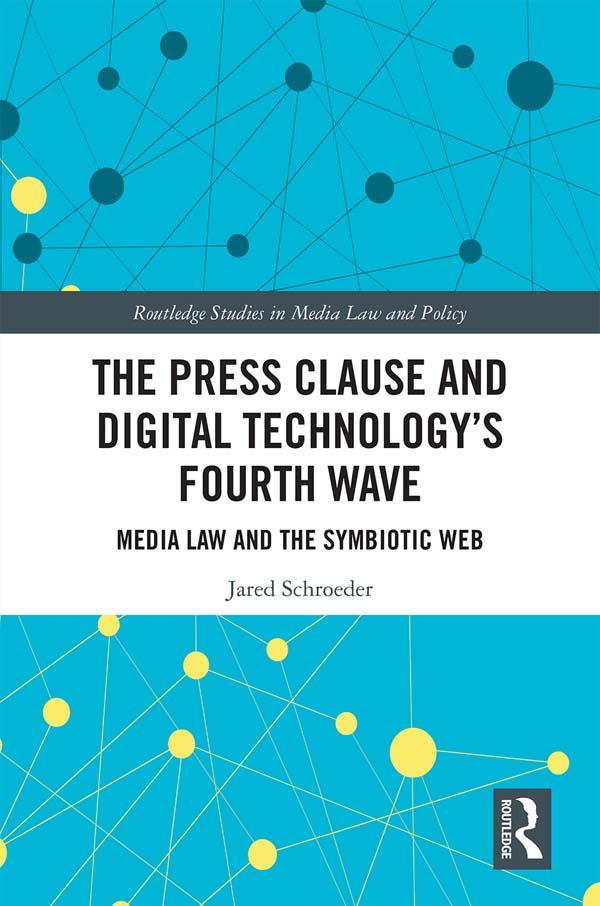
During the first part of the twenty-first century, bloggers, citizen journalists, social media users, Yelp reviewers, and a myriad of other communicators have found themselves facing defamation, privacy, campaign finance, and other lawsuits as a result of the messages they have communicated. In many ways, these communicators are facing legal questions that are similar to what traditional journalists have faced for centuries regarding their rights to gather and publish information. This book examines how the press clause, a First Amendment freedom with no agreed-upon definition, can be understood in order to help guide the courts and twenty-first-century publishers regarding protecting expression as we move into the fourth wave of networked communication, an era that will be defined by increasingly complex relationships between humans and artificially intelligent communicators. To do so, the book draws upon the discourse theory of communication in democratic society, the legal and foundational history of the press clause, lower-court cases that involve citizen publishers who have claimed protections that have historically been associated with traditional journalism, and established legal and scholarly examinations of artificial intelligence to ultimately construct a framework for how the press clause can be reimagined to protect older and newer generations of publishers.
Maksa helposti kortilla, Klarnalla, Apple Paylla tai Google Paylla. Etkö ole tyytyväinen? Sinulla on aina 14 päivän palautusoikeus. Lue lisää ehdoistamme. Jos sinulla on kysyttävää, lähetä meille sähköpostia osoitteeseen hello@memmo.org.
Memmo tekee opiskelusta helpompaa – missä päin maailmaa ikinä oletkin. Meillä yhdistät kurssikirjat ja fiksut opiskelutyökalut yhteen paikkaan: tiivistelmät, visat, podcastit ja muistikortit. Ja sitten Ted, opiskelukaverisi, joka vastaa kaikkeen, mitä ikinä mietitkin. Yli 50 000 opiskelijaa opiskelee jo täällä – rakennettu auttamaan sinua oppimaan nopeammin ja stressaamaan vähemmän.