
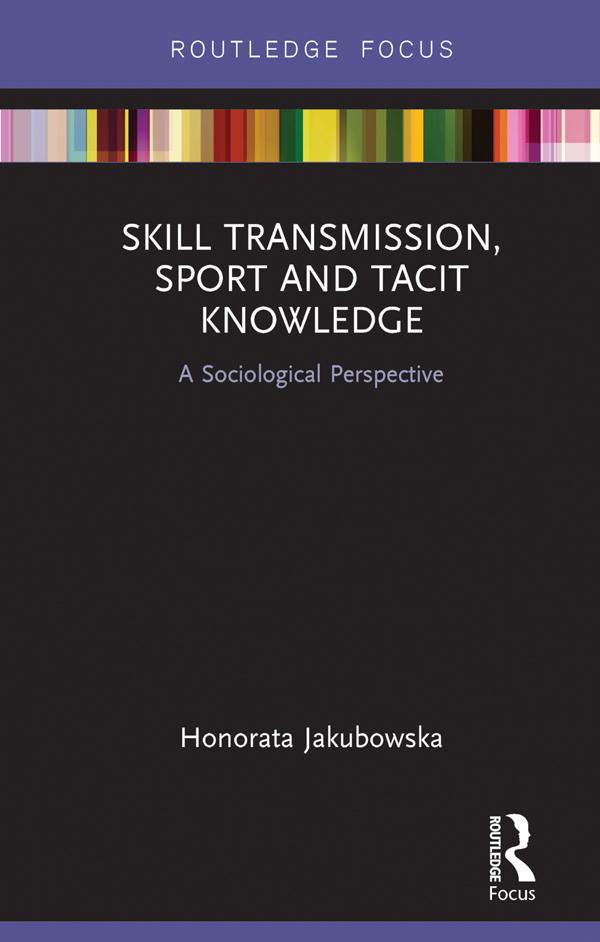
Teaching the skills necessary to play sport depends partly on transmitting knowledge verbally, yet non-verbal or tacit knowledge also has an important role. A coach may tell a young athlete to 'move more dynamically', but it is undoubtedly easier to demonstrate with the body itself how this should be done. Skills such as developing a 'feel for the water' cannot simply be transmitted verbally; they are embodied in the tacit knowledge acquired from practice, repetition and experience.
This is the first sociological study of the transmission of skills through tacit knowledge in sport. Drawing on philosophy, sociology and theories of embodiment, it presents original research gathered from qualitative empirical studies of young athletes. It discusses the concept of tacit knowledge in relation to motor skills transmission in a variety of sports, including athletics, swimming and judo, and examines the methodological possibilities of studying tacit knowledge, as well as its challenges and limitations.
This is fascinating reading for all those with an interest in the sociology of sport, theories of embodiment, or skill acquisition and transmission.
Maksa helposti kortilla, Klarnalla, Apple Paylla tai Google Paylla. Etkö ole tyytyväinen? Sinulla on aina 14 päivän palautusoikeus. Lue lisää ehdoistamme. Jos sinulla on kysyttävää, lähetä meille sähköpostia osoitteeseen hello@memmo.org.
Memmo tekee opiskelusta helpompaa – missä päin maailmaa ikinä oletkin. Meillä yhdistät kurssikirjat ja fiksut opiskelutyökalut yhteen paikkaan: tiivistelmät, visat, podcastit ja muistikortit. Ja sitten Ted, opiskelukaverisi, joka vastaa kaikkeen, mitä ikinä mietitkin. Yli 50 000 opiskelijaa opiskelee jo täällä – rakennettu auttamaan sinua oppimaan nopeammin ja stressaamaan vähemmän.