
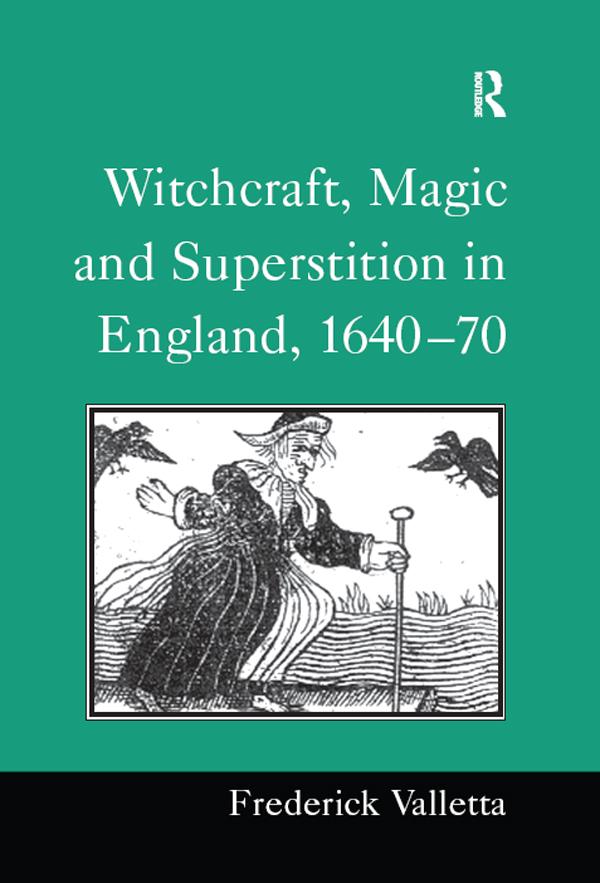
This study examines the relationship between élite and popular beliefs in witchcraft, magic and superstition in England, analyzing such beliefs against the background of political, religious and social upheaval characteristic of the Civil War, Interregnum and Restoration periods. Belief in witchcraft received new impulses because of the general ferment of religious ideas and the tendency of participants in the Civil Wars to resort to imagery drawn from beliefs about the devil and witches; or to use portents to argue for the wrongs of their opponents. Throughout the work, the author stresses that deeply held superstitions were fundamental to belief in witches, the devil, ghosts, apparitions and supernatural healing. Despite the fact that popular superstitions were often condemned, it was recognized that their propaganda value was too useful to ignore. A host of pamphlets and treatises were published during this period which unashamedly incorporated such beliefs. Valletta here explores the manner in which political and religious authorities somewhat cynically used demonic imagery and language to discredit their opponents and to manipulate popular opinion.
Maksa helposti kortilla, Klarnalla, Apple Paylla tai Google Paylla. Etkö ole tyytyväinen? Sinulla on aina 14 päivän palautusoikeus. Lue lisää ehdoistamme. Jos sinulla on kysyttävää, lähetä meille sähköpostia osoitteeseen hello@memmo.org.
Memmo tekee opiskelusta helpompaa – missä päin maailmaa ikinä oletkin. Meillä yhdistät kurssikirjat ja fiksut opiskelutyökalut yhteen paikkaan: tiivistelmät, visat, podcastit ja muistikortit. Ja sitten Ted, opiskelukaverisi, joka vastaa kaikkeen, mitä ikinä mietitkin. Yli 50 000 opiskelijaa opiskelee jo täällä – rakennettu auttamaan sinua oppimaan nopeammin ja stressaamaan vähemmän.
Saatat pitää myös näistä
Osta kirja0