
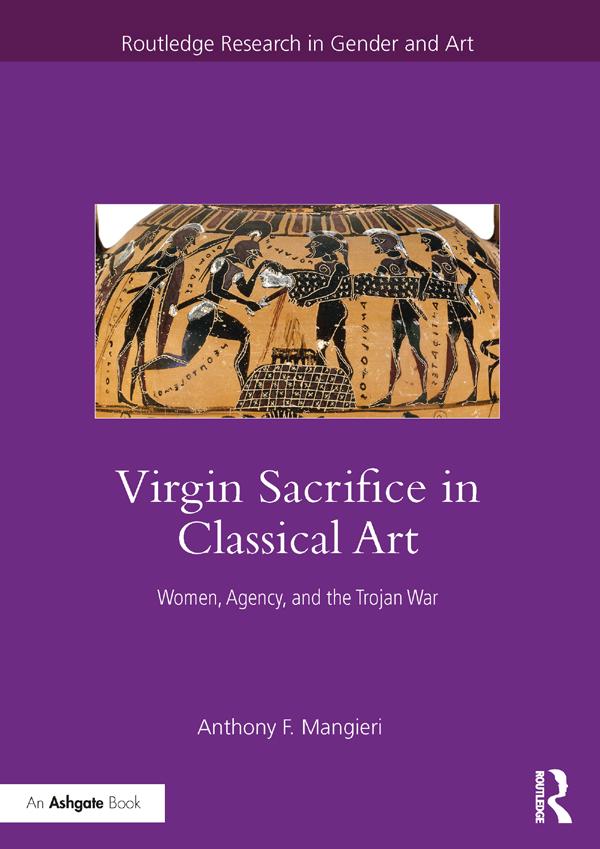
The Trojan War begins and ends with the sacrifice of a virgin princess. The gruesome killing of a woman must have captivated ancient people because the myth of the sacrificial virgin resonates powerfully in the arts of ancient Greece and Rome. Most scholars agree that the Greeks and Romans did not practice human sacrifice, so why then do the myths of virgin sacrifice appear persistently in art and literature for over a millennium? Virgin Sacrifice in Classical Art: Women, Agency, and the Trojan War seeks to answer this question.
This book tells the stories of the sacrificial maidens in order to help the reader discover the meanings bound up in these myths for historical people. In exploring the representations of Iphigeneia and Polyxena in Greek, Etruscan, and Roman art, this book offers a broader cultural history that reveals what people in the ancient world were seeking in these stories. The result is an interdisciplinary study that offers new interpretations on the meaning of the sacrificial virgin as a cultural and ideological construction. This is the first book-length study of virgin sacrifice in ancient art and the first to provide an interpretive framework within which to understand its imagery.
Maksa helposti kortilla, Klarnalla, Apple Paylla tai Google Paylla. Etkö ole tyytyväinen? Sinulla on aina 14 päivän palautusoikeus. Lue lisää ehdoistamme. Jos sinulla on kysyttävää, lähetä meille sähköpostia osoitteeseen hello@memmo.org.
Memmo tekee opiskelusta helpompaa – missä päin maailmaa ikinä oletkin. Meillä yhdistät kurssikirjat ja fiksut opiskelutyökalut yhteen paikkaan: tiivistelmät, visat, podcastit ja muistikortit. Ja sitten Ted, opiskelukaverisi, joka vastaa kaikkeen, mitä ikinä mietitkin. Yli 50 000 opiskelijaa opiskelee jo täällä – rakennettu auttamaan sinua oppimaan nopeammin ja stressaamaan vähemmän.