
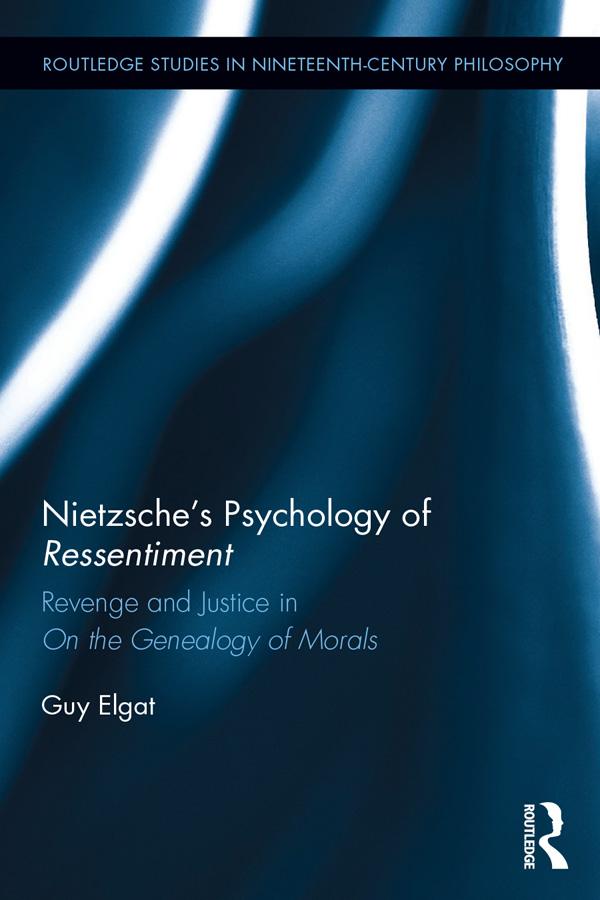
Ressentiment—the hateful desire for revenge—plays a pivotal role in Nietzsche’s On the Genealogy of Morals. Ressentiment explains the formation of bad conscience, guilt, asceticism, and, most importantly, it motivates the "slave revolt" that gives rise to Western morality’s values. Ressentiment, however, has not enjoyed a thorough treatment in the secondary literature. This book brings it sharply into focus and provides the first detailed examination of Nietzsche’s psychology of ressentiment. Unlike other books on the Genealogy, it uses ressentiment as a key to the Genealogy and focuses on the intriguing relationship between ressentiment and justice. It shows how ressentiment, despite its blindness to justice, gives rise to moral justice—the central target of Nietzsche’s critique. This critique notwithstanding, the Genealogy shows Nietzsche’s enduring commitment to the virtue of non-moral justice: a commitment that grounds his provocative view that moral justice spells the ‘end of justice’. The result provides a novel view of Nietzsche's moral psychology in the Genealogy, his critique of morality, and his views on justice.
Maksa helposti kortilla, Klarnalla, Apple Paylla tai Google Paylla. Etkö ole tyytyväinen? Sinulla on aina 14 päivän palautusoikeus. Lue lisää ehdoistamme. Jos sinulla on kysyttävää, lähetä meille sähköpostia osoitteeseen hello@memmo.org.
Memmo tekee opiskelusta helpompaa – missä päin maailmaa ikinä oletkin. Meillä yhdistät kurssikirjat ja fiksut opiskelutyökalut yhteen paikkaan: tiivistelmät, visat, podcastit ja muistikortit. Ja sitten Ted, opiskelukaverisi, joka vastaa kaikkeen, mitä ikinä mietitkin. Yli 50 000 opiskelijaa opiskelee jo täällä – rakennettu auttamaan sinua oppimaan nopeammin ja stressaamaan vähemmän.