
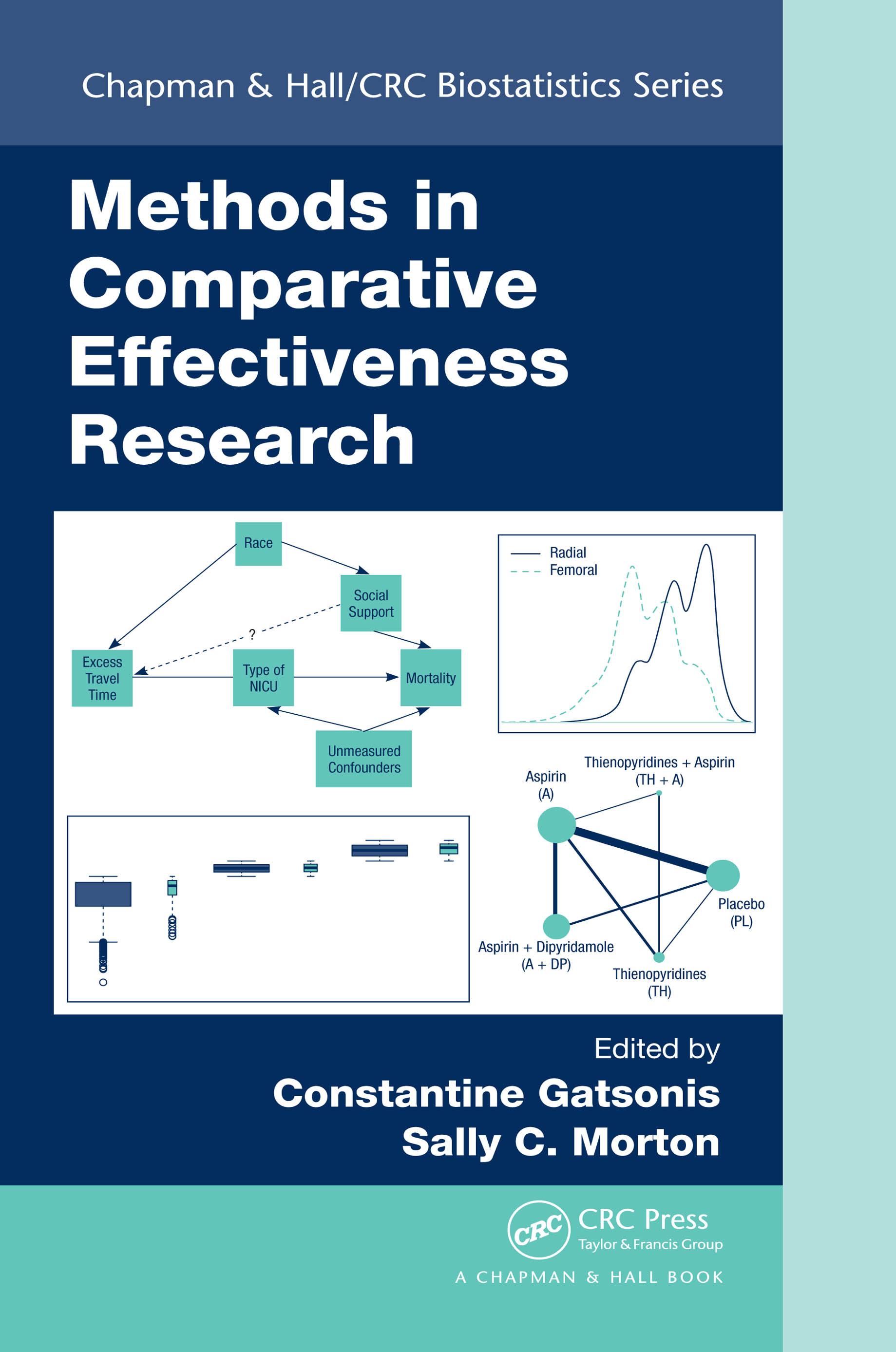
Comparative effectiveness research (CER) is the generation and synthesis of evidence that compares the benefits and harms of alternative methods to prevent, diagnose, treat, and monitor a clinical condition or to improve the delivery of care (IOM 2009). CER is conducted to develop evidence that will aid patients, clinicians, purchasers, and health policy makers in making informed decisions at both the individual and population levels. CER encompasses a very broad range of types of studies—experimental, observational, prospective, retrospective, and research synthesis.
This volume covers the main areas of quantitative methodology for the design and analysis of CER studies. The volume has four major sections—causal inference; clinical trials; research synthesis; and specialized topics. The audience includes CER methodologists, quantitative-trained researchers interested in CER, and graduate students in statistics, epidemiology, and health services and outcomes research. The book assumes a masters-level course in regression analysis and familiarity with clinical research.
Maksa helposti kortilla, Klarnalla, Apple Paylla tai Google Paylla. Etkö ole tyytyväinen? Sinulla on aina 14 päivän palautusoikeus. Lue lisää ehdoistamme. Jos sinulla on kysyttävää, lähetä meille sähköpostia osoitteeseen hello@memmo.org.
Memmo tekee opiskelusta helpompaa – missä päin maailmaa ikinä oletkin. Meillä yhdistät kurssikirjat ja fiksut opiskelutyökalut yhteen paikkaan: tiivistelmät, visat, podcastit ja muistikortit. Ja sitten Ted, opiskelukaverisi, joka vastaa kaikkeen, mitä ikinä mietitkin. Yli 50 000 opiskelijaa opiskelee jo täällä – rakennettu auttamaan sinua oppimaan nopeammin ja stressaamaan vähemmän.