
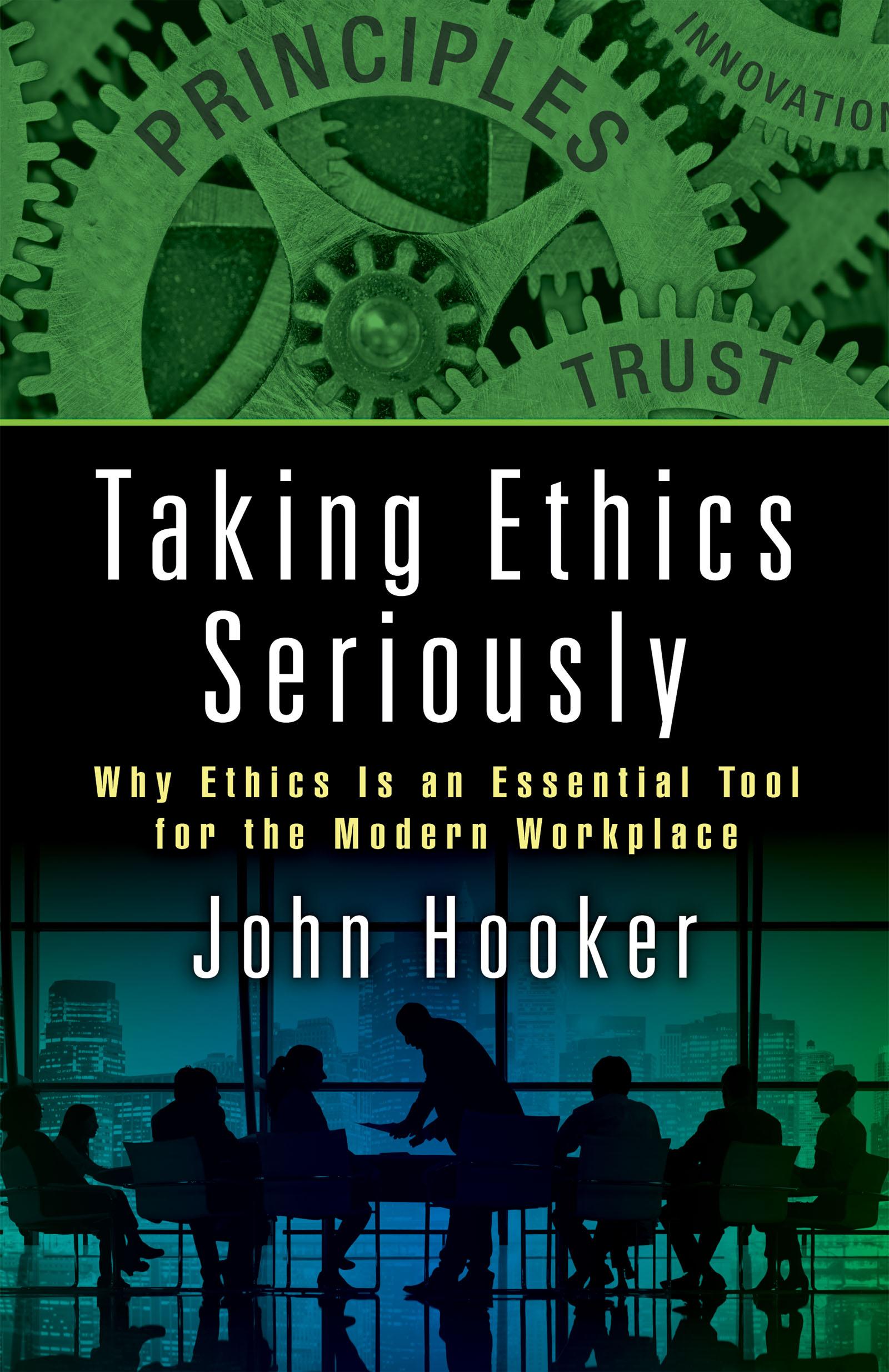
This book develops an intellectual framework for analyzing ethical dilemmas that is both grounded in theory and versatile enough to deal rigorously with real-world issues. It sees ethics as a necessary foundation for the social infrastructure that makes modern life possible, much as engineering is a foundation for physical infrastructure. It is not wedded to any particular ethical philosophy but draws from several traditions to construct a unified and principled approach to ethical reasoning. Rather than follow the common academic practice of seeking a reflective equilibrium of moral intuitions and principles, it builds on a few bedrock principles of rational thought that serve as criteria for valid argumentation. It develops the ideas from the ground up, without presupposing any background in ethics or philosophy.
Epistemologically, the book views ethics as parallel to mathematics, in that it relies on generally accepted proof techniques to establish results. Whereas mathematics rests on such proof paradigms as mathematical induction and proof by contradiction, ethics can be seen as relying on proof by applying consistency tests, such as generalizability and respect for autonomy. Utilitarianism also plays a key role, but it is reconceived as a deontological criterion. This approach obviously requires that these criteria be formulated more rigorously than is normally the case. To accomplish this, the book begins with the classical idea that an action is distinguishable from mere behavior by virtue of its having a coherent rationale, where coherence requires passing certain consistency tests such as generalizability. An action is therefore inseparable from its rationale, and generalizability is defined in terms of consistency with the rationale. A utilitarian criterion receives a similar treatment with respect to a means-end rationale. Respect for autonomy is grounded in a carefully developed action theory that takes into account such concepts as joint autonomy, implied consent, and the permissibility of interference with unethical behavior. It provides an account of responsibility that is both practical and theoretically satisfying, and it yields a novel solution of the much-discussed trolley car dilemmas.
The book is written for a general audience and strives to be as readable and engaging as possible, while maintaining rigor. It begins by dispelling a raft of misconceptions that trivialize ethics and block its development as an essential tool of modern life, such as the notion that ethics is just a matter of opinion without rational foundation. After presenting the ethical principles just described, along with many examples, it provides several chapters that analyze real-life dilemmas, many obtained from the author’s students and professional workshop participants. One cannot understand physics or chemistry without seeing how their principles are applied to real problems, and the same is true of ethics. These chapters demonstrate that a unified normative theory can deal with a wide range of real cases while achieving a reasonable level of objectivity and rigor.
Maksa helposti kortilla, Klarnalla, Apple Paylla tai Google Paylla. Etkö ole tyytyväinen? Sinulla on aina 14 päivän palautusoikeus. Lue lisää ehdoistamme. Jos sinulla on kysyttävää, lähetä meille sähköpostia osoitteeseen hello@memmo.org.
Memmo tekee opiskelusta helpompaa – missä päin maailmaa ikinä oletkin. Meillä yhdistät kurssikirjat ja fiksut opiskelutyökalut yhteen paikkaan: tiivistelmät, visat, podcastit ja muistikortit. Ja sitten Ted, opiskelukaverisi, joka vastaa kaikkeen, mitä ikinä mietitkin. Yli 50 000 opiskelijaa opiskelee jo täällä – rakennettu auttamaan sinua oppimaan nopeammin ja stressaamaan vähemmän.