
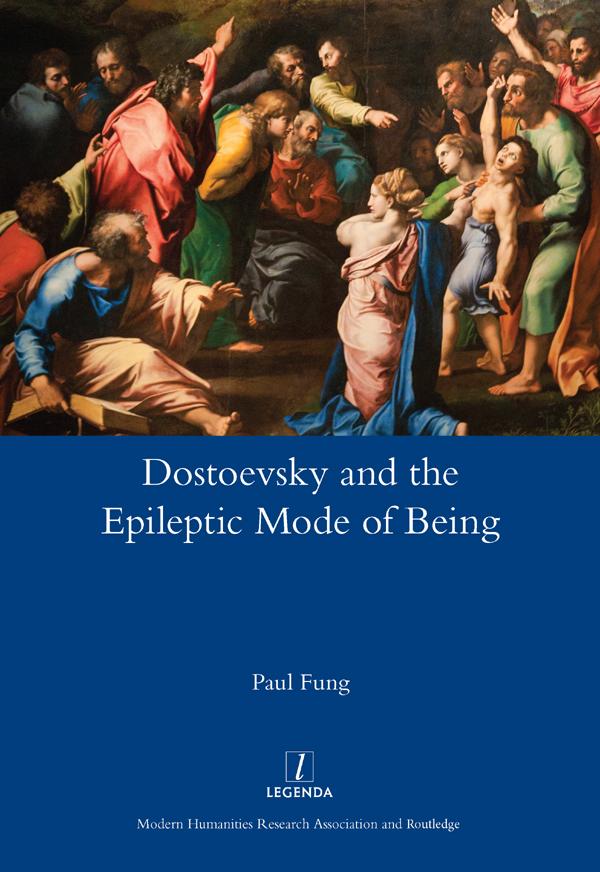
For Fyodor Dostoevsky (1821-81), who lived with epileptic seizures for more than thirty years, illness is an ineradicable part of existence. Epilepsy in his writings denotes both a set of physical symptoms and a state of survival in which the protagonists incessantly try to articulate, theorize, or master what is ungraspable in their everyday experience. Their attempts to deal with what they cannot control or comprehend results in disappointment, or what Dostoevsky called a mystical terror. Dostoevsky's heroes are unable fully to understand this state, and their existence becomes 'epileptic' in so far as self-knowledge and self-coincidence are never achieved. Fung explores new critical pathways by reexamining five of Dostoevsky's post-Siberian novels. Drawing on insights from writers including Benjamin, Blanchot, Freud, Lacan and Nietzsche, the book takes epilepsy as a trope for discussing the unspeakable moments in the texts, and is intended for students and scholars who are interested in the subject of modernity, critique of the visual, and dialogues between philosophy and literature. Paul Fung is Assistant Professor in English at Hang Seng Management College, Hong Kong.
Maksa helposti kortilla, Klarnalla, Apple Paylla tai Google Paylla. Etkö ole tyytyväinen? Sinulla on aina 14 päivän palautusoikeus. Lue lisää ehdoistamme. Jos sinulla on kysyttävää, lähetä meille sähköpostia osoitteeseen hello@memmo.org.
Memmo tekee opiskelusta helpompaa – missä päin maailmaa ikinä oletkin. Meillä yhdistät kurssikirjat ja fiksut opiskelutyökalut yhteen paikkaan: tiivistelmät, visat, podcastit ja muistikortit. Ja sitten Ted, opiskelukaverisi, joka vastaa kaikkeen, mitä ikinä mietitkin. Yli 50 000 opiskelijaa opiskelee jo täällä – rakennettu auttamaan sinua oppimaan nopeammin ja stressaamaan vähemmän.
Saatat pitää myös näistä
Osta kirja0