
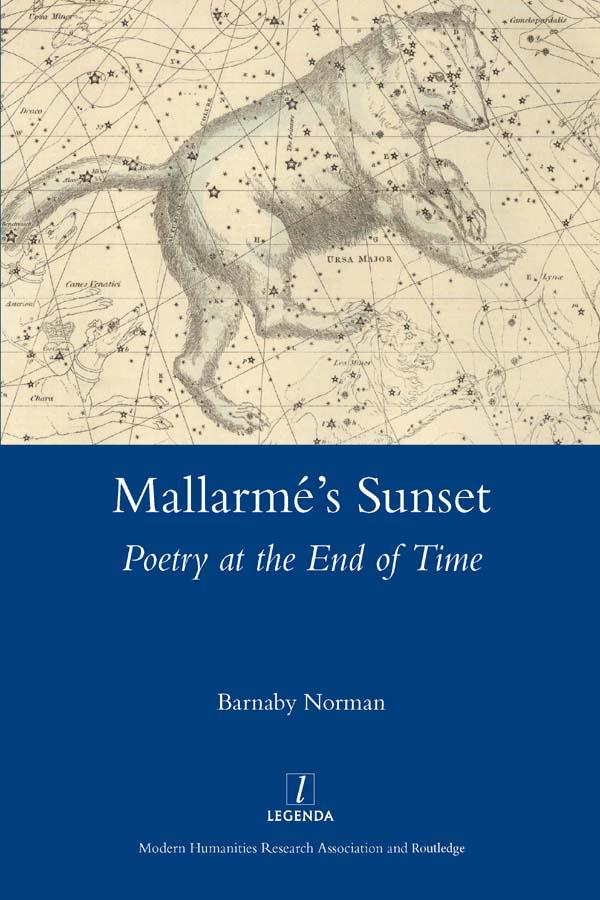
The writings of the great Symbolist poet Stephane Mallarme (1842-1898) were to become uniquely influential in twentieth century literary criticism. For critics and philosophers such as Maurice Blanchot and Jacques Derrida, Mallarme's name came to represent a rupture in literary history, and an opening of literature onto a radically new kind of writing. Through close readings of key works, Norman retraces Mallarme's trajectory as a poet, showing in particular how he positioned his work in relation to Hegel's Aesthetics. Analysing the motif of the sunset Norman argues that Mallarme situated his work at the conclusion of the history of art, in Hegelian terms, and it is this that made him so interesting for Blanchot and Derrida. Their readings, born of their wish to subvert Hegel's totalizing impulse, give rise to an entirely new view of works now almost universally seen as masterpieces.
Maksa helposti kortilla, Klarnalla, Apple Paylla tai Google Paylla. Etkö ole tyytyväinen? Sinulla on aina 14 päivän palautusoikeus. Lue lisää ehdoistamme. Jos sinulla on kysyttävää, lähetä meille sähköpostia osoitteeseen hello@memmo.org.
Memmo tekee opiskelusta helpompaa – missä päin maailmaa ikinä oletkin. Meillä yhdistät kurssikirjat ja fiksut opiskelutyökalut yhteen paikkaan: tiivistelmät, visat, podcastit ja muistikortit. Ja sitten Ted, opiskelukaverisi, joka vastaa kaikkeen, mitä ikinä mietitkin. Yli 50 000 opiskelijaa opiskelee jo täällä – rakennettu auttamaan sinua oppimaan nopeammin ja stressaamaan vähemmän.
Saatat pitää myös näistä
Osta kirja0