
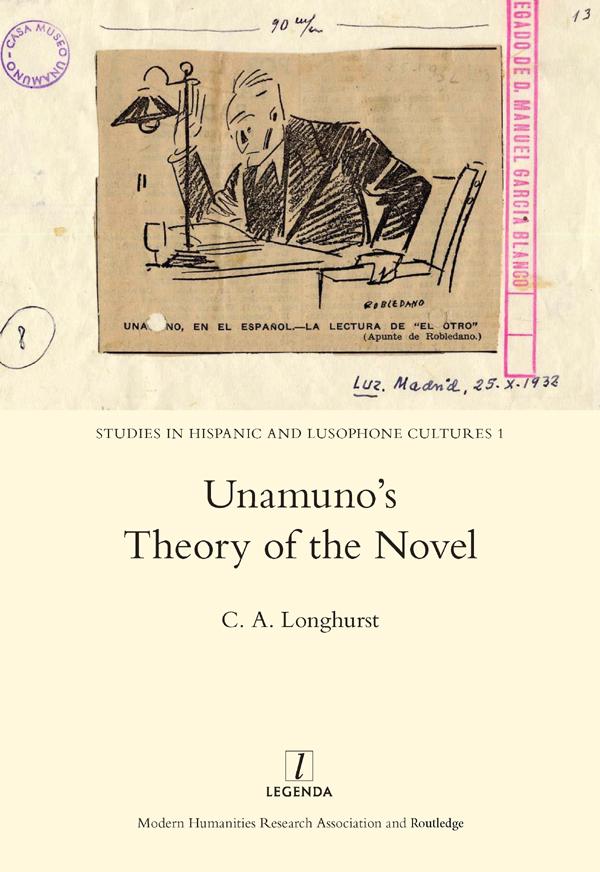
Miguel de Unamuno (1864-1936) is widely regarded as Spain's greatest and most controversial writer of the first half of the twentieth century. Professor of Greek, and later Rector, at the University of Salamanca, and a figure with a noted public profile in his day, he wrote a large number of philosophical, political and philological essays, as well as poems, plays and short stories, but it is his highly idiosyncratic novels, for which he coined the word nivola, that have attracted the greatest critical attention. Niebla (Mist, 1914) has become one of the most studied works of Spanish literature, such is the enduring fascination which it has provoked. In this study, C. A. Longhurst, a distinguished Unamuno scholar, sets out to show that behind Unamuno's fictional experiments there lies a coherent and quasi-philosophical concept of the novelesque genre and indeed of writing itself. Ideas about freedom, identity, finality, mutuality and community are closely intertwined with ideas on writing and reading and give rise to a new and highly personal way of conceiving fiction.
Maksa helposti kortilla, Klarnalla, Apple Paylla tai Google Paylla. Etkö ole tyytyväinen? Sinulla on aina 14 päivän palautusoikeus. Lue lisää ehdoistamme. Jos sinulla on kysyttävää, lähetä meille sähköpostia osoitteeseen hello@memmo.org.
Memmo tekee opiskelusta helpompaa – missä päin maailmaa ikinä oletkin. Meillä yhdistät kurssikirjat ja fiksut opiskelutyökalut yhteen paikkaan: tiivistelmät, visat, podcastit ja muistikortit. Ja sitten Ted, opiskelukaverisi, joka vastaa kaikkeen, mitä ikinä mietitkin. Yli 50 000 opiskelijaa opiskelee jo täällä – rakennettu auttamaan sinua oppimaan nopeammin ja stressaamaan vähemmän.
Saatat pitää myös näistä
Osta kirja0