
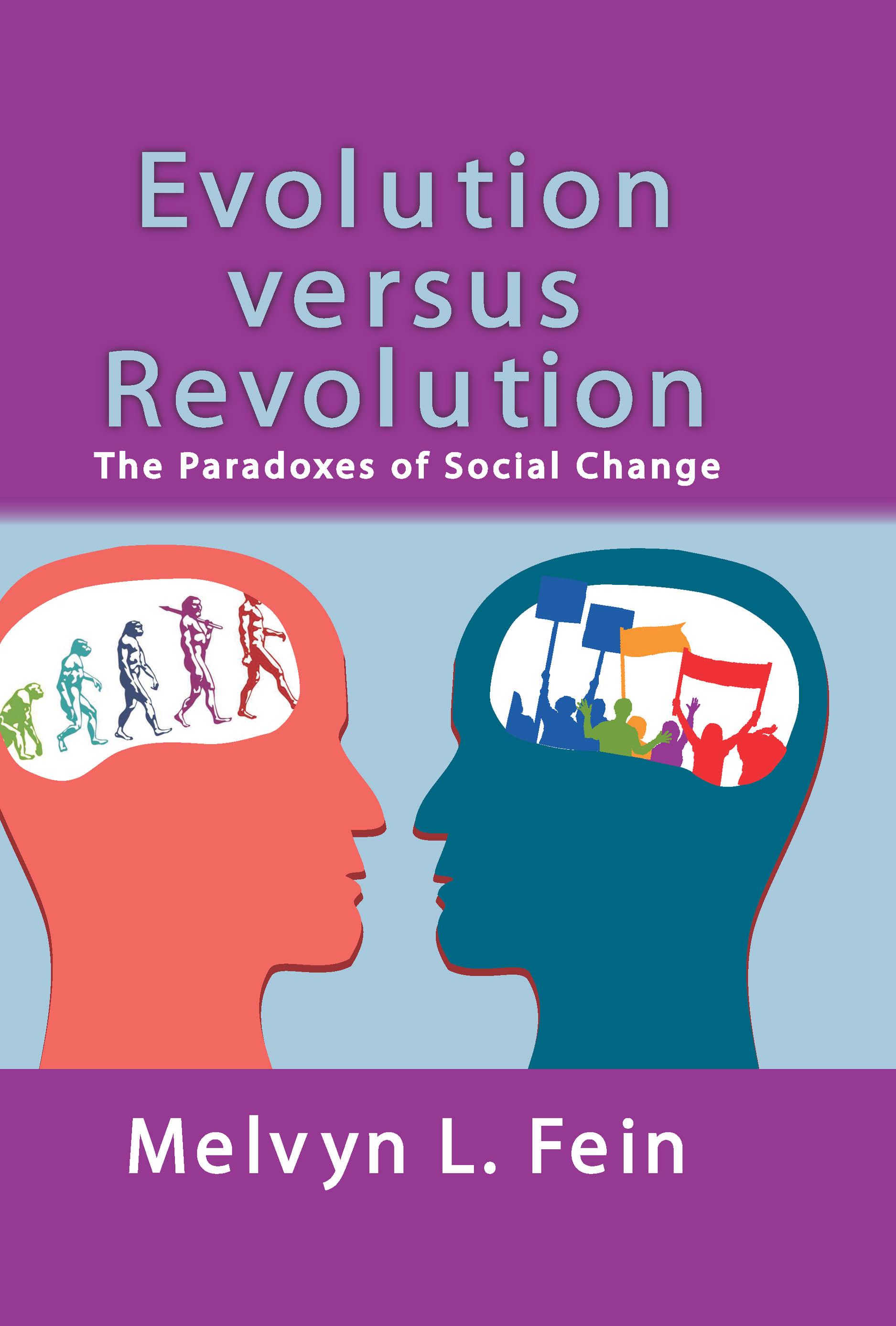
Revolutionary and evolutionary theorists have very different views about change; Fein writes in favour of evolution. He proposes an integrated model of social evolution, one that accounts for the complexity, inconclusiveness, and impediments that characterize social transformations.This multi-dimensional approach recognizes that change is always saturated in conflict. Major changes are rarely initiated by conscious decisions that are automatically implemented; power and morality generally control the direction that significant alterations take. Fein explains how the social generalist dilemma places our need for both flexibility and stability in opposition to each other such that non-rational mechanisms are needed to produce a solution. He also describes how an "inverse force rule" dictates that small societies are bound together by strong social forces, whereas large ones are secured by weak forces. This suggests that social roles are likely to become professionalized over time.If social change is, in fact, analogous to natural rather than artificial selection, we may be in the midst of an only partially predictable middle class revolution. Indeed, the current impasse between liberals and conservatives may be evidence that we are in the consolidation phase of this process. Should this be the case, a paradigm shift, not a classical revolution, is in our future.
Maksa helposti kortilla, Klarnalla, Apple Paylla tai Google Paylla. Etkö ole tyytyväinen? Sinulla on aina 14 päivän palautusoikeus. Lue lisää ehdoistamme. Jos sinulla on kysyttävää, lähetä meille sähköpostia osoitteeseen hello@memmo.org.
Memmo tekee opiskelusta helpompaa – missä päin maailmaa ikinä oletkin. Meillä yhdistät kurssikirjat ja fiksut opiskelutyökalut yhteen paikkaan: tiivistelmät, visat, podcastit ja muistikortit. Ja sitten Ted, opiskelukaverisi, joka vastaa kaikkeen, mitä ikinä mietitkin. Yli 50 000 opiskelijaa opiskelee jo täällä – rakennettu auttamaan sinua oppimaan nopeammin ja stressaamaan vähemmän.
Saatat pitää myös näistä
Osta kirja0