
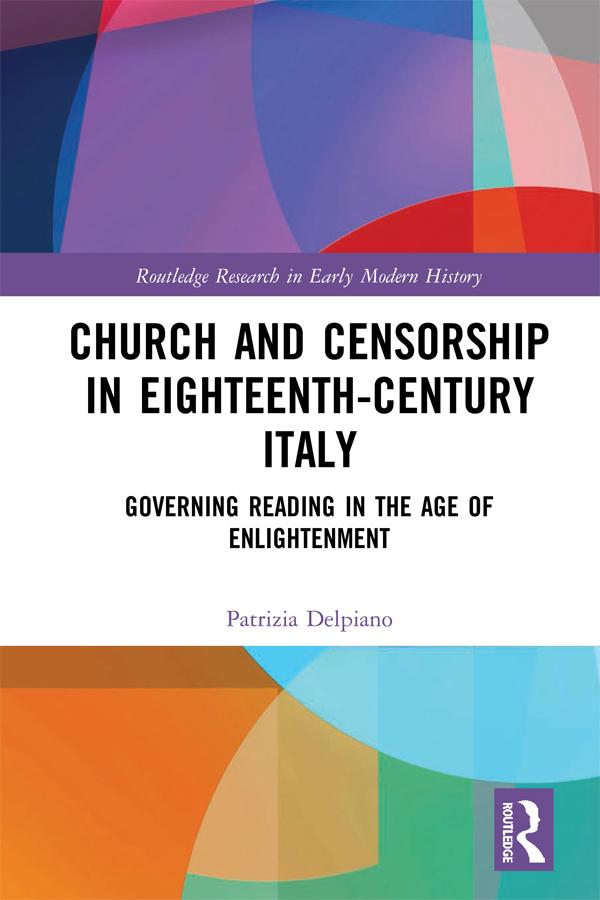
Dealing with the issue of ecclesiastical censorship and control over reading and readers, this study challenges the traditional view that during the eighteenth century the Catholic Church in Italy underwent an inexorable decline. It reconstructs the strategies used by the ecclesiastical leadership to regulate the press and culture during a century characterized by important changes, from the spread of the Enlightenment to the creation of a state censorship apparatus. Based on the archival records of the Roman Inquisition and the Congregation of the Index of Forbidden Books preserved in the Vatican, it provides a comprehensive analysis of the Catholic Church’s endeavour to keep literature and reading in check by means of censorship and the promotion of a "good" press.
The crisis of the Inquisition system did not imply a general diminution of the Church’s involvement in controlling the press. Rather than being effective instruments of repression, the Inquisition and the Index combined to create an ideological apparatus to resist new ideas and to direct public opinion. This was a network mainly inspired by Counter-Enlightenment principles which would go on to influence the Church’s action well beyond the eighteenth century.
This book is an English translation of Il governo della lettura: Chiesa e libri nell’Italia del Settecento (Bologna: Il Mulino, 2007).
Maksa helposti kortilla, Klarnalla, Apple Paylla tai Google Paylla. Etkö ole tyytyväinen? Sinulla on aina 14 päivän palautusoikeus. Lue lisää ehdoistamme. Jos sinulla on kysyttävää, lähetä meille sähköpostia osoitteeseen hello@memmo.org.
Memmo tekee opiskelusta helpompaa – missä päin maailmaa ikinä oletkin. Meillä yhdistät kurssikirjat ja fiksut opiskelutyökalut yhteen paikkaan: tiivistelmät, visat, podcastit ja muistikortit. Ja sitten Ted, opiskelukaverisi, joka vastaa kaikkeen, mitä ikinä mietitkin. Yli 50 000 opiskelijaa opiskelee jo täällä – rakennettu auttamaan sinua oppimaan nopeammin ja stressaamaan vähemmän.