
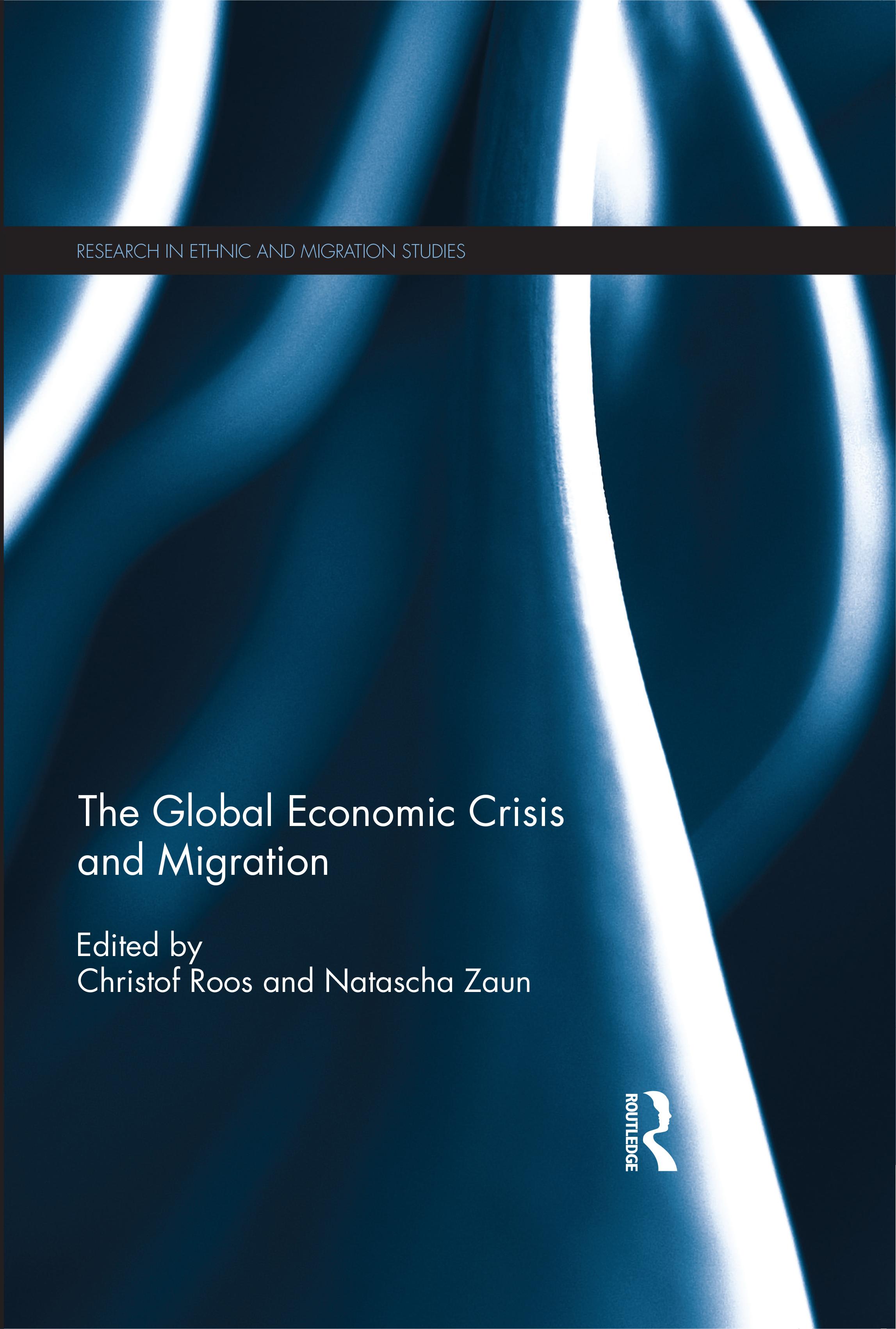
Offering an in-depth analysis of the impact of the economic crisis (2008–2012) on immigration movements and policies in the U.S. and Europe, the analysis in this book is guided by two key questions: What is the scope of change?; and did the crisis motivate this change or did other factors do so?
The contributions to the book find that the crisis had immediate effects on migration patterns – migrants left crisis-stricken countries, naturalised in non-crisis countries where they had previously settled, or stopped migrating to formerly attractive countries which had been negatively affected by the crisis. Whereas prior to the crisis the majority of migrants were highly-skilled, during the crisis there was a shift to vulnerable groups such as low-skilled workers and women.
The book also finds that migration policies have indeed changed in times of crisis. However, these changes are neither exclusively restrictions nor liberalisations, but encompass changes in both directions. Despite the coincidence of many policy changes with the crisis, these changes are not primarily induced by the crisis. Instead, politicians rhetorically used the crisis to promote both liberal and restrictive policy changes which were already in the making before the crisis. This book was originally published as a special issue of the Journal of Ethnic and Migration Studies.
Maksa helposti kortilla, Klarnalla, Apple Paylla tai Google Paylla. Etkö ole tyytyväinen? Sinulla on aina 14 päivän palautusoikeus. Lue lisää ehdoistamme. Jos sinulla on kysyttävää, lähetä meille sähköpostia osoitteeseen hello@memmo.org.
Memmo tekee opiskelusta helpompaa – missä päin maailmaa ikinä oletkin. Meillä yhdistät kurssikirjat ja fiksut opiskelutyökalut yhteen paikkaan: tiivistelmät, visat, podcastit ja muistikortit. Ja sitten Ted, opiskelukaverisi, joka vastaa kaikkeen, mitä ikinä mietitkin. Yli 50 000 opiskelijaa opiskelee jo täällä – rakennettu auttamaan sinua oppimaan nopeammin ja stressaamaan vähemmän.