
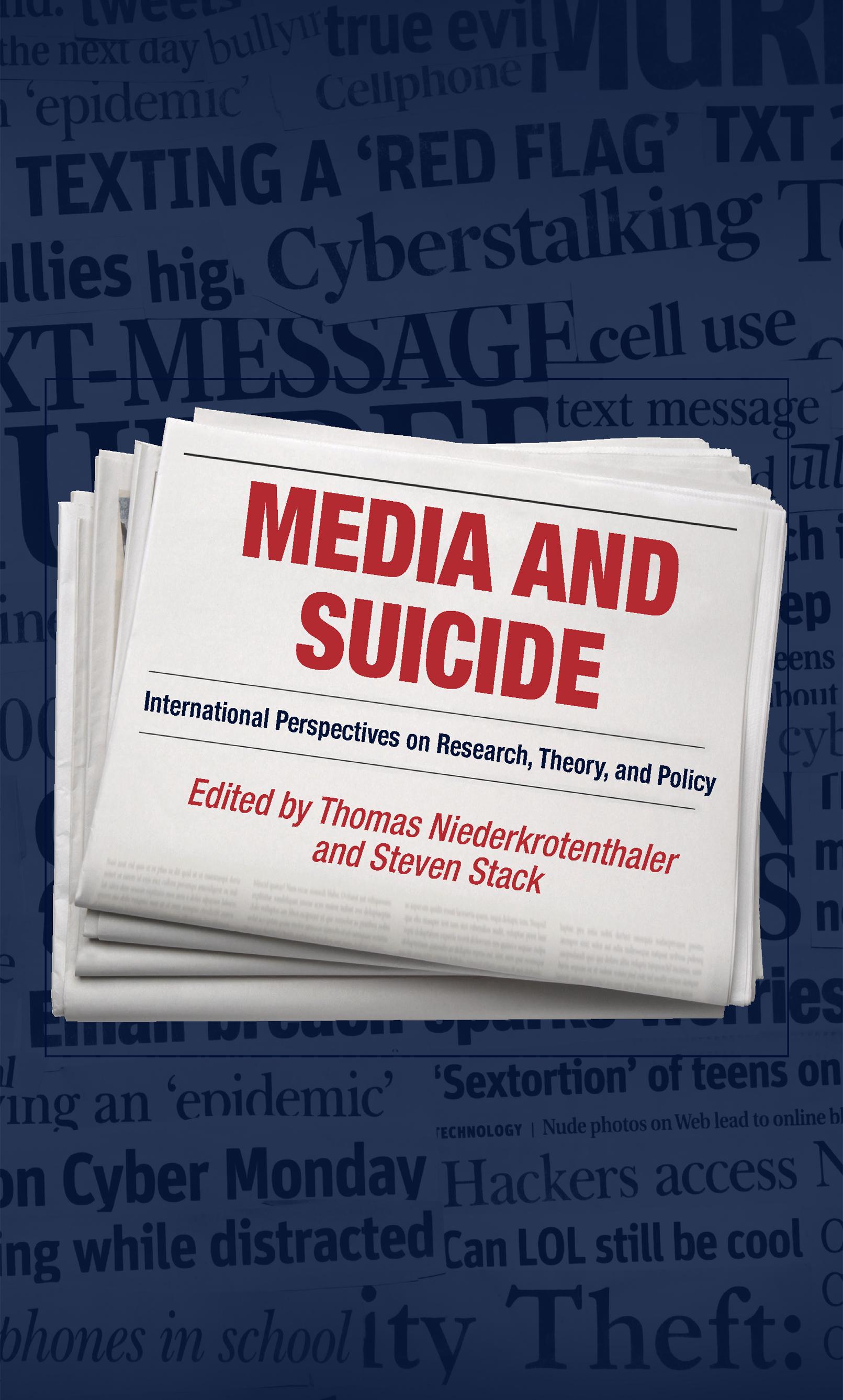
Somewhere in the world, in the next forty seconds, a person is going to commit suicide. Globally, suicides account for 50 percent of all violent deaths among men and 71 percent for women. Despite suicide prevention programs, therapy, and pharmacological treatments, the suicide rate is either increasing or remaining high around the world.
Media and Suicide holds traditional and emergent media accountable for influencing an individual’s decision to commit suicide. Global experts present research, historical analysis, theoretical disputes (including discussion on the Werther and Papageno effects), and policy regarding the media’s impact on suicide. They answer questions about the effects of different types of media and storytelling, show how the impact of social media can be diminished, discuss internet bullying, mass-shootings and mass-suicides, show the effects of recovery stories, and much more.
The editors also present examples of suicide policy in the United States, Switzerland, the United Kingdom, Ireland, and Hong Kong on how to best communicate reporting guidelines to decrease the copycat effect, especially in less developed nations where most of the world’s nearly one million suicides occur each year. Although there is much work to be done to prevent media-influenced suicide, this innovative volume will contribute a large piece to this complex puzzle.
Maksa helposti kortilla, Klarnalla, Apple Paylla tai Google Paylla. Etkö ole tyytyväinen? Sinulla on aina 14 päivän palautusoikeus. Lue lisää ehdoistamme. Jos sinulla on kysyttävää, lähetä meille sähköpostia osoitteeseen hello@memmo.org.
Memmo tekee opiskelusta helpompaa – missä päin maailmaa ikinä oletkin. Meillä yhdistät kurssikirjat ja fiksut opiskelutyökalut yhteen paikkaan: tiivistelmät, visat, podcastit ja muistikortit. Ja sitten Ted, opiskelukaverisi, joka vastaa kaikkeen, mitä ikinä mietitkin. Yli 50 000 opiskelijaa opiskelee jo täällä – rakennettu auttamaan sinua oppimaan nopeammin ja stressaamaan vähemmän.