
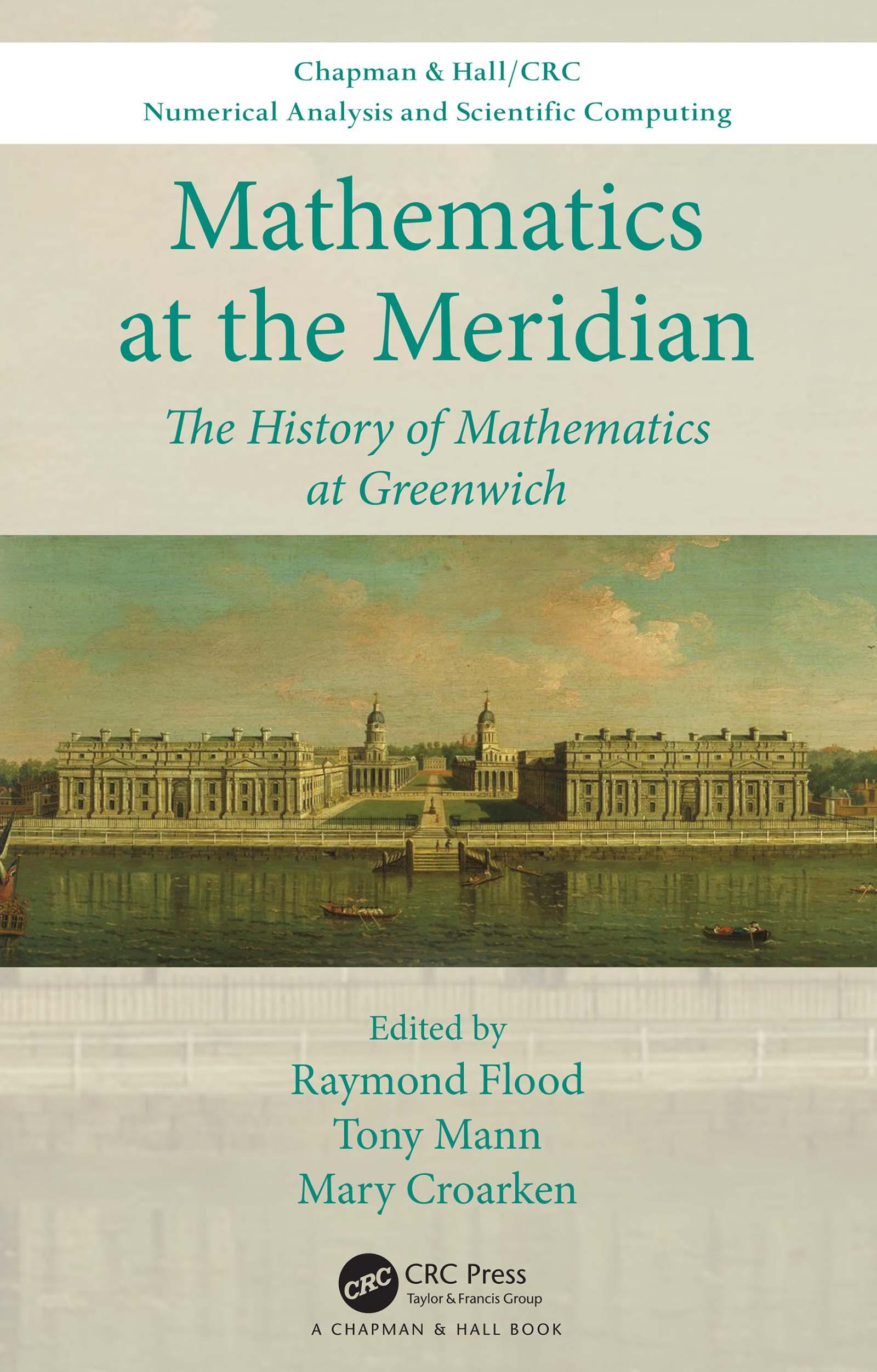
Greenwich has been a centre for scientific computing since the foundation of the Royal Observatory in 1675. Early Astronomers Royal gathered astronomical data with the purpose of enabling navigators to compute their longitude at sea. Nevil Maskelyne in the 18th century organised the work of computing tables for the Nautical Almanac, anticipating later methods used in safety-critical computing systems. The 19th century saw influential critiques of Charles Babbage’s mechanical calculating engines, and in the 20th century Leslie Comrie and others pioneered the automation of computation. The arrival of the Royal Naval College in 1873 and the University of Greenwich in 1999 has brought more mathematicians and different kinds of mathematics to Greenwich. In the 21st century computational mathematics has found many new applications. This book presents an account of the mathematicians who worked at Greenwich and their achievements.
Features
- A scholarly but accessible history of mathematics at Greenwich, from the seventeenth century to the present day, with each chapter written by an expert in the field
- The book will appeal to astronomical and naval historians as well as historians of mathematics and scientific computing.
Maksa helposti kortilla, Klarnalla, Apple Paylla tai Google Paylla. Etkö ole tyytyväinen? Sinulla on aina 14 päivän palautusoikeus. Lue lisää ehdoistamme. Jos sinulla on kysyttävää, lähetä meille sähköpostia osoitteeseen hello@memmo.org.
Memmo tekee opiskelusta helpompaa – missä päin maailmaa ikinä oletkin. Meillä yhdistät kurssikirjat ja fiksut opiskelutyökalut yhteen paikkaan: tiivistelmät, visat, podcastit ja muistikortit. Ja sitten Ted, opiskelukaverisi, joka vastaa kaikkeen, mitä ikinä mietitkin. Yli 50 000 opiskelijaa opiskelee jo täällä – rakennettu auttamaan sinua oppimaan nopeammin ja stressaamaan vähemmän.