
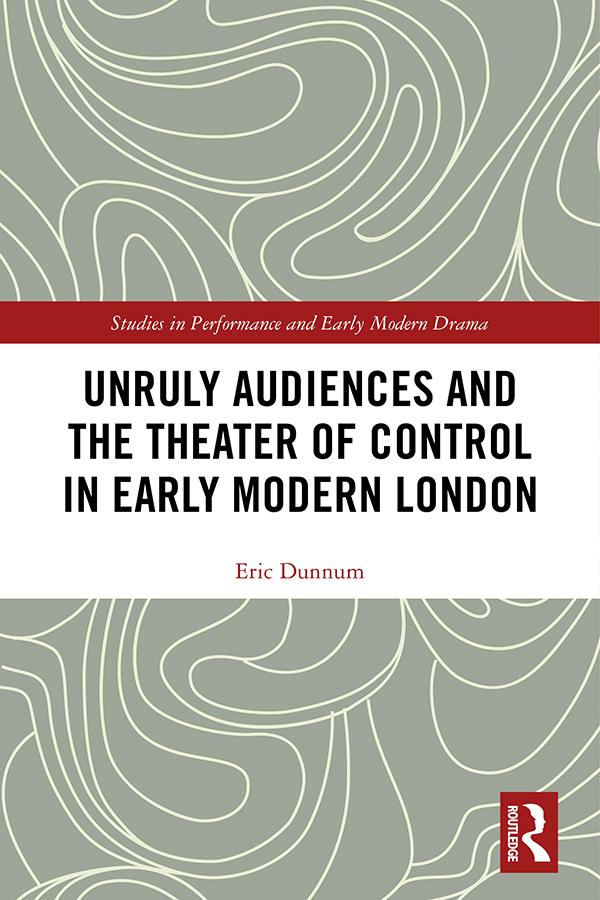
Unruly Audiences and the Theater of Control in Early Modern London explores the effects of audience riots on the dramaturgy of early modern playwrights, arguing that playwrights from Marlowe to Brome often used their plays to control the physical reactions of their audience.
This study analyses how, out of anxiety that unruly audiences would destroy the nascent industry of professional drama in England, playwrights sought to limit the effect that their plays could have on the audience. They tried to construct playgoing through their drama in the hopes of creating a less-reactive, more pensive, and controlled playgoer. The result was the radical experimentation in dramaturgy that, in part, defines Renaissance drama.
Written for scholars of Early Modern and Renaissance Drama and Theatre, Theatre History, and Early Modern and Renaissance History, this book calls for a new focus on the local economic concerns of the theatre companies as a way to understand the motivation behind the drama of early modern London.
Maksa helposti kortilla, Klarnalla, Apple Paylla tai Google Paylla. Etkö ole tyytyväinen? Sinulla on aina 14 päivän palautusoikeus. Lue lisää ehdoistamme. Jos sinulla on kysyttävää, lähetä meille sähköpostia osoitteeseen hello@memmo.org.
Memmo tekee opiskelusta helpompaa – missä päin maailmaa ikinä oletkin. Meillä yhdistät kurssikirjat ja fiksut opiskelutyökalut yhteen paikkaan: tiivistelmät, visat, podcastit ja muistikortit. Ja sitten Ted, opiskelukaverisi, joka vastaa kaikkeen, mitä ikinä mietitkin. Yli 50 000 opiskelijaa opiskelee jo täällä – rakennettu auttamaan sinua oppimaan nopeammin ja stressaamaan vähemmän.