
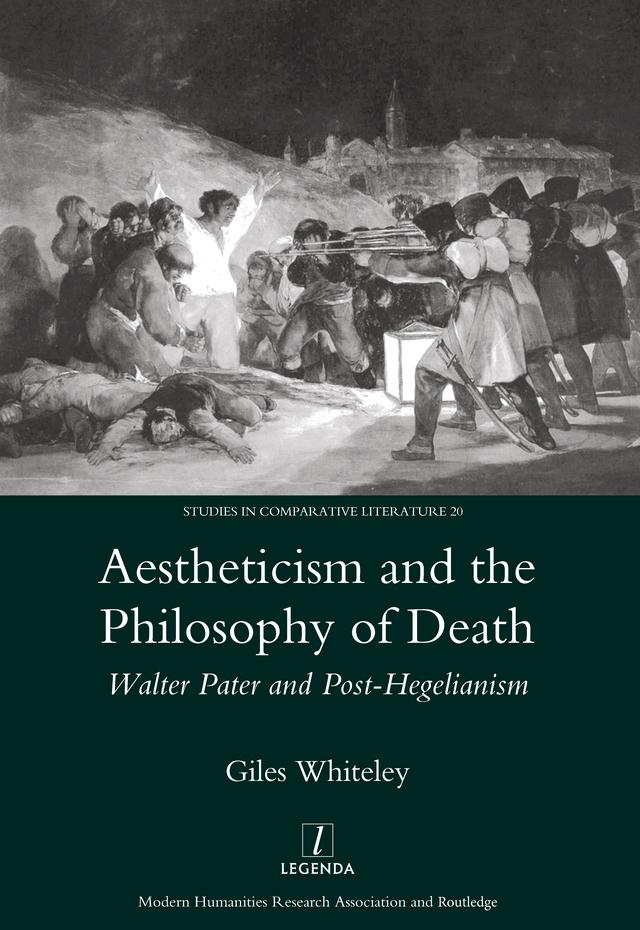
"Walter Pater, best known as the author of The Renaissance (1873) and as Oscar Wildes tutor and friend, was a leading figure in European aestheticism and British fin-de-siecle culture. Despite this, he has received only limited critical attention, and has tended to be read conservatively. Drawing on Paters unpublished manuscripts, Giles Whiteley challenges this view of Pater as a closeted don who spend the remainder of his life regretting the excesses of his Renaissance. Focusing on Paters reading of the German idealist philosopher, G. W. F. Hegel, Whiteley argues that Paters response to both the philosophical and the ideological legacies of idealism was significantly more advanced than has been hitherto thought. Presenting a persuasive new reading of the genre of the imaginary portrait Paters most elusive form of writing the book paints a picture of Walter Pater as a truly revolutionary thinker. Pater, like Nietzsche during the same period, breaks with the dialectic as a method. Anticipating the radical critiques of ideology of post- Hegelians such as Derrida and Deleuze, Pater becomes a radical and transgressive thinker in his own right."
Maksa helposti kortilla, Klarnalla, Apple Paylla tai Google Paylla. Etkö ole tyytyväinen? Sinulla on aina 14 päivän palautusoikeus. Lue lisää ehdoistamme. Jos sinulla on kysyttävää, lähetä meille sähköpostia osoitteeseen hello@memmo.org.
Memmo tekee opiskelusta helpompaa – missä päin maailmaa ikinä oletkin. Meillä yhdistät kurssikirjat ja fiksut opiskelutyökalut yhteen paikkaan: tiivistelmät, visat, podcastit ja muistikortit. Ja sitten Ted, opiskelukaverisi, joka vastaa kaikkeen, mitä ikinä mietitkin. Yli 50 000 opiskelijaa opiskelee jo täällä – rakennettu auttamaan sinua oppimaan nopeammin ja stressaamaan vähemmän.
Saatat pitää myös näistä
Osta kirja0