
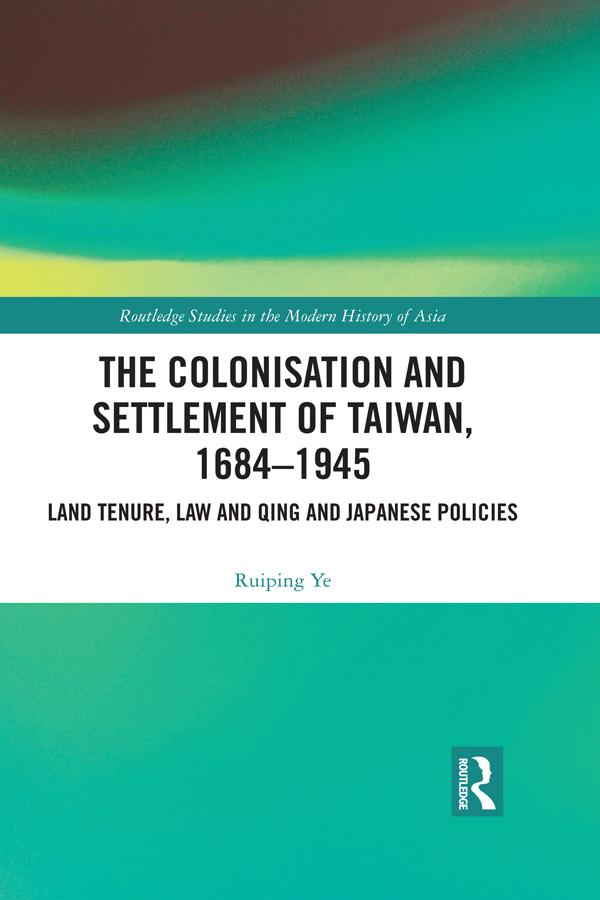
The dispossession of indigenous peoples by conquest regimes remains a pressing issue. This book, unlike most other books on the subject, contrasts two different colonial administrations – first the Chinese Qing Empire, then, from 1895, the Japanese. It shows how, under the Chinese legal system, the Qing employed the Chinese legal system to manage the relationship between the increasing numbers of Han Chinese settlers and the indigenous peoples, and how, although the Qing regime refrained from taking actions to transform aboriginal land tenure, nevertheless Chinese settlers were able to manipulate aboriginal land tenure to their advantage. It goes on to examine the very different approach of the Japanese colonial administration, which following the Meiji Restoration of 1868 had begun to adopt a Western legal framework, demonstrating how this was intentionally much more intrusive, and how the Japanese modernized legal framework significantly disrupted aboriginal land tenure. Based on extensive original research, the book provides important insights into colonisation, different legal traditions and the impact of colonial settlement on indigenous peoples.
Maksa helposti kortilla, Klarnalla, Apple Paylla tai Google Paylla. Etkö ole tyytyväinen? Sinulla on aina 14 päivän palautusoikeus. Lue lisää ehdoistamme. Jos sinulla on kysyttävää, lähetä meille sähköpostia osoitteeseen hello@memmo.org.
Memmo tekee opiskelusta helpompaa – missä päin maailmaa ikinä oletkin. Meillä yhdistät kurssikirjat ja fiksut opiskelutyökalut yhteen paikkaan: tiivistelmät, visat, podcastit ja muistikortit. Ja sitten Ted, opiskelukaverisi, joka vastaa kaikkeen, mitä ikinä mietitkin. Yli 50 000 opiskelijaa opiskelee jo täällä – rakennettu auttamaan sinua oppimaan nopeammin ja stressaamaan vähemmän.