
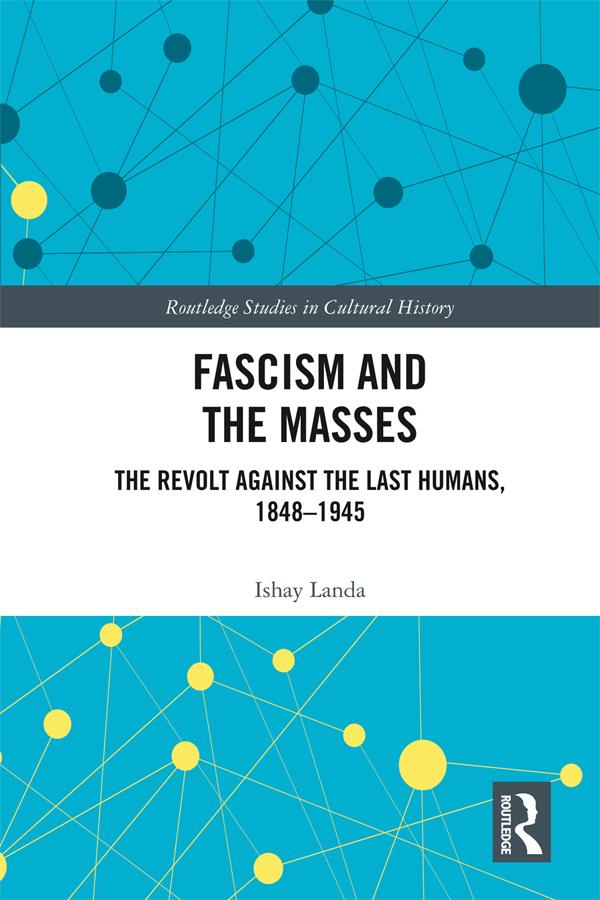
Highlighting the "mass" nature of interwar European fascism has long become commonplace. Throughout the years, numerous critics have construed fascism as a phenomenon of mass society, perhaps the ultimate expression of mass politics. This study deconstructs this long-standing perception. It argues that the entwining of fascism with the masses is a remarkable transubstantiation of a movement which understood and presented itself as a militant rejection of the ideal of mass politics, and indeed of mass society and mass culture more broadly conceived. Thus, rather than "massifying" society, fascism was the culmination of a long effort on the part of the élites and the middle-classes to de-massify it. The perennially menacing mass – seen as plebeian and insubordinate – was to be drilled into submission, replaced by supposedly superior collective entities, such as the nation, the race, or the people. Focusing on Italian fascism and German National Socialism, but consulting fascist movements and individuals elsewhere in interwar Europe, the book incisively shows how fascism is best understood as ferociously resisting what Elias referred to as "the civilizing process" and what Marx termed "the social individual." Fascism, notably, was a revolt against what Nietzsche described as the peaceful, middling and egalitarian "Last Humans."
Maksa helposti kortilla, Klarnalla, Apple Paylla tai Google Paylla. Etkö ole tyytyväinen? Sinulla on aina 14 päivän palautusoikeus. Lue lisää ehdoistamme. Jos sinulla on kysyttävää, lähetä meille sähköpostia osoitteeseen hello@memmo.org.
Memmo tekee opiskelusta helpompaa – missä päin maailmaa ikinä oletkin. Meillä yhdistät kurssikirjat ja fiksut opiskelutyökalut yhteen paikkaan: tiivistelmät, visat, podcastit ja muistikortit. Ja sitten Ted, opiskelukaverisi, joka vastaa kaikkeen, mitä ikinä mietitkin. Yli 50 000 opiskelijaa opiskelee jo täällä – rakennettu auttamaan sinua oppimaan nopeammin ja stressaamaan vähemmän.