
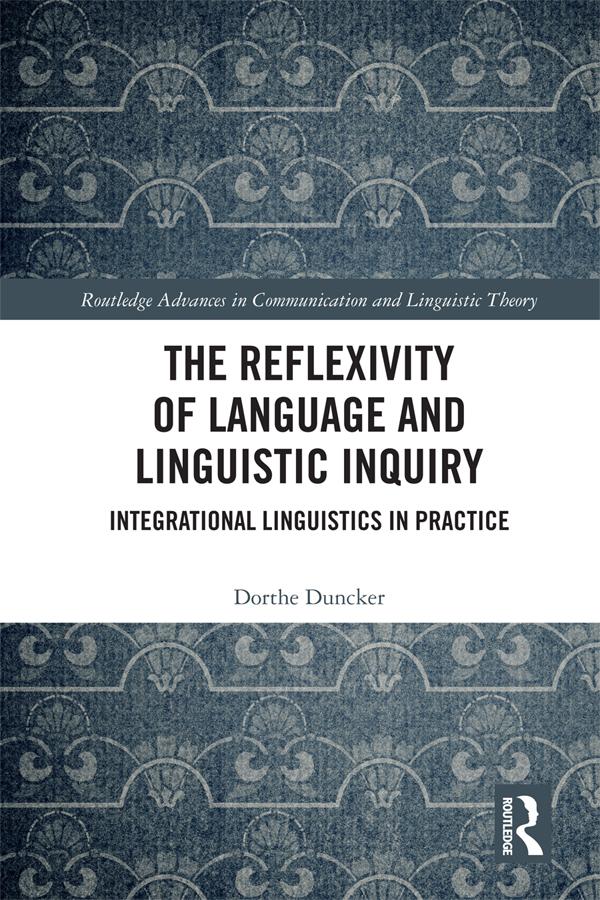
This book explores the reflexivity of language both from the perspective of the lay speaker and the linguistic analyst. Linguistic inquiry is conditional upon linguistic reflexivity, but so is language. Without linguistic reflexivity, we would not be able to make sense of everyday linguistic communication, and the idea of a language would not be conceivable. Not even fundamental notions such as words or meaning would exist. Linguistic reflexivity is a feature of the communication process, and it essentially depends on situated participants and time. It is a defining characteristic of the human language but despite its obvious importance, it is not very well understood theoretically, and it is strangely under-researched empirically. Throughout history and in modern linguistics, it has mostly either been taken for granted, misconstrued, or ignored. Only integrational linguistics fully recognizes its specifically linguistic implications. However, integrational linguistics does not provide the necessary methodological basis for investigating linguistic phenomena empirically. This catch-22 situation means that the goal of the book is twofold: one part is to explore the reflexivity of language theoretically, and the other part is to propose an applied integrational linguistics and to implement this proposal in practice.
Maksa helposti kortilla, Klarnalla, Apple Paylla tai Google Paylla. Etkö ole tyytyväinen? Sinulla on aina 14 päivän palautusoikeus. Lue lisää ehdoistamme. Jos sinulla on kysyttävää, lähetä meille sähköpostia osoitteeseen hello@memmo.org.
Memmo tekee opiskelusta helpompaa – missä päin maailmaa ikinä oletkin. Meillä yhdistät kurssikirjat ja fiksut opiskelutyökalut yhteen paikkaan: tiivistelmät, visat, podcastit ja muistikortit. Ja sitten Ted, opiskelukaverisi, joka vastaa kaikkeen, mitä ikinä mietitkin. Yli 50 000 opiskelijaa opiskelee jo täällä – rakennettu auttamaan sinua oppimaan nopeammin ja stressaamaan vähemmän.