
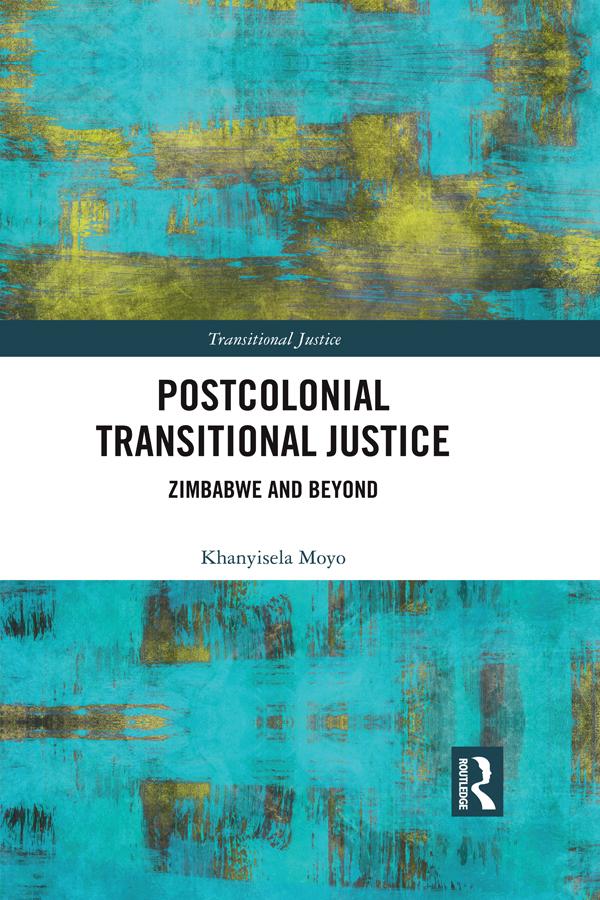
Transitional justice processes are now considered to be crucial steps in facilitating the move from conflict or repression to a secure democratic future.
This book contributes to a deeper understanding of transitional justice by examining the complexities of transition in postcolonial societies. It focuses particularly on Zimbabwe but draws on relevant comparative material from other postcolonial polities. Examples include but are not limited to African countries such as South Africa, Rwanda and Mozambique. European societies such as Northern Ireland, as well as other nations such as Guatemala, are also considered. While amplifying the breadth of the subject of transitional justice, the book addresses the claim that transitional justice mechanisms in postcolonial countries are necessary if the rule of law and the credibility of the country’s legal institutions are to be restored. Drawing on postcolonial legal theory, and especially on analyses of the relationship between international law and imperialism, the book challenges the assumption that a domestic rule of law ‘deficit’ may be remedied with recourse to international law. Taking up the paradigmatic perception that international law is neutral and has fixed rules, it demonstrates how complex issues which arise during postcolonial transitions require a more critical adoption of transitional justice mechanisms.
Maksa helposti kortilla, Klarnalla, Apple Paylla tai Google Paylla. Etkö ole tyytyväinen? Sinulla on aina 14 päivän palautusoikeus. Lue lisää ehdoistamme. Jos sinulla on kysyttävää, lähetä meille sähköpostia osoitteeseen hello@memmo.org.
Memmo tekee opiskelusta helpompaa – missä päin maailmaa ikinä oletkin. Meillä yhdistät kurssikirjat ja fiksut opiskelutyökalut yhteen paikkaan: tiivistelmät, visat, podcastit ja muistikortit. Ja sitten Ted, opiskelukaverisi, joka vastaa kaikkeen, mitä ikinä mietitkin. Yli 50 000 opiskelijaa opiskelee jo täällä – rakennettu auttamaan sinua oppimaan nopeammin ja stressaamaan vähemmän.