
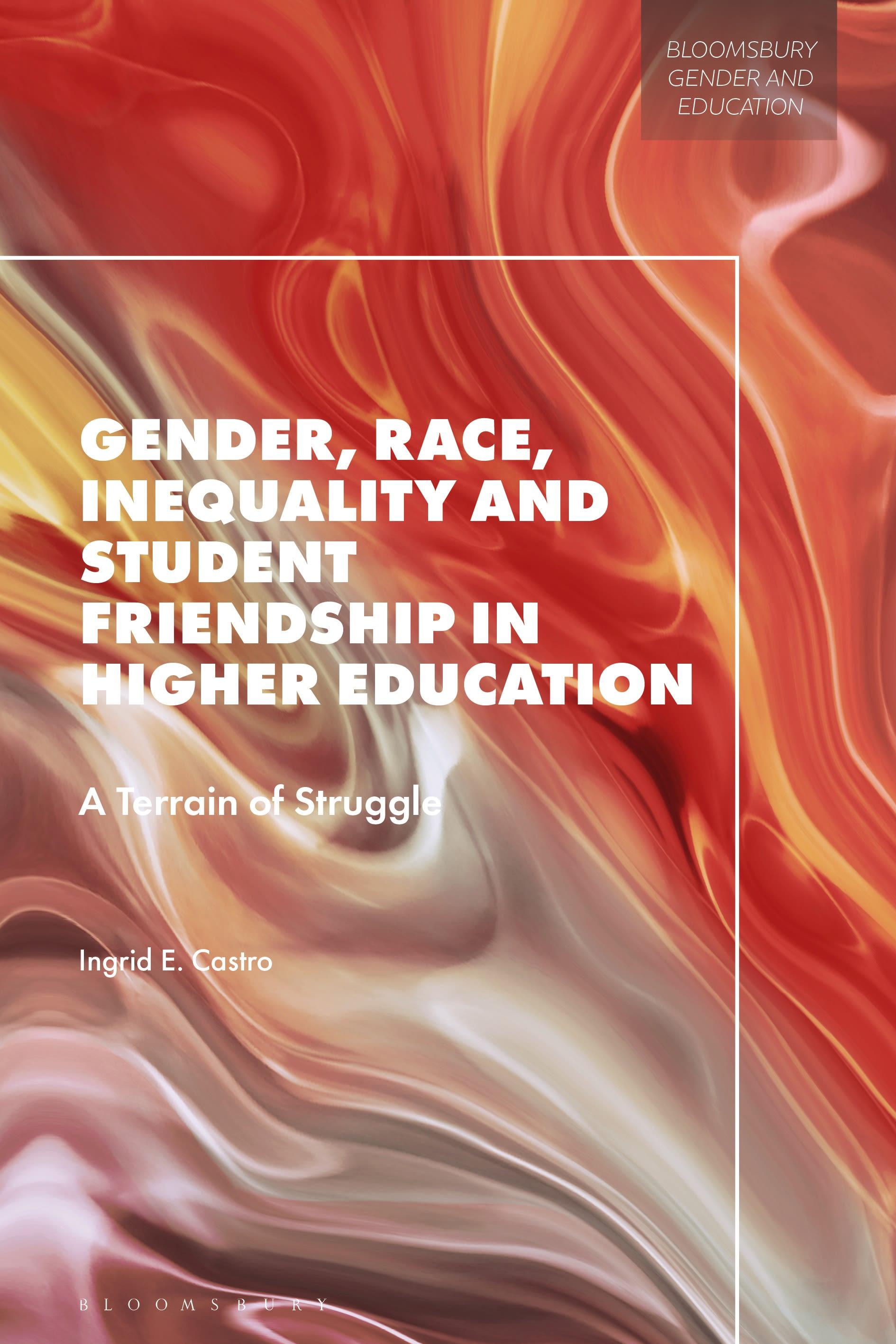
With a qualitative case study of two university campuses in the United States, Ingrid E. Castro examines experiences of students in forming and sustaining close interracial friendships.
The data in this book are comprised of interviews with students conducted at two predominantly white institutions in the early 2000s, illuminating how women of various races struggled to find commonality across difference, particularly in relation to racism, white privilege and experiences with stereotyping, microaggressions and segregation on campuses. Taking a feminist approach attending to gender, race and class inequality, Castro contributes autoethnographic recollections of her experiences as a multiethnic Latina college student in the early 1990s. She then analyses Xennial women's experiences with the benefit of contemporary frameworks and theories on gendered friendships, parental protectionism, campus climate and race relations, and explores the social and academic spaces of campus, which include interest groups, classrooms, majors, and dorms as sites of interaction. The conclusion reflects on the ideology of meritocracy and current DEI efforts on campuses in the U.S., suggesting institutional and policy changes to better campus climate and increase the potential for interracial friendship formation for students. A rich, honest and detailed account of relationships emerges with significant implications for the field of friendship studies and the sociology of higher education.
Gender, Race, Inequality and Student Friendship in Higher Education is essential reading for those interested in how universities must move forward in addressing gender, race and class relations on university campuses.
The data in this book are comprised of interviews with students conducted at two predominantly white institutions in the early 2000s, illuminating how women of various races struggled to find commonality across difference, particularly in relation to racism, white privilege and experiences with stereotyping, microaggressions and segregation on campuses. Taking a feminist approach attending to gender, race and class inequality, Castro contributes autoethnographic recollections of her experiences as a multiethnic Latina college student in the early 1990s. She then analyses Xennial women's experiences with the benefit of contemporary frameworks and theories on gendered friendships, parental protectionism, campus climate and race relations, and explores the social and academic spaces of campus, which include interest groups, classrooms, majors, and dorms as sites of interaction. The conclusion reflects on the ideology of meritocracy and current DEI efforts on campuses in the U.S., suggesting institutional and policy changes to better campus climate and increase the potential for interracial friendship formation for students. A rich, honest and detailed account of relationships emerges with significant implications for the field of friendship studies and the sociology of higher education.
Gender, Race, Inequality and Student Friendship in Higher Education is essential reading for those interested in how universities must move forward in addressing gender, race and class relations on university campuses.
Sivuja: 312
Kategoria: Kultur-, Genus- & Postkoloniala studier
e-ISBN: 9781350540736
Lähetyspaino: 1.2 kg
Toimitusaika: 1-2 päivää
Maksa helposti kortilla, Klarnalla, Apple Paylla tai Google Paylla. Etkö ole tyytyväinen? Sinulla on aina 14 päivän palautusoikeus. Lue lisää ehdoistamme. Jos sinulla on kysyttävää, lähetä meille sähköpostia osoitteeseen hello@memmo.org.
Memmo tekee opiskelusta helpompaa – missä päin maailmaa ikinä oletkin. Meillä yhdistät kurssikirjat ja fiksut opiskelutyökalut yhteen paikkaan: tiivistelmät, visat, podcastit ja muistikortit. Ja sitten Ted, opiskelukaverisi, joka vastaa kaikkeen, mitä ikinä mietitkin. Yli 50 000 opiskelijaa opiskelee jo täällä – rakennettu auttamaan sinua oppimaan nopeammin ja stressaamaan vähemmän.