
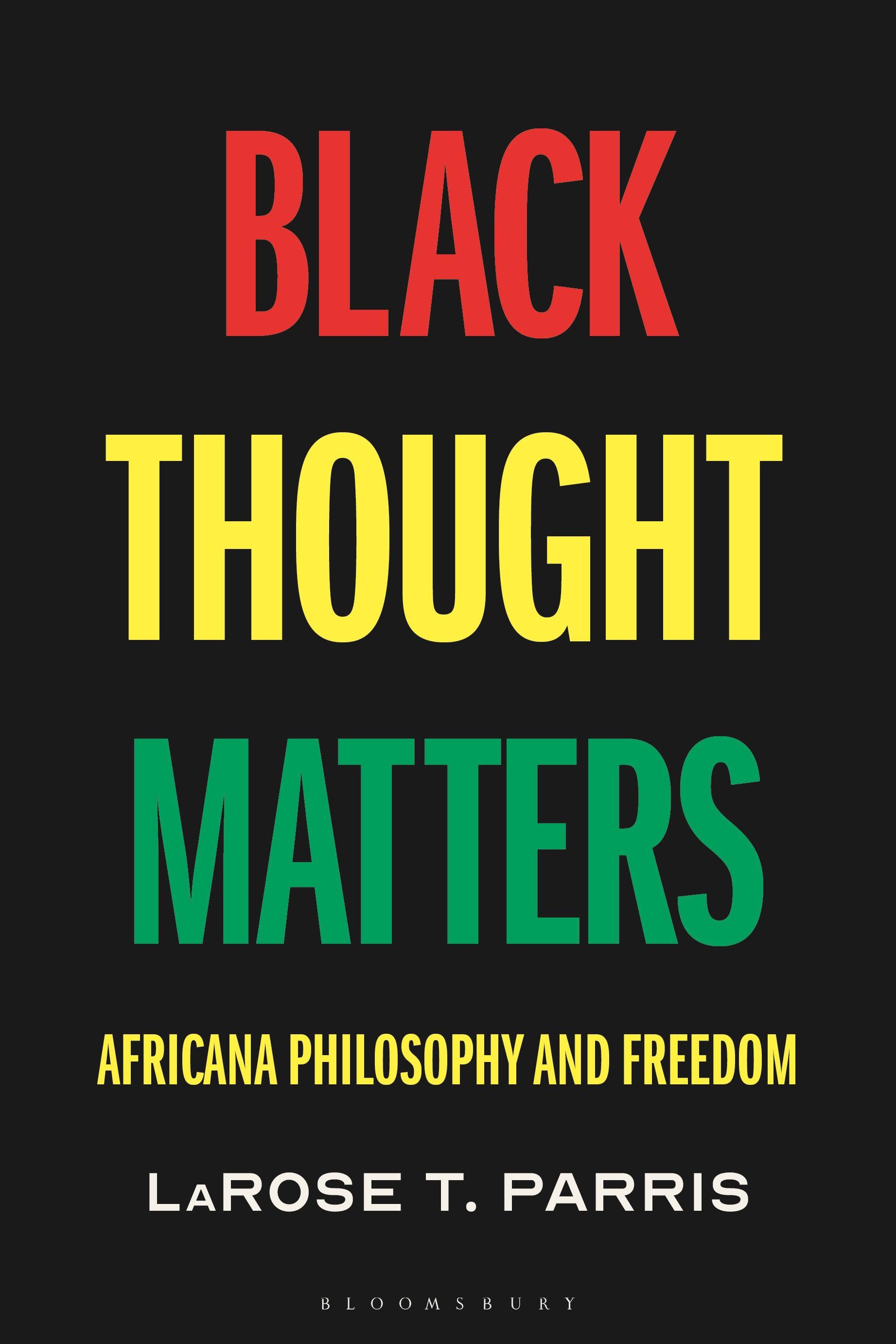
The profound influence of African and Afro-diasporic philosophy on Western thought has, throughout history, been denied and dismissed.
In an act of political and ideological defiance, Black Thought Matters traces the early production of philosophical thought to the African continent, disrupting the hegemonic Eurocentric narrative of the Enlightenment as the triumph of human rationality and intellectualism over blind religiosity. Across historical epochs-antiquity, the Enlightenment, the age of empire, and the modern world-LaRose T. Parris uncovers the persistent erasure, whitening, and distortion of Black thought. To rewrite this record, she draws on sources from Antef to Ibn Rushd, and Anna Julia Cooper to Frantz Fanon, as well as contemporary Africana philosophers, to construct a powerful counter-history that places Black thought at the centre rather than the margins of human knowledge.
In making the case for Africana philosophy's centrality to the genesis and movement of global philosophical and political thought, this book also valorizes transnational liberation efforts efforts repudiating Black dehumanization, criminalization, and extermination through state-sponsored police murder. Affirming Black thought's relevance announces a commitment to the import of Africana thinkers whose work laid the foundation for Black Lives Matter's ethical and political mission: to emphasize the intrinsic value of Black life and struggle to advance a radical egalitarianism wherein all lives are truly equal.
In an act of political and ideological defiance, Black Thought Matters traces the early production of philosophical thought to the African continent, disrupting the hegemonic Eurocentric narrative of the Enlightenment as the triumph of human rationality and intellectualism over blind religiosity. Across historical epochs-antiquity, the Enlightenment, the age of empire, and the modern world-LaRose T. Parris uncovers the persistent erasure, whitening, and distortion of Black thought. To rewrite this record, she draws on sources from Antef to Ibn Rushd, and Anna Julia Cooper to Frantz Fanon, as well as contemporary Africana philosophers, to construct a powerful counter-history that places Black thought at the centre rather than the margins of human knowledge.
In making the case for Africana philosophy's centrality to the genesis and movement of global philosophical and political thought, this book also valorizes transnational liberation efforts efforts repudiating Black dehumanization, criminalization, and extermination through state-sponsored police murder. Affirming Black thought's relevance announces a commitment to the import of Africana thinkers whose work laid the foundation for Black Lives Matter's ethical and political mission: to emphasize the intrinsic value of Black life and struggle to advance a radical egalitarianism wherein all lives are truly equal.
Maksa helposti kortilla, Klarnalla, Apple Paylla tai Google Paylla. Etkö ole tyytyväinen? Sinulla on aina 14 päivän palautusoikeus. Lue lisää ehdoistamme. Jos sinulla on kysyttävää, lähetä meille sähköpostia osoitteeseen hello@memmo.org.
Memmo tekee opiskelusta helpompaa – missä päin maailmaa ikinä oletkin. Meillä yhdistät kurssikirjat ja fiksut opiskelutyökalut yhteen paikkaan: tiivistelmät, visat, podcastit ja muistikortit. Ja sitten Ted, opiskelukaverisi, joka vastaa kaikkeen, mitä ikinä mietitkin. Yli 50 000 opiskelijaa opiskelee jo täällä – rakennettu auttamaan sinua oppimaan nopeammin ja stressaamaan vähemmän.