
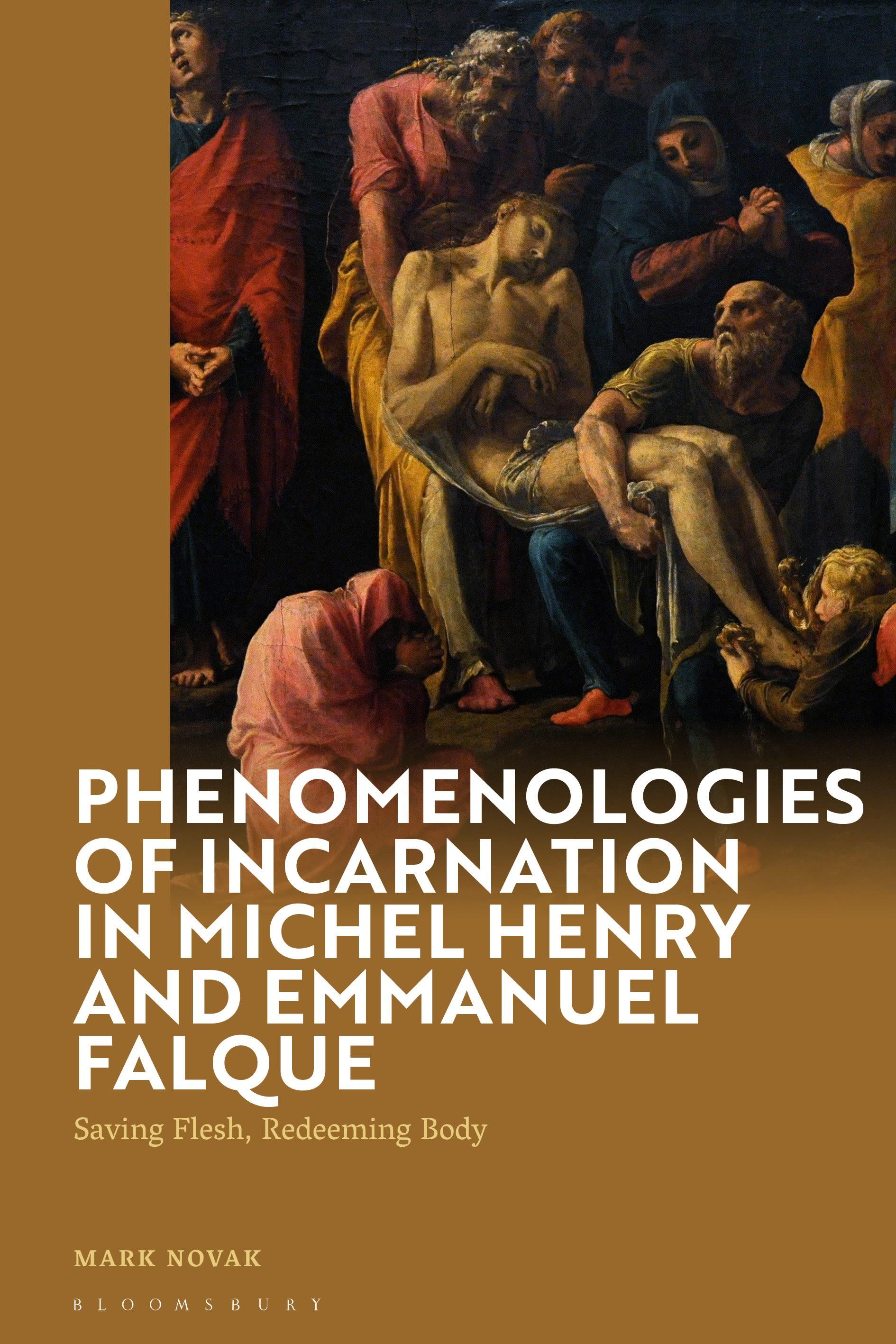
Bringing Michel Henry and Emmanuel Falque into dialogue, Mark Novak explores how they both articulate a phenomenology of the body and flesh in relation to incarnation.
As key proponents of the 'theological turn' in phenomenology, this volume illustrates how philosophical foundations inform Henry and Falque's theological views and uncovers the differences, and in some cases, surprising similarities between the two thinkers' positions on this central Christian tenet.
Beginning with a succinct overview of the origins of phenomenology and the shift towards embodiment, Novak surveys a number of different theories from Husserl's foundational distinction between flesh (Leib) and body (Körper) to Heidegger, Merleau-Ponty and Dominique Janicaud. With this, focus turns to Henry and Falque. Methodically examining each thinker's key texts on flesh and the body, Novak proposes that their views on incarnation are not as different as philosophers might think. Even despite Falque's claim that Henry's views on the incarnation neglect materiality by understanding the human being as flesh, Novak demonstrates how Falque's critical response to Henry's idea ironically mirrors it. By turning to material forces to better describe the body in his recent work, Falque recapitulates Henry's understanding of flesh.
Phenomenologies of Incarnation in Michel Henry and Emmanuel Falque provides a much-needed introduction to the phenomenology of embodiment and its important implications for philosophical theology.
As key proponents of the 'theological turn' in phenomenology, this volume illustrates how philosophical foundations inform Henry and Falque's theological views and uncovers the differences, and in some cases, surprising similarities between the two thinkers' positions on this central Christian tenet.
Beginning with a succinct overview of the origins of phenomenology and the shift towards embodiment, Novak surveys a number of different theories from Husserl's foundational distinction between flesh (Leib) and body (Körper) to Heidegger, Merleau-Ponty and Dominique Janicaud. With this, focus turns to Henry and Falque. Methodically examining each thinker's key texts on flesh and the body, Novak proposes that their views on incarnation are not as different as philosophers might think. Even despite Falque's claim that Henry's views on the incarnation neglect materiality by understanding the human being as flesh, Novak demonstrates how Falque's critical response to Henry's idea ironically mirrors it. By turning to material forces to better describe the body in his recent work, Falque recapitulates Henry's understanding of flesh.
Phenomenologies of Incarnation in Michel Henry and Emmanuel Falque provides a much-needed introduction to the phenomenology of embodiment and its important implications for philosophical theology.
Maksa helposti kortilla, Klarnalla, Apple Paylla tai Google Paylla. Etkö ole tyytyväinen? Sinulla on aina 14 päivän palautusoikeus. Lue lisää ehdoistamme. Jos sinulla on kysyttävää, lähetä meille sähköpostia osoitteeseen hello@memmo.org.
Memmo tekee opiskelusta helpompaa – missä päin maailmaa ikinä oletkin. Meillä yhdistät kurssikirjat ja fiksut opiskelutyökalut yhteen paikkaan: tiivistelmät, visat, podcastit ja muistikortit. Ja sitten Ted, opiskelukaverisi, joka vastaa kaikkeen, mitä ikinä mietitkin. Yli 50 000 opiskelijaa opiskelee jo täällä – rakennettu auttamaan sinua oppimaan nopeammin ja stressaamaan vähemmän.