
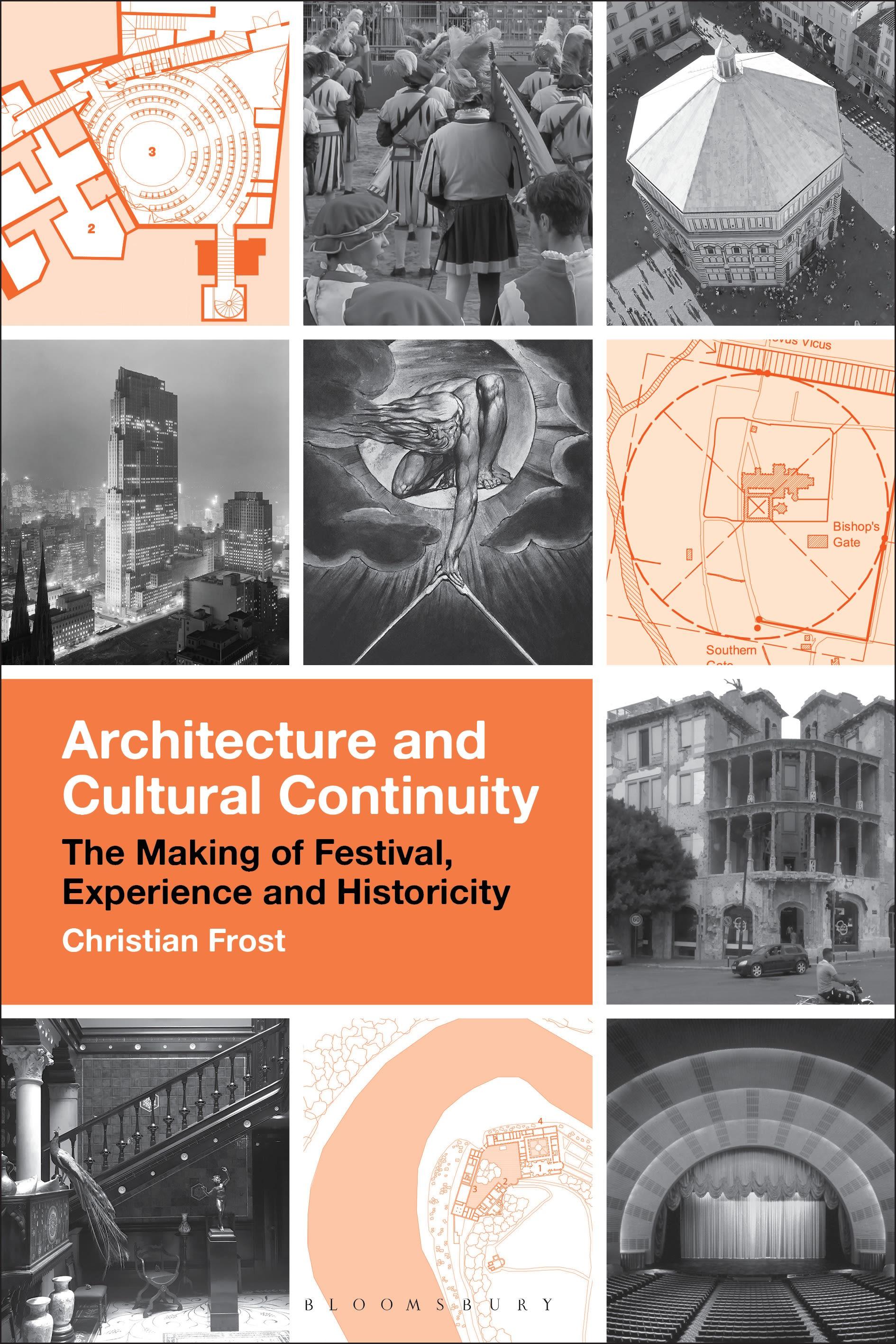
Architecture and Cultural Continuity explores a dynamic way of viewing architecture – arguing that all architecture is best evaluated through active experiences in relation to cultural traditions of community and belonging, space, ritual, and setting.
A work in three parts, the book first analyses in-depth the Festival of San Giovanni in Florence, an annual series of celebrations involving the entire city. Tracing its history from its Roman origins via the Renaissance through to contemporary times, this case study is used to explore ideas of continuity and tradition and how these shape and are shaped by architecture and the city. Part 2 gathers theoretical tools from philosophy, anthropology, and performance studies to offer a framework for the appraisal of architecture – whether engaged in festival or simply part of the background to everyday life – as experience rather than form. The final part presents historic and contemporary case studies to explain the theory in practice, from Lord Leighton's House in London to Beit Beirut in Lebanon, and from Salisbury's medieval Chapterhouse to the contemporary Australian Parliament building.
Written for architectural theorists, historians, and designers alike, this book will allow the reader to assess architecture in a way that re-addresses aspects of history often obscured by post-enlightenment thinking, and reveals an architecture rooted in cultural traditions better able to contribute to the diverse communities of the future.
A work in three parts, the book first analyses in-depth the Festival of San Giovanni in Florence, an annual series of celebrations involving the entire city. Tracing its history from its Roman origins via the Renaissance through to contemporary times, this case study is used to explore ideas of continuity and tradition and how these shape and are shaped by architecture and the city. Part 2 gathers theoretical tools from philosophy, anthropology, and performance studies to offer a framework for the appraisal of architecture – whether engaged in festival or simply part of the background to everyday life – as experience rather than form. The final part presents historic and contemporary case studies to explain the theory in practice, from Lord Leighton's House in London to Beit Beirut in Lebanon, and from Salisbury's medieval Chapterhouse to the contemporary Australian Parliament building.
Written for architectural theorists, historians, and designers alike, this book will allow the reader to assess architecture in a way that re-addresses aspects of history often obscured by post-enlightenment thinking, and reveals an architecture rooted in cultural traditions better able to contribute to the diverse communities of the future.
Maksa helposti kortilla, Klarnalla, Apple Paylla tai Google Paylla. Etkö ole tyytyväinen? Sinulla on aina 14 päivän palautusoikeus. Lue lisää ehdoistamme. Jos sinulla on kysyttävää, lähetä meille sähköpostia osoitteeseen hello@memmo.org.
Memmo tekee opiskelusta helpompaa – missä päin maailmaa ikinä oletkin. Meillä yhdistät kurssikirjat ja fiksut opiskelutyökalut yhteen paikkaan: tiivistelmät, visat, podcastit ja muistikortit. Ja sitten Ted, opiskelukaverisi, joka vastaa kaikkeen, mitä ikinä mietitkin. Yli 50 000 opiskelijaa opiskelee jo täällä – rakennettu auttamaan sinua oppimaan nopeammin ja stressaamaan vähemmän.