
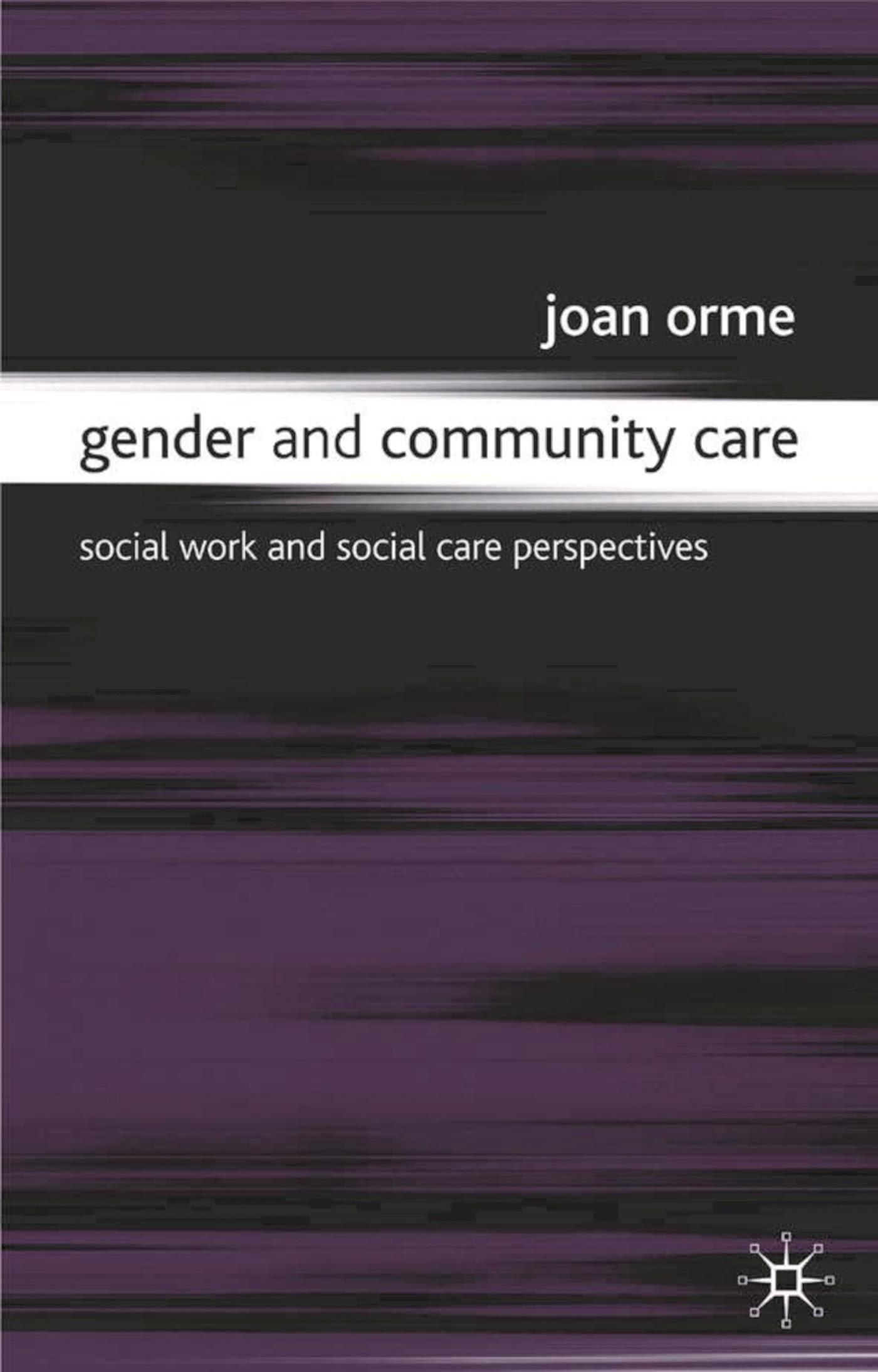
Are there differences in the way that men and women care? Are the care needs of women and men perceived as being different? What do we mean by community? Is being cared for always a positive experience? How can social workers and social care workers work positively with individual differences?
Much has been written about both the formal and informal provision of community care, and women's role within this. However, less attention has been paid to the users of community care services. Usually described in terms of being old, disabled, or experiencing mental health problems, service users are assumed to fit into homogeneous groups, their race and gender made invisible by the needs or problems they present.
This book takes the experiences of users of community care services as its starting point. Drawing on feminist theory it documents the gender assumptions behind social work practice and community care policies, and reveals how these impact on women and men as both providers and recipients of community care. In doing so it provides an outline of the developments in practice and policy, and illustrates how particular constructions of gender have influenced both. This important text challenges assumptions that caring is always a positive experience for women and men.
To conclude, a comprehensive overview of the literature about user groups is provided. This informs the author's argument that practitioners in social work and social care have to be attentive in their interventions to the way that identities are constructed and experienced, in order to ensure that services reflect both caring and justice.
Much has been written about both the formal and informal provision of community care, and women's role within this. However, less attention has been paid to the users of community care services. Usually described in terms of being old, disabled, or experiencing mental health problems, service users are assumed to fit into homogeneous groups, their race and gender made invisible by the needs or problems they present.
This book takes the experiences of users of community care services as its starting point. Drawing on feminist theory it documents the gender assumptions behind social work practice and community care policies, and reveals how these impact on women and men as both providers and recipients of community care. In doing so it provides an outline of the developments in practice and policy, and illustrates how particular constructions of gender have influenced both. This important text challenges assumptions that caring is always a positive experience for women and men.
To conclude, a comprehensive overview of the literature about user groups is provided. This informs the author's argument that practitioners in social work and social care have to be attentive in their interventions to the way that identities are constructed and experienced, in order to ensure that services reflect both caring and justice.
Maksa helposti kortilla, Klarnalla, Apple Paylla tai Google Paylla. Etkö ole tyytyväinen? Sinulla on aina 14 päivän palautusoikeus. Lue lisää ehdoistamme. Jos sinulla on kysyttävää, lähetä meille sähköpostia osoitteeseen hello@memmo.org.
Memmo tekee opiskelusta helpompaa – missä päin maailmaa ikinä oletkin. Meillä yhdistät kurssikirjat ja fiksut opiskelutyökalut yhteen paikkaan: tiivistelmät, visat, podcastit ja muistikortit. Ja sitten Ted, opiskelukaverisi, joka vastaa kaikkeen, mitä ikinä mietitkin. Yli 50 000 opiskelijaa opiskelee jo täällä – rakennettu auttamaan sinua oppimaan nopeammin ja stressaamaan vähemmän.