
Modern literature is often described in terms of its impersonality. What is the significance of this fact?
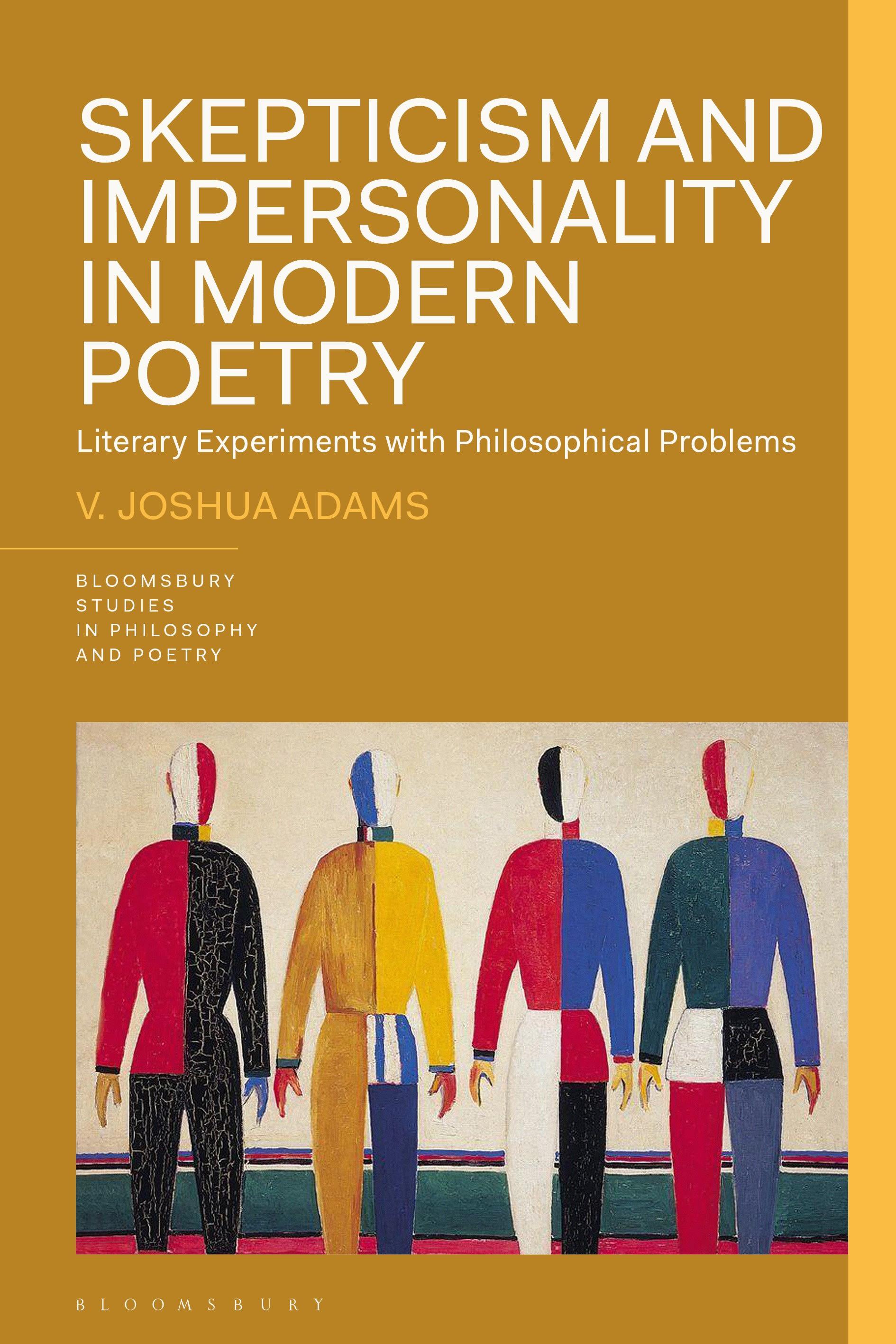
In Skepticism and Impersonality, V. Joshua Adams follows the history of impersonality in modern poetry from Mallarmé and Eliot through to the present, engaging with work by major poets and critics, but also contemporary philosophers. Rather than seeing impersonality exclusively as a literary historical phenomenon, Adams argues that we should understand it as an attempt to address skeptical problems arising from the limitations of first-person experience.
Defending impersonality as a response to skeptical problems, including doubts about the publicity of our experiences, our knowledge of other minds, the capacity of our language to describe the world, the relationship between mind and body, and the fictionality and continuity of our sense of self, Adams analyzes what he calls “experiments in impersonality” as means of working through skeptical doubt. The writers discussed transform this doubt into art, whilst also ironizing it as corrosive and self-defeating. Ultimately this leads Adams to reinterpret literary impersonality as a therapeutic philosophical project.
Skepticism and Impersonality promises a new theoretical justification for our practical interest in literary texts, to renovate our conception of how those texts might do philosophical work, and to expand our sense of what a philosophical poem can be.
In Skepticism and Impersonality, V. Joshua Adams follows the history of impersonality in modern poetry from Mallarmé and Eliot through to the present, engaging with work by major poets and critics, but also contemporary philosophers. Rather than seeing impersonality exclusively as a literary historical phenomenon, Adams argues that we should understand it as an attempt to address skeptical problems arising from the limitations of first-person experience.
Defending impersonality as a response to skeptical problems, including doubts about the publicity of our experiences, our knowledge of other minds, the capacity of our language to describe the world, the relationship between mind and body, and the fictionality and continuity of our sense of self, Adams analyzes what he calls “experiments in impersonality” as means of working through skeptical doubt. The writers discussed transform this doubt into art, whilst also ironizing it as corrosive and self-defeating. Ultimately this leads Adams to reinterpret literary impersonality as a therapeutic philosophical project.
Skepticism and Impersonality promises a new theoretical justification for our practical interest in literary texts, to renovate our conception of how those texts might do philosophical work, and to expand our sense of what a philosophical poem can be.
Sivuja: 248
Kategoria: Litteraturvetenskap & Teori
e-ISBN: 9781350259669
Lähetyspaino: 1.2 kg
Toimitusaika: 1-2 päivää
Maksa helposti kortilla, Klarnalla, Apple Paylla tai Google Paylla. Etkö ole tyytyväinen? Sinulla on aina 14 päivän palautusoikeus. Lue lisää ehdoistamme. Jos sinulla on kysyttävää, lähetä meille sähköpostia osoitteeseen hello@memmo.org.
Memmo tekee opiskelusta helpompaa – missä päin maailmaa ikinä oletkin. Meillä yhdistät kurssikirjat ja fiksut opiskelutyökalut yhteen paikkaan: tiivistelmät, visat, podcastit ja muistikortit. Ja sitten Ted, opiskelukaverisi, joka vastaa kaikkeen, mitä ikinä mietitkin. Yli 50 000 opiskelijaa opiskelee jo täällä – rakennettu auttamaan sinua oppimaan nopeammin ja stressaamaan vähemmän.