
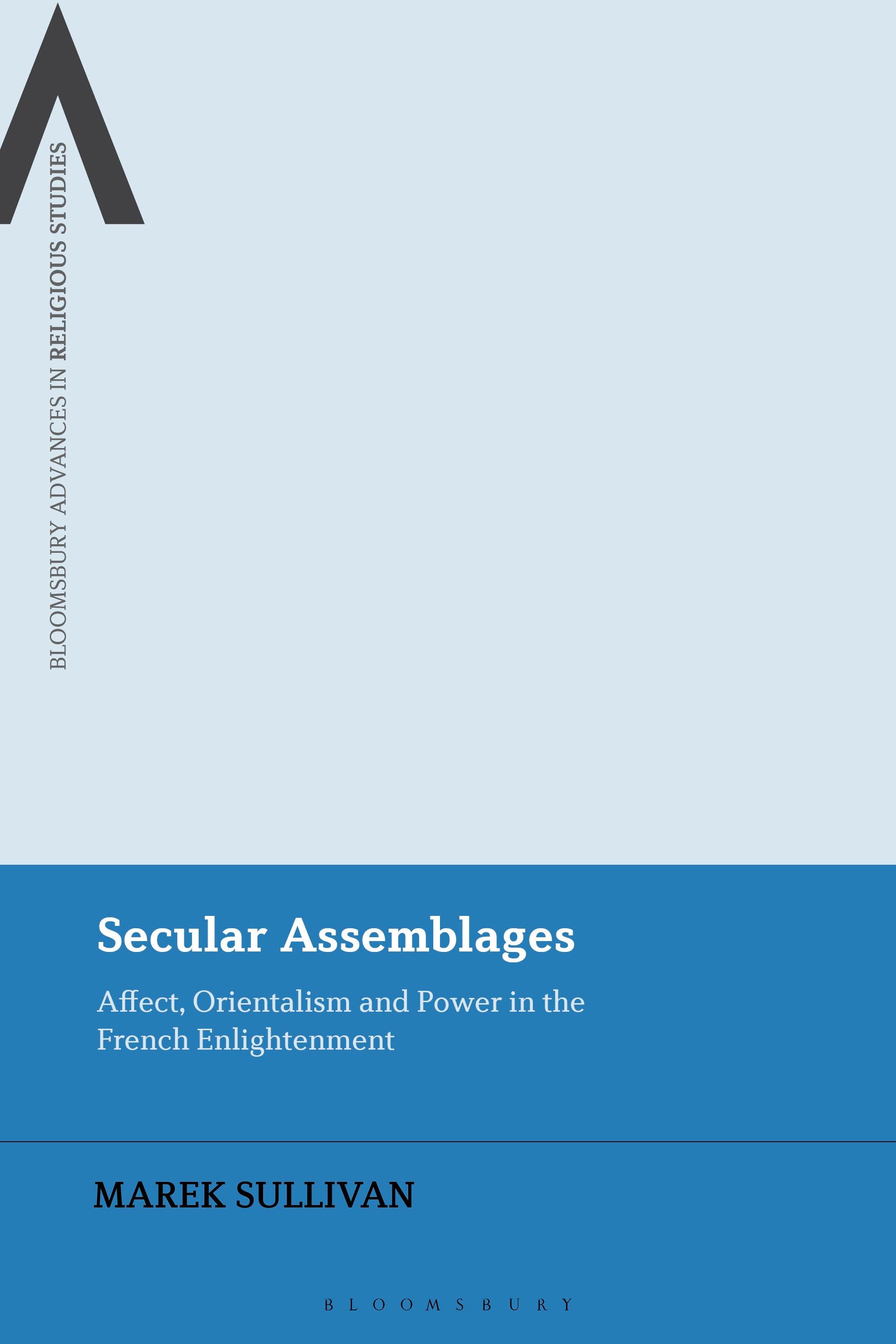
In this book, Marek Sullivan challenges a widespread consensus linking secularization to rationalization, and argues for a more sensual genealogy of secularity connected to affect, race and power. While existing works of secular intellectual history, especially Charles Taylor's A Secular Age (2007), tend to rely on rationalistic conceptions of Enlightenment thought, Sullivan offers an alternative perspective on key thinkers such as Descartes, Montesquieu and Diderot, asserting that these figures sought to reinstate emotion against the rationalistic tendencies of the past. From Descartes's last work Les Passions de l'Âme (1649) to Baron d'Holbach's System of Nature (1770), the French Enlightenment demonstrated an acute understanding of the limits of reason, with crucial implications for our current 'postsecular' and 'postliberal' moment.
Sullivan also emphasizes the importance of Western constructions of Oriental religions for the history of the secular, identifying a distinctively secular-yet impassioned-form of Orientalism that emerged in the 18th century. Mahomet's racial profile in Voltaire's Le Fanatisme, ou Mahomet (1741), for example, functioned as a polemic device calibrated for emotional impact, in line with Enlightenment efforts to generate an affective body of anti-Catholic propaganda that simultaneously shored up people's sense of national belonging. By exposing the Enlightenment as a nationalistic and affective movement that resorted to racist, Orientalist and emotional tropes from the outset, Sullivan ultimately undermines modern nationalist appeals to the Enlightenment as a mark of European distinction.
Sullivan also emphasizes the importance of Western constructions of Oriental religions for the history of the secular, identifying a distinctively secular-yet impassioned-form of Orientalism that emerged in the 18th century. Mahomet's racial profile in Voltaire's Le Fanatisme, ou Mahomet (1741), for example, functioned as a polemic device calibrated for emotional impact, in line with Enlightenment efforts to generate an affective body of anti-Catholic propaganda that simultaneously shored up people's sense of national belonging. By exposing the Enlightenment as a nationalistic and affective movement that resorted to racist, Orientalist and emotional tropes from the outset, Sullivan ultimately undermines modern nationalist appeals to the Enlightenment as a mark of European distinction.
Sivuja: 264
Kategoria: Religion & Teologi
e-ISBN: 9781350123694
Lähetyspaino: 1.2 kg
Toimitusaika: 1-2 päivää
Maksa helposti kortilla, Klarnalla, Apple Paylla tai Google Paylla. Etkö ole tyytyväinen? Sinulla on aina 14 päivän palautusoikeus. Lue lisää ehdoistamme. Jos sinulla on kysyttävää, lähetä meille sähköpostia osoitteeseen hello@memmo.org.
Memmo tekee opiskelusta helpompaa – missä päin maailmaa ikinä oletkin. Meillä yhdistät kurssikirjat ja fiksut opiskelutyökalut yhteen paikkaan: tiivistelmät, visat, podcastit ja muistikortit. Ja sitten Ted, opiskelukaverisi, joka vastaa kaikkeen, mitä ikinä mietitkin. Yli 50 000 opiskelijaa opiskelee jo täällä – rakennettu auttamaan sinua oppimaan nopeammin ja stressaamaan vähemmän.