
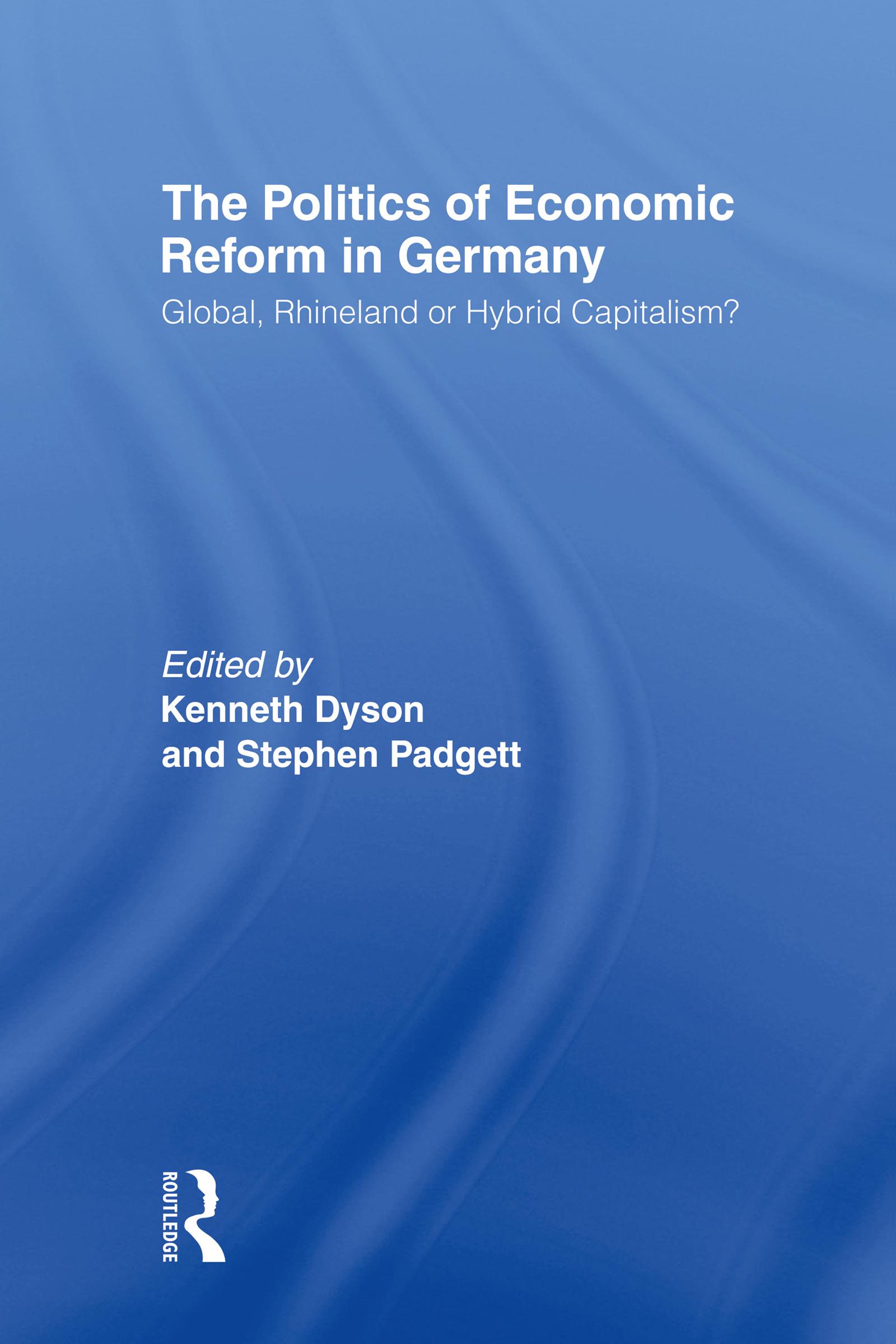
This new volume situates current debates about economic reform in Germany in illuminating historical and structural contexts.
Showing how economic reform has become the central issue on the German political agenda, raising contentious issues of policy management and posing deeper questions about political beliefs and identities. It also examines the politics of the reform process, outlining competing views about the root causes of Germany’s economic problems, the appropriate policy responses, and the distribution of costs. It situates the reform process in the wider context of the decline of the German economic model (Modell Deutschland) and Germany’s transition from European ‘pace-setter’ to economic ‘laggard’.
Particular attention is paid to the following key questions:
- What continuities and discontinuities can be seen in Germany's political economy?
- Are globalization and Europeanization associated with a progressive neo-liberal ascendancy in economic reform?
- How does economic reform in Germany compare with that in other states, notably Britain and France?
- Are there distinctive patterns in the way domestic policymakers negotiate economic reform?
- How do the characteristics of the German labour market and welfare state condition economic reform?
- How much variation exists at the Laender levels?
This book was previously published as a special issue of German Politics.
Maksa helposti kortilla, Klarnalla, Apple Paylla tai Google Paylla. Etkö ole tyytyväinen? Sinulla on aina 14 päivän palautusoikeus. Lue lisää ehdoistamme. Jos sinulla on kysyttävää, lähetä meille sähköpostia osoitteeseen hello@memmo.org.
Memmo tekee opiskelusta helpompaa – missä päin maailmaa ikinä oletkin. Meillä yhdistät kurssikirjat ja fiksut opiskelutyökalut yhteen paikkaan: tiivistelmät, visat, podcastit ja muistikortit. Ja sitten Ted, opiskelukaverisi, joka vastaa kaikkeen, mitä ikinä mietitkin. Yli 50 000 opiskelijaa opiskelee jo täällä – rakennettu auttamaan sinua oppimaan nopeammin ja stressaamaan vähemmän.