
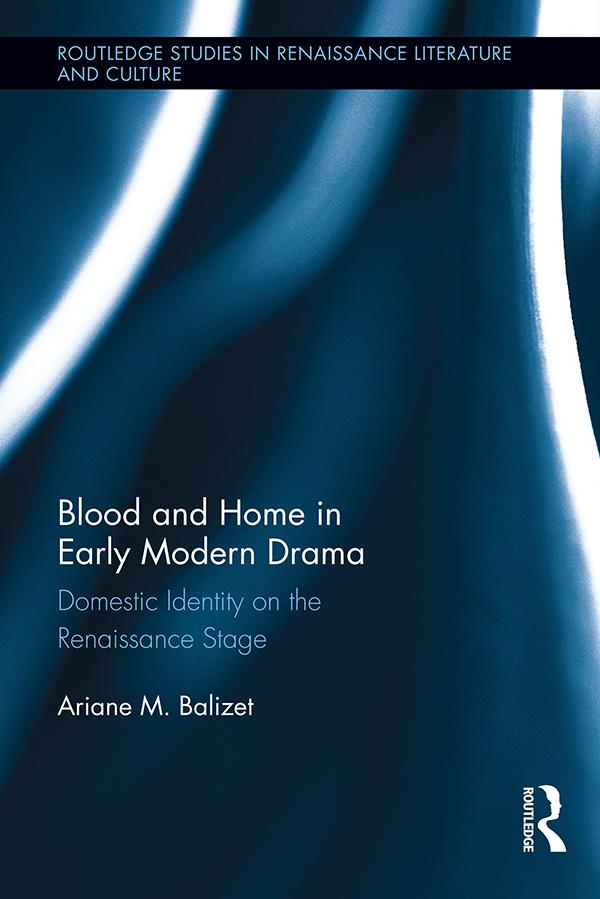
In this volume, the author argues that blood was, crucially, a means by which dramatists negotiated shifting contours of domesticity in 16th and 17th century England. Early modern English drama vividly addressed contemporary debates over an expanding idea of "the domestic," which encompassed the domus as well as sex, parenthood, household order, the relationship between home and state, and the connections between family honor and national identity. The author contends that the domestic ideology expressed by theatrical depictions of marriage and household order is one built on the simultaneous familiarity and violence inherent to blood.
The theatrical relation between blood and home is far more intricate than the idealized language of the familial bloodline; the home was itself a bloody place, with domestic bloodstains signifying a range of experiences including religious worship, sex, murder, birth, healing, and holy justice. Focusing on four bleeding figures—the Bleeding Bride, Bleeding Husband, Bleeding Child, and Bleeding Patient—the author argues that the household blood of the early modern stage not only expressed the violence and conflict occasioned by domestic ideology, but also established the home as a site that alternately reified and challenged patriarchal authority.
Maksa helposti kortilla, Klarnalla, Apple Paylla tai Google Paylla. Etkö ole tyytyväinen? Sinulla on aina 14 päivän palautusoikeus. Lue lisää ehdoistamme. Jos sinulla on kysyttävää, lähetä meille sähköpostia osoitteeseen hello@memmo.org.
Memmo tekee opiskelusta helpompaa – missä päin maailmaa ikinä oletkin. Meillä yhdistät kurssikirjat ja fiksut opiskelutyökalut yhteen paikkaan: tiivistelmät, visat, podcastit ja muistikortit. Ja sitten Ted, opiskelukaverisi, joka vastaa kaikkeen, mitä ikinä mietitkin. Yli 50 000 opiskelijaa opiskelee jo täällä – rakennettu auttamaan sinua oppimaan nopeammin ja stressaamaan vähemmän.