
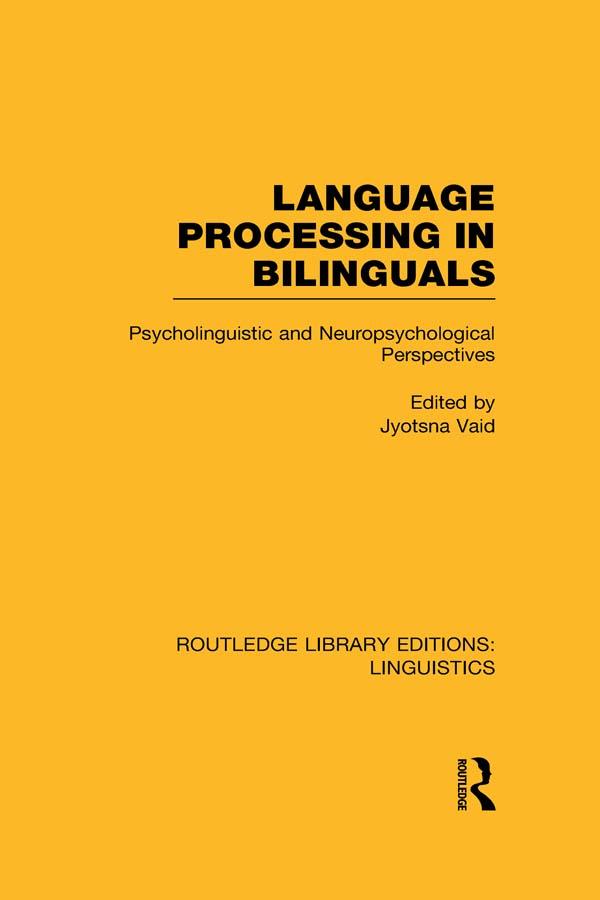
For decades, bilingualism has resisted definition. If bilingualism is defined as habitual, fluent, correct and accent-free use of two languages, few individuals would qualify as bilinguals. A more viable approach may be to concede that ‘bilingual’ can be seen instead as a range of points on a continuum that allows for differences. The psychological study of bilingualism encompasses a wide range of phenomena including the organization and representation of the grammar, the perception and production of language mixing, cerebral lateralization of language functions, and patterns of recovery of aphasic patients. This book collects together an international array of researchers in experimental psychology, linguistics and neuropsychology, who bring their expertise to bear on the critical issues that are raised by the bilingual phenomena.
Maksa helposti kortilla, Klarnalla, Apple Paylla tai Google Paylla. Etkö ole tyytyväinen? Sinulla on aina 14 päivän palautusoikeus. Lue lisää ehdoistamme. Jos sinulla on kysyttävää, lähetä meille sähköpostia osoitteeseen hello@memmo.org.
Memmo tekee opiskelusta helpompaa – missä päin maailmaa ikinä oletkin. Meillä yhdistät kurssikirjat ja fiksut opiskelutyökalut yhteen paikkaan: tiivistelmät, visat, podcastit ja muistikortit. Ja sitten Ted, opiskelukaverisi, joka vastaa kaikkeen, mitä ikinä mietitkin. Yli 50 000 opiskelijaa opiskelee jo täällä – rakennettu auttamaan sinua oppimaan nopeammin ja stressaamaan vähemmän.