
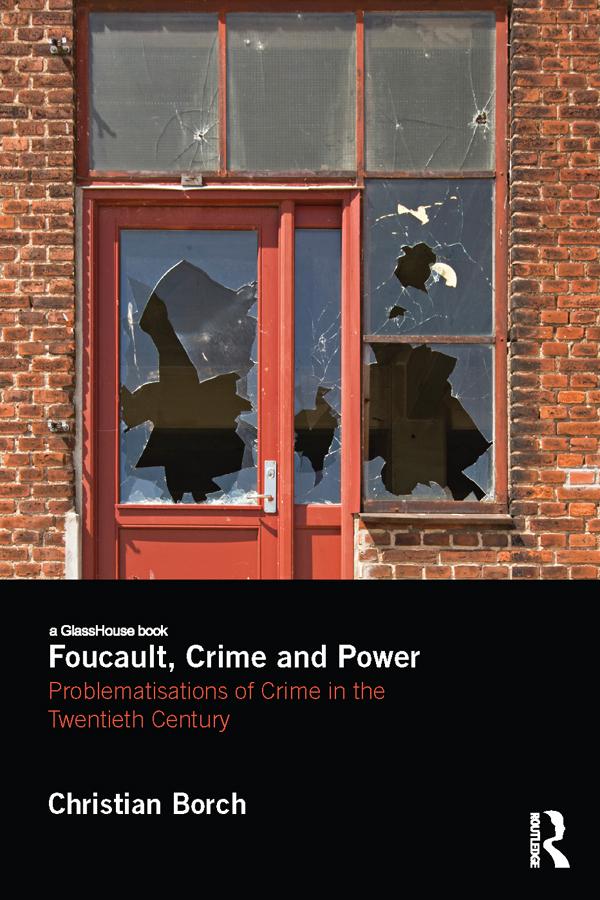
This book presents a Foucauldian problematisation analysis of crime, with a particular focus on the twentieth century. It considers how crime has been conceived as problem and, by scrutinising the responses that have been adapted to deal with crime, demonstrates how a range of power modalities have evolved throughout the twentieth century.
Christian Borch shows how the tendency of criminologists to focus on either disciplinary power or governmentality has neglected the broader complex of Foucault’s concerns: ignoring its historical underpinnings, whilst for the most part limiting studies to only very recent developments, without giving sufficient attention to their historical backdrop. The book uses developments in Denmark – developments that can be readily identified in most other western countries – as a paradigmatic case for understanding how crime has been problematised in the West. Thus, Foucault, Crime and Power: Problematisations of Crime in the Twentieth Century demonstrates that a Foucauldian approach to crime holds greater analytical potentials for criminological research than have so far been recognized.
Maksa helposti kortilla, Klarnalla, Apple Paylla tai Google Paylla. Etkö ole tyytyväinen? Sinulla on aina 14 päivän palautusoikeus. Lue lisää ehdoistamme. Jos sinulla on kysyttävää, lähetä meille sähköpostia osoitteeseen hello@memmo.org.
Memmo tekee opiskelusta helpompaa – missä päin maailmaa ikinä oletkin. Meillä yhdistät kurssikirjat ja fiksut opiskelutyökalut yhteen paikkaan: tiivistelmät, visat, podcastit ja muistikortit. Ja sitten Ted, opiskelukaverisi, joka vastaa kaikkeen, mitä ikinä mietitkin. Yli 50 000 opiskelijaa opiskelee jo täällä – rakennettu auttamaan sinua oppimaan nopeammin ja stressaamaan vähemmän.