
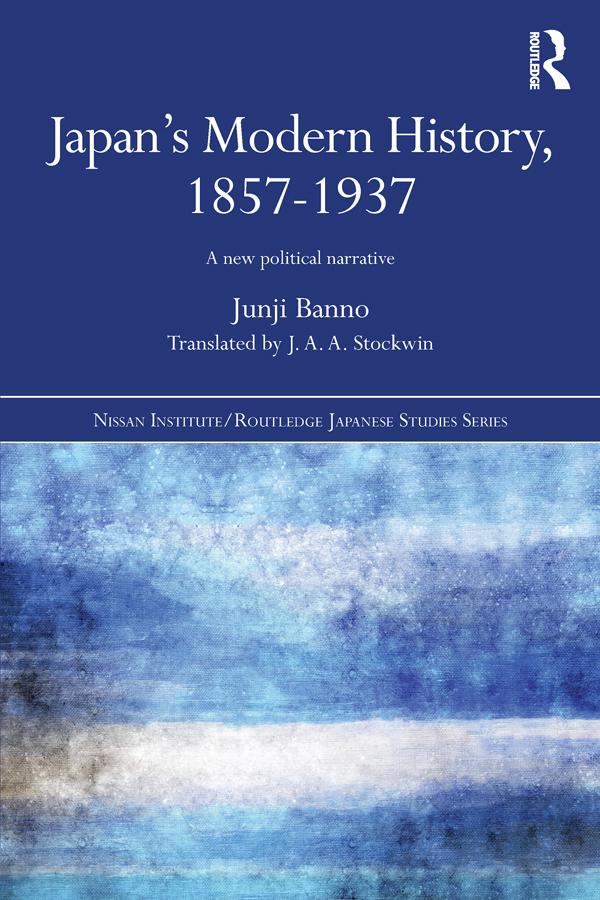
Over the course of the period 1857 to 1937 in Japan, six distinct stages can be identified as the country moved from Shogun rule and its subsequent overthrow, from industrialisation and investment to the Meiji Constitution and then from Taishō democracy to Shōwa fascism. In this book, Junji Banno stresses the mutual relationships between each period, and to this end renames then accordingly: the age of reform; age of revolution; age of construction; age of management; age of reorganisation; and age of crisis.
Following this model, the book covers eighty years of history in Japan, focusing on political history and foreign relations, with extensive material also on economic development and foreign influences on political institutions and practices. Based on extensive archival research, Japan’s Modern History considers synoptically the key trends and their significance over the period of 1857 to 1937. In turn, it presents in detail fascinating information on many of the main leaders and other significant figures, with extensive quotations from their writings, letters and diaries.
This book is a translation into English of a major work of scholarship by a leading historian of modern Japan, and may be considered the apex of Junji Banno’s work in the field. As such, it will be of great interest to students and scholars of both Japanese history and history more broadly.
Maksa helposti kortilla, Klarnalla, Apple Paylla tai Google Paylla. Etkö ole tyytyväinen? Sinulla on aina 14 päivän palautusoikeus. Lue lisää ehdoistamme. Jos sinulla on kysyttävää, lähetä meille sähköpostia osoitteeseen hello@memmo.org.
Memmo tekee opiskelusta helpompaa – missä päin maailmaa ikinä oletkin. Meillä yhdistät kurssikirjat ja fiksut opiskelutyökalut yhteen paikkaan: tiivistelmät, visat, podcastit ja muistikortit. Ja sitten Ted, opiskelukaverisi, joka vastaa kaikkeen, mitä ikinä mietitkin. Yli 50 000 opiskelijaa opiskelee jo täällä – rakennettu auttamaan sinua oppimaan nopeammin ja stressaamaan vähemmän.