
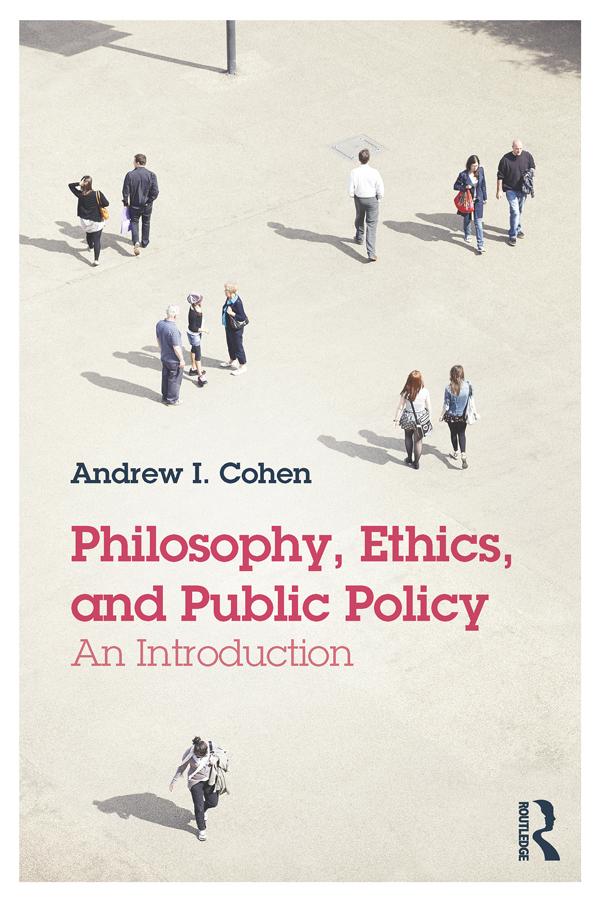
What makes a policy work? What should policies attempt to do, and what ought they not do? These questions are at the heart of both policy-making and ethics. Philosophy, Ethics and Public Policy: An Introduction examines these questions and more. Andrew I. Cohen uses contemporary examples and controversies, mainly drawn from policy in a North American context, to illustrate important flashpoints in ethics and public policy, such as:
- public policy and globalization: sweatshops; medicine and the developing world; immigration
- marriage, family and education: same-sex marriage; women and the family; education and Intelligent Design
- justifying and responding to state coercion: torture; reparations and restorative justice
- the ethics of the body and commodification: the human organ trade, and factory farming of animals.
Each chapter illustrates how ethics offers ways of prioritizing some policy alternatives and imagining new ones. Reflecting on various themes in globalization, markets, and privacy, the chapters are windows to enduring significant debates about what states may do to shape our behavior. Overall, the book will help readers understand how ethics can frame policymaking, while also suggesting that sometimes the best policy is no policy. Including annotated further reading, this is an excellent introduction to a fast-growing subject for students in Philosophy, Public Policy, and related disciplines.
Maksa helposti kortilla, Klarnalla, Apple Paylla tai Google Paylla. Etkö ole tyytyväinen? Sinulla on aina 14 päivän palautusoikeus. Lue lisää ehdoistamme. Jos sinulla on kysyttävää, lähetä meille sähköpostia osoitteeseen hello@memmo.org.
Memmo tekee opiskelusta helpompaa – missä päin maailmaa ikinä oletkin. Meillä yhdistät kurssikirjat ja fiksut opiskelutyökalut yhteen paikkaan: tiivistelmät, visat, podcastit ja muistikortit. Ja sitten Ted, opiskelukaverisi, joka vastaa kaikkeen, mitä ikinä mietitkin. Yli 50 000 opiskelijaa opiskelee jo täällä – rakennettu auttamaan sinua oppimaan nopeammin ja stressaamaan vähemmän.