
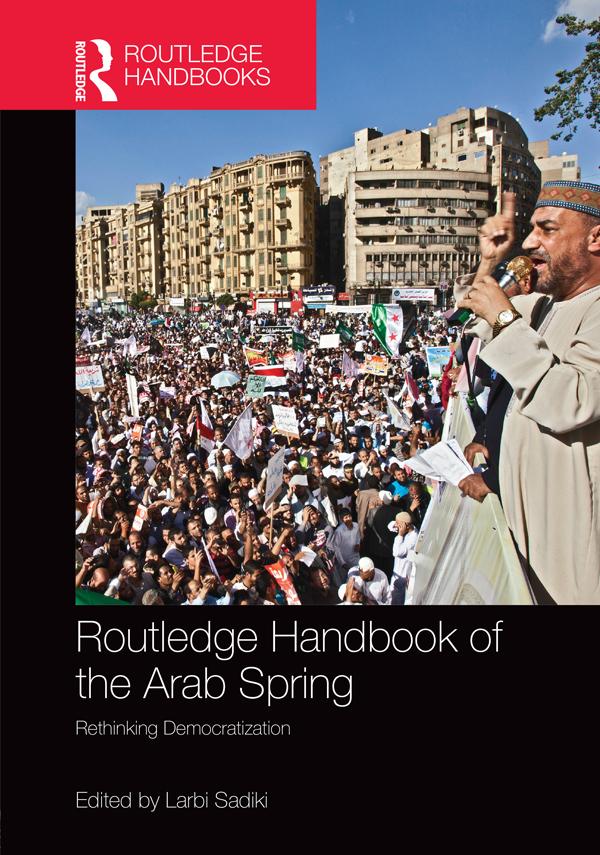
The self-immolation of Mohammed Bouazizi in Tunisia in December 2010 heralded the arrival of the ‘Arab Spring,’ a startling, yet not unprecedented, era of profound social and political upheaval.
The meme of the Arab Spring is characterised by bottom-up change, or the lack thereof, and its effects are still unfurling today. The Routledge Handbook of the Arab Spring seeks to provide a departure point for ongoing discussion of a fluid phenomenon on a plethora of topics, including:
- Contexts and contests of democratisation
- The sweep of the Arab Spring
- Egypt
- Women and the Arab Spring
- Agents of change and the technology of protest
- Impact of the Arab Spring in the wider Middle East and further afield
Collating a wide array of viewpoints, specialisms, biases, and degrees of proximity and distance from events that shook the Arab world to its core, the Handbook is written with the reader in mind, to provide students, practitioners, diplomats, policy-makers and lay readers with contextualization and knowledge, and to set the stage for further discussion of the Arab Spring.
Maksa helposti kortilla, Klarnalla, Apple Paylla tai Google Paylla. Etkö ole tyytyväinen? Sinulla on aina 14 päivän palautusoikeus. Lue lisää ehdoistamme. Jos sinulla on kysyttävää, lähetä meille sähköpostia osoitteeseen hello@memmo.org.
Memmo tekee opiskelusta helpompaa – missä päin maailmaa ikinä oletkin. Meillä yhdistät kurssikirjat ja fiksut opiskelutyökalut yhteen paikkaan: tiivistelmät, visat, podcastit ja muistikortit. Ja sitten Ted, opiskelukaverisi, joka vastaa kaikkeen, mitä ikinä mietitkin. Yli 50 000 opiskelijaa opiskelee jo täällä – rakennettu auttamaan sinua oppimaan nopeammin ja stressaamaan vähemmän.