
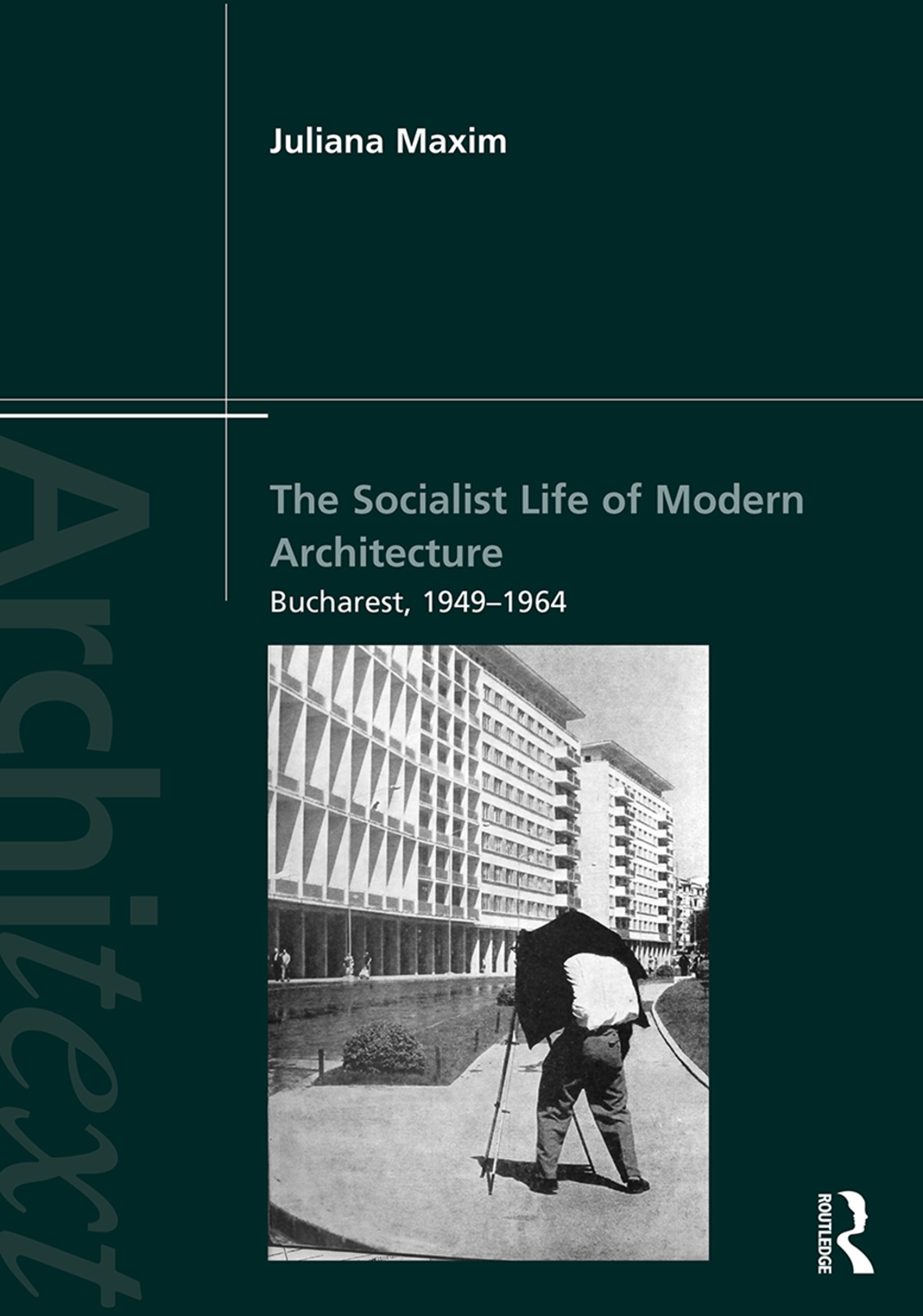
The Socialist Life of Modern Architecture is the first systematic architectural history of Romania under socialism written in English. It examines the mechanisms through which modern architecture was invested with political meaning and, in reverse, how specific architectural solutions came to define the socialist experience.
Each of the book’s three parts traces the historical development of one key aspect of Romania’s architectural culture between the years 1949–1964:
- the planning and construction of housing districts in Bucharest;
- the role of typification of design and standardization of construction in a project of cultural transformation;
- the production and management of a folk architectural tradition.
Going beyond buildings and architects to consider the use of photography, painting, and novels, as well as narrations of history and the formation of an ethnographic architectural heritage, the author explores how buildings came to participate in the cultural imagination of socialism—and became, in fact, a privileged medium of socialism.
Part of the growing interest in the significance of Soviet Bloc architecture, this is an important contribution to the fields of architectural history, cultural history, and visual culture.
Maksa helposti kortilla, Klarnalla, Apple Paylla tai Google Paylla. Etkö ole tyytyväinen? Sinulla on aina 14 päivän palautusoikeus. Lue lisää ehdoistamme. Jos sinulla on kysyttävää, lähetä meille sähköpostia osoitteeseen hello@memmo.org.
Memmo tekee opiskelusta helpompaa – missä päin maailmaa ikinä oletkin. Meillä yhdistät kurssikirjat ja fiksut opiskelutyökalut yhteen paikkaan: tiivistelmät, visat, podcastit ja muistikortit. Ja sitten Ted, opiskelukaverisi, joka vastaa kaikkeen, mitä ikinä mietitkin. Yli 50 000 opiskelijaa opiskelee jo täällä – rakennettu auttamaan sinua oppimaan nopeammin ja stressaamaan vähemmän.