
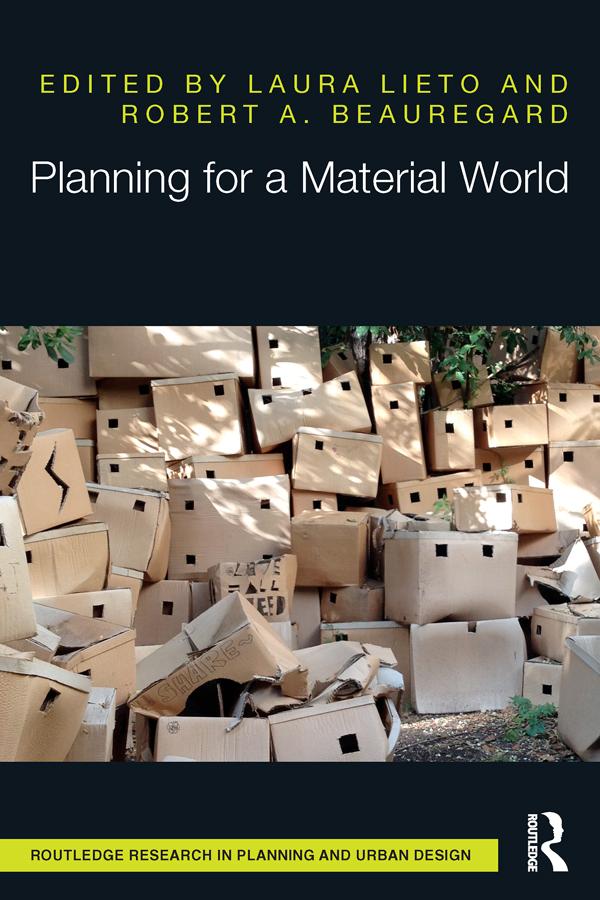
Today, urban scholars think of cities and regions as evolving through networks of human associations, technologies, and natural ecologies. This being the case, planners are faced with the task of navigating a profoundly material world. Planning with and for humans alone is unacceptable: in the unfolding of urban processes, non-human things cannot be ignored. This inclusive vision has consequences for how planners envision the connections among norms, technologies and life-worlds as well as how they design and implement their plans.
The contributors to this volume utilize a variety of examples – ecologically-sensitive, regional planning in Naples (Italy); congestion pricing in New York City; and public participation in Europe, among others – to explore how planners engage a heterogeneous and restless world. Inspired by assemblage thinking and actor-network theory, each chapter draws on this "new materialism" to acknowledge, in quite pragmatic ways, that spatial politics is a process of becoming that is inseparable from the materiality of urban practices.
Maksa helposti kortilla, Klarnalla, Apple Paylla tai Google Paylla. Etkö ole tyytyväinen? Sinulla on aina 14 päivän palautusoikeus. Lue lisää ehdoistamme. Jos sinulla on kysyttävää, lähetä meille sähköpostia osoitteeseen hello@memmo.org.
Memmo tekee opiskelusta helpompaa – missä päin maailmaa ikinä oletkin. Meillä yhdistät kurssikirjat ja fiksut opiskelutyökalut yhteen paikkaan: tiivistelmät, visat, podcastit ja muistikortit. Ja sitten Ted, opiskelukaverisi, joka vastaa kaikkeen, mitä ikinä mietitkin. Yli 50 000 opiskelijaa opiskelee jo täällä – rakennettu auttamaan sinua oppimaan nopeammin ja stressaamaan vähemmän.