
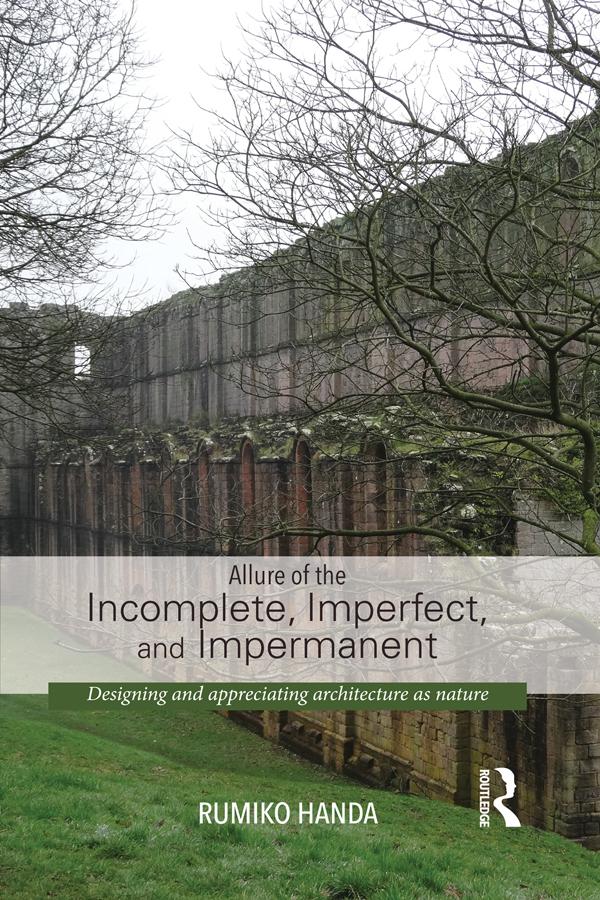
Architects have long operated based on the assumption that a building is 'complete' once construction has finished. Striving to create a perfect building, they wish for it to stay in its original state indefinitely, viewing any subsequent alterations as unintended effects or the results of degeneration. The ideal is for a piece of architecture to remain permanently perfect and complete. This contrasts sharply with reality where changes take place as people move in, requirements change, events happen, and building materials are subject to wear and tear.
Rumiko Handa argues it is time to correct this imbalance. Using examples ranging from the Roman Coliseum to Japanese tea rooms, she draws attention to an area that is usually ignored: the allure of incomplete, imperfect and impermanent architecture. By focusing on what happens to buildings after they are ‘complete’, she shows that the ‘afterlife’ is in fact the very ‘life’ of a building.
However, the book goes beyond theoretical debate. Addressing professionals as well as architecture students and educators, it persuades architects of the necessity to anticipate possible future changes and to incorporate these into their original designs.
Maksa helposti kortilla, Klarnalla, Apple Paylla tai Google Paylla. Etkö ole tyytyväinen? Sinulla on aina 14 päivän palautusoikeus. Lue lisää ehdoistamme. Jos sinulla on kysyttävää, lähetä meille sähköpostia osoitteeseen hello@memmo.org.
Memmo tekee opiskelusta helpompaa – missä päin maailmaa ikinä oletkin. Meillä yhdistät kurssikirjat ja fiksut opiskelutyökalut yhteen paikkaan: tiivistelmät, visat, podcastit ja muistikortit. Ja sitten Ted, opiskelukaverisi, joka vastaa kaikkeen, mitä ikinä mietitkin. Yli 50 000 opiskelijaa opiskelee jo täällä – rakennettu auttamaan sinua oppimaan nopeammin ja stressaamaan vähemmän.