
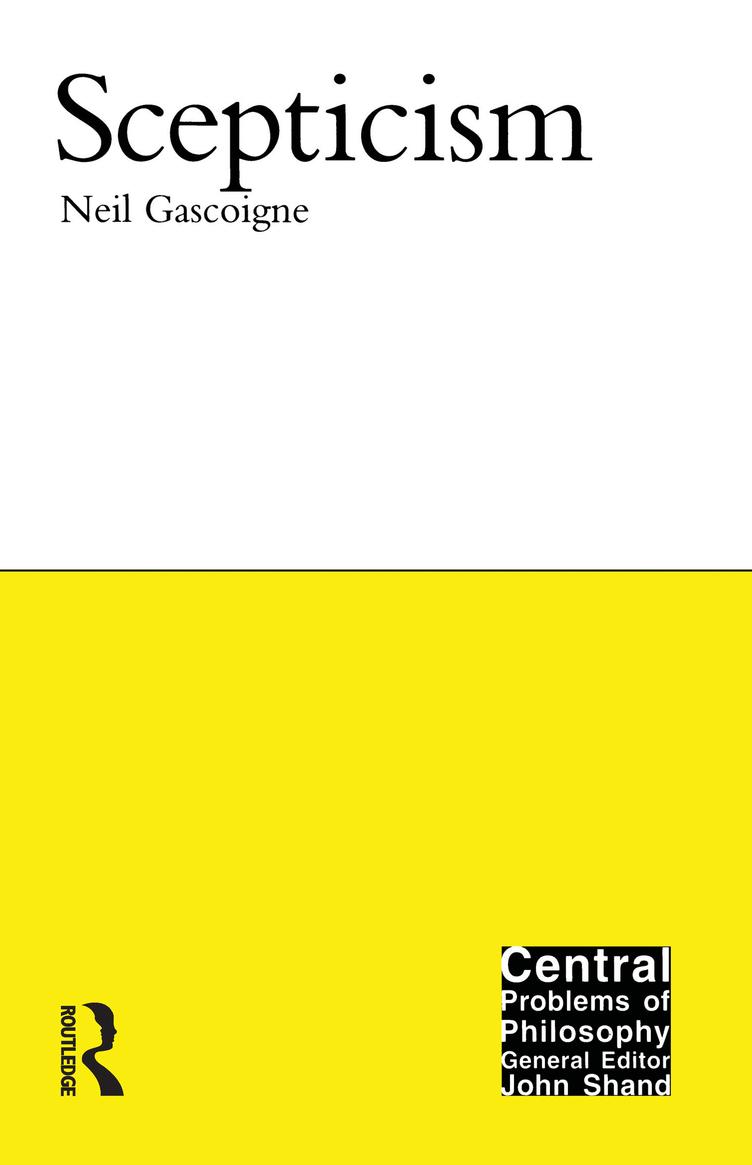
The history of scepticism is assumed by many to be the history of failed responses to a problem first raised by Descartes. While the thought of the ancient sceptics is acknowledged, their principle concern with how to live a good life is regarded as bearing little, if any, relation to the work of contemporary epistemologists. In "Scepticism" Neil Gascoigne engages with the work of canonical philosophers from Descartes, Hume and Kant through to Moore, Austin, and Wittgenstein to show how themes that first emerged in the Hellenistic period are inextricably bound up with the historical development of scepticism. Foremost amongst these is the view that scepticism relates not to the possibility of empirical knowledge but to the possibility of epistemological theory. This challenge to epistemology itself is explored and two contemporary trends are considered: the turn against foundationalist epistemology and towards more naturalistic conceptions of inquiry, and the resistance to this on the part of non-naturalistically inclined philosophers. In contextualizing the debate in this way Gascoigne equips students with a better appreciation of the methodological importance of sceptical reasoning, an analytic understanding of the structure of sceptical arguments, and an awareness of the significance of scepticism to the nature of philosophical inquiry.
Maksa helposti kortilla, Klarnalla, Apple Paylla tai Google Paylla. Etkö ole tyytyväinen? Sinulla on aina 14 päivän palautusoikeus. Lue lisää ehdoistamme. Jos sinulla on kysyttävää, lähetä meille sähköpostia osoitteeseen hello@memmo.org.
Memmo tekee opiskelusta helpompaa – missä päin maailmaa ikinä oletkin. Meillä yhdistät kurssikirjat ja fiksut opiskelutyökalut yhteen paikkaan: tiivistelmät, visat, podcastit ja muistikortit. Ja sitten Ted, opiskelukaverisi, joka vastaa kaikkeen, mitä ikinä mietitkin. Yli 50 000 opiskelijaa opiskelee jo täällä – rakennettu auttamaan sinua oppimaan nopeammin ja stressaamaan vähemmän.