
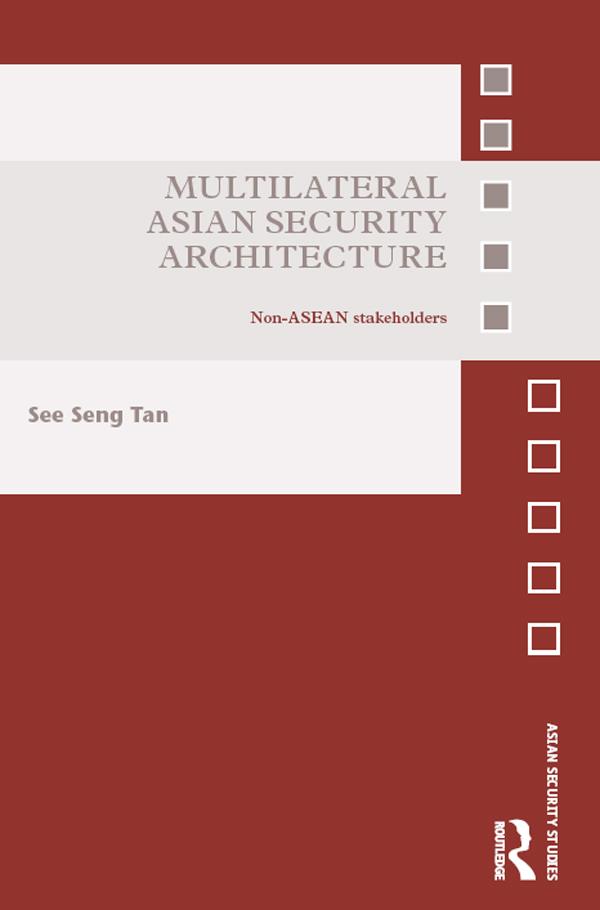
This book provides a comparative assessment of the material and ideational contributions of five countries to the regional architecture of post-Cold War Asia.
In contrast to the usual emphasis placed on the role and centrality of the Association of Southeast Asian Nations (ASEAN) in Asia’s multilateral architecture and its component institutions, this book argues that the four non-ASEAN countries of interest here ¾ Australia, Japan, China and the United States ¾ and Indonesia have played and continue to play an influential part in determining the shape and substance of Asian multilateralism from its pre-inception to the present. The work does not contend that existing scholarship overstates ASEAN’s significance to the successes and failures of Asia’s multilateral enterprise. Rather, it claims that the impact of non-ASEAN stakeholders in innovating multilateral architecture in Asia has been understated. Whether ASEAN has fared well or poorly as a custodian of Asia’s regional architecture, the fact remains that the countries considered here, notwithstanding their present discontent over the state of that architecture, are key to understanding the evolution of Asian multilateralism.
This book will be of much interest to students of Asian politics, international organisations, security studies and IR more generally.
Maksa helposti kortilla, Klarnalla, Apple Paylla tai Google Paylla. Etkö ole tyytyväinen? Sinulla on aina 14 päivän palautusoikeus. Lue lisää ehdoistamme. Jos sinulla on kysyttävää, lähetä meille sähköpostia osoitteeseen hello@memmo.org.
Memmo tekee opiskelusta helpompaa – missä päin maailmaa ikinä oletkin. Meillä yhdistät kurssikirjat ja fiksut opiskelutyökalut yhteen paikkaan: tiivistelmät, visat, podcastit ja muistikortit. Ja sitten Ted, opiskelukaverisi, joka vastaa kaikkeen, mitä ikinä mietitkin. Yli 50 000 opiskelijaa opiskelee jo täällä – rakennettu auttamaan sinua oppimaan nopeammin ja stressaamaan vähemmän.