
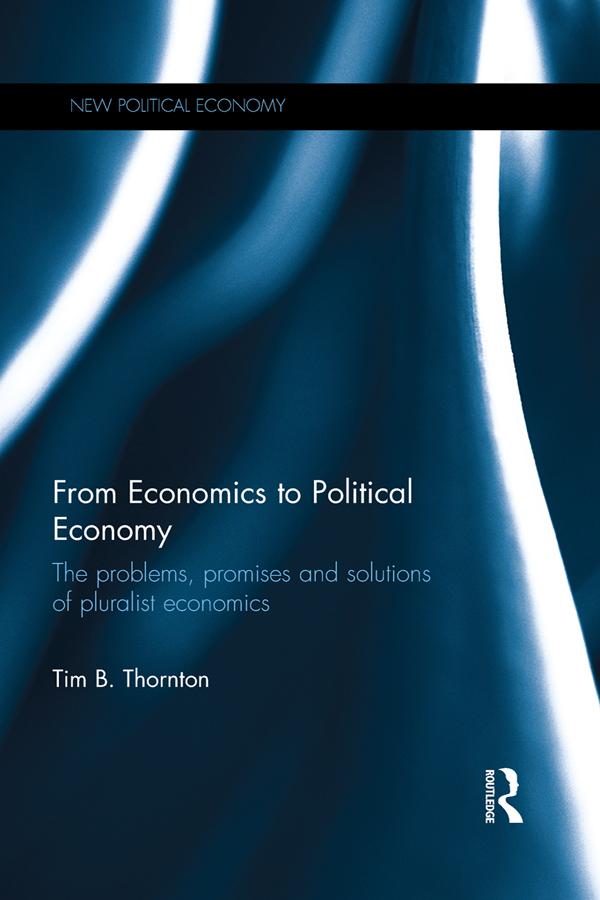
The discipline of economics has been increasingly criticized for its inability to illuminate the workings of the real world and to provide reliable policy guidance for the major economic and social challenges of our time.
A central problem in contemporary economics, and a problem from which many of its other failings flow, is its lack of plurality. By a lack of plurality it is meant that contemporary economics lacks diversity in its methods, theories, epistemology and methodology. It is also meant that economics has become far less interdisciplinary. From Economics to Political Economy offers an explanation as to why economics has become so determinedly non-pluralistic, and also gives considerable attention to exploring and evaluating promising strategies for reform. These strategies include developing a pluralist economics under the label of ‘political economy’ within other social science departments (such as departments of politics). Along the way the reader will learn about the worldwide student movement seeking greater pluralism in economics, encounter some dramatic case studies in intellectual suppression, gain a fuller sense of the nature of contemporary economics and explore the relationship between economics and other social sciences.
This book is of interest to any social scientist, particularly those with interests in economics and politics.
Maksa helposti kortilla, Klarnalla, Apple Paylla tai Google Paylla. Etkö ole tyytyväinen? Sinulla on aina 14 päivän palautusoikeus. Lue lisää ehdoistamme. Jos sinulla on kysyttävää, lähetä meille sähköpostia osoitteeseen hello@memmo.org.
Memmo tekee opiskelusta helpompaa – missä päin maailmaa ikinä oletkin. Meillä yhdistät kurssikirjat ja fiksut opiskelutyökalut yhteen paikkaan: tiivistelmät, visat, podcastit ja muistikortit. Ja sitten Ted, opiskelukaverisi, joka vastaa kaikkeen, mitä ikinä mietitkin. Yli 50 000 opiskelijaa opiskelee jo täällä – rakennettu auttamaan sinua oppimaan nopeammin ja stressaamaan vähemmän.