
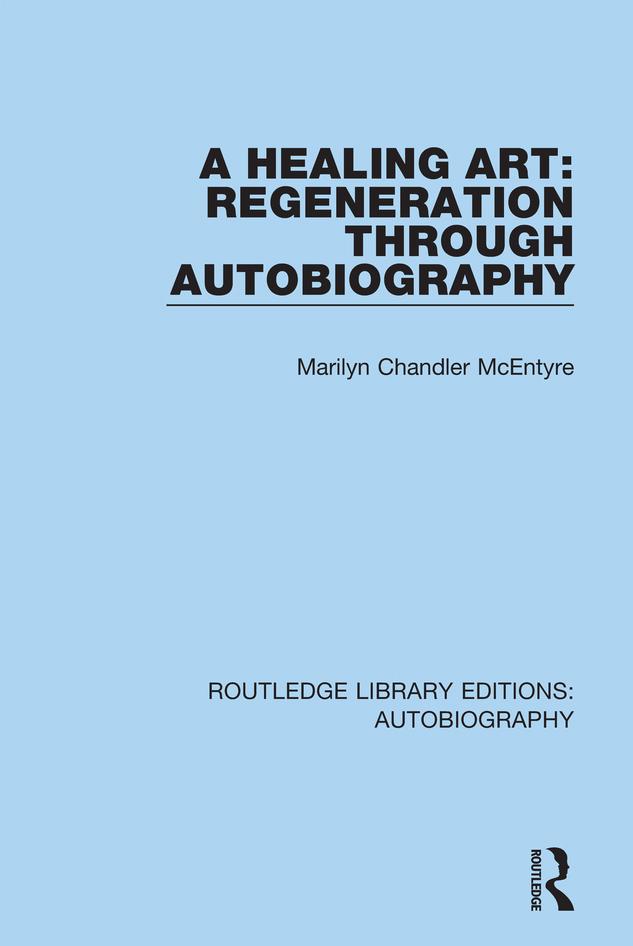
Originally published in 1990. Many post-World War I autobiographies focus on episodes of crisis. In a century torn by global strife and breakdown of cultural institutions, autobiography provides a way of recovering from crisis and restructuring reality–a healing act that involves the writer in a "wrestle with words and meanings" that can be deeply regenerative. Narration can be a way of purging guilt and pain, re-centering the self, and reconnecting with community after a shattering experience has driven one into silence and isolation. This book considers the problems, such as finding words for the inexplicable, the narrative perspective chosen and the traditional forms or narrative structures as means of re-patterning consciousness. It looks at seven autobiographies as crisis narratives and demonstrates how therapy and art merge in autobiography so that the literature acts back upon life.
Works considered: Vera Brittain’s Testament of Youth; Elie Wiesel’s Night; Christa Wolf’s Kinheitsmuster (A Model Childhood); C. S. Lewis’ A Grief Observed; Peter Handke’s Wunschloses Unglueck (A Sorrow Beyond Dreams); Adrienne Rich’s Of Woman Born; Robert Prisig’s Zen and the Art of Motorcycle Maintenance.
Maksa helposti kortilla, Klarnalla, Apple Paylla tai Google Paylla. Etkö ole tyytyväinen? Sinulla on aina 14 päivän palautusoikeus. Lue lisää ehdoistamme. Jos sinulla on kysyttävää, lähetä meille sähköpostia osoitteeseen hello@memmo.org.
Memmo tekee opiskelusta helpompaa – missä päin maailmaa ikinä oletkin. Meillä yhdistät kurssikirjat ja fiksut opiskelutyökalut yhteen paikkaan: tiivistelmät, visat, podcastit ja muistikortit. Ja sitten Ted, opiskelukaverisi, joka vastaa kaikkeen, mitä ikinä mietitkin. Yli 50 000 opiskelijaa opiskelee jo täällä – rakennettu auttamaan sinua oppimaan nopeammin ja stressaamaan vähemmän.