
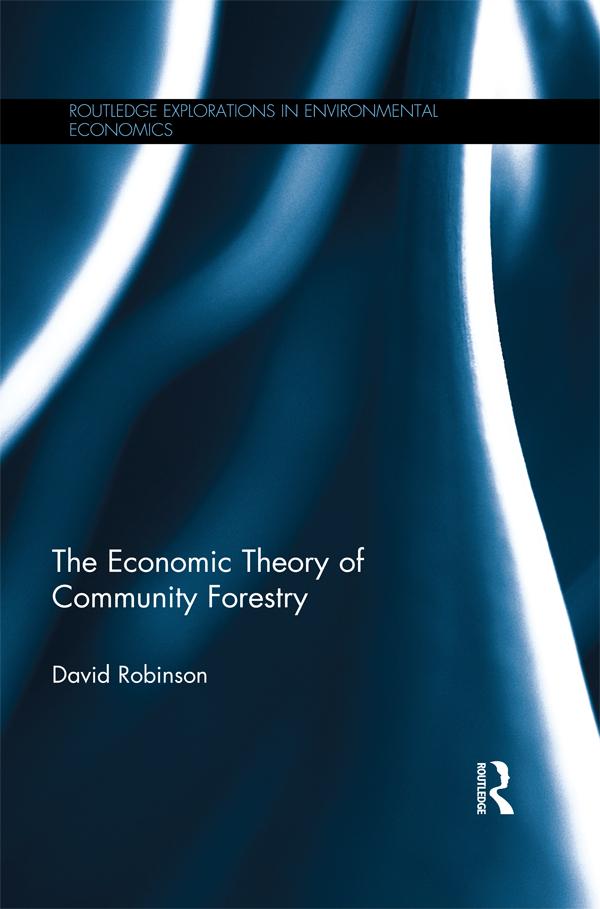
Community forestry is an expanding model of forest management around the world. Over a quarter of forests in developing countries are now owned by or assigned to communities and there is a growing community forestry movement in developed countries such as Canada and the USA. There is, however, no economic theory of community forestry and no systematic treatment of the potential economic advantages of promoting Community forestry in developed countries. As a result much of the policy debate over forest management and forest tenure rests on confused and often erroneous views held by policy makers and encouraged by the dominant forestry industry.
The Economic Theory of Community Forestry aims to address this gap and provides the tools for understanding community forestry movement as an alternative form of ownership that can mobilize community resources and encourage innovation. It uses a wide range of economic principles to show how community forestry can be economically superior to conventional forestry; provides examples from Canadian practice; and discusses the regulatory regime that policy makers must put in place to benefit from community forestry.
This book will be of interest to policy makers, activists, community forestry managers and members, foresters and forestry students.
Maksa helposti kortilla, Klarnalla, Apple Paylla tai Google Paylla. Etkö ole tyytyväinen? Sinulla on aina 14 päivän palautusoikeus. Lue lisää ehdoistamme. Jos sinulla on kysyttävää, lähetä meille sähköpostia osoitteeseen hello@memmo.org.
Memmo tekee opiskelusta helpompaa – missä päin maailmaa ikinä oletkin. Meillä yhdistät kurssikirjat ja fiksut opiskelutyökalut yhteen paikkaan: tiivistelmät, visat, podcastit ja muistikortit. Ja sitten Ted, opiskelukaverisi, joka vastaa kaikkeen, mitä ikinä mietitkin. Yli 50 000 opiskelijaa opiskelee jo täällä – rakennettu auttamaan sinua oppimaan nopeammin ja stressaamaan vähemmän.