
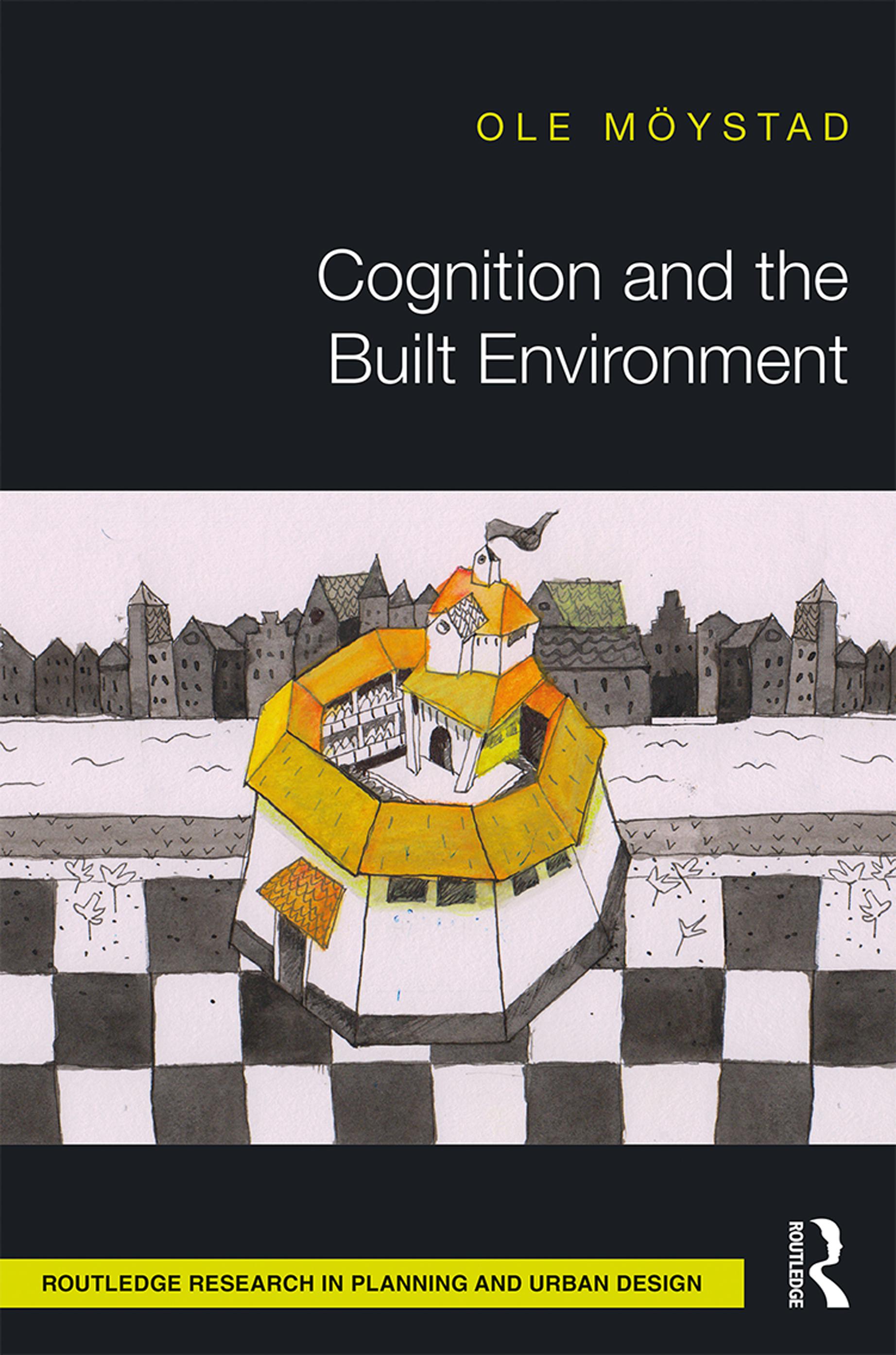
Cognition and the Built Environment argues that interacting with our built environment, as users and as architects, is a cognitive process. It claims that architecture, in its form and meaning, is a basic, embodied level of human cognition.
The assumption is that we and our built environment together form an intelligent system, a cognitive feedback loop between us and the world of which we are part. With this as a vantage point, the book discusses the meaning and intelligence of concrete architectural environments as well as the agency of the architect, of his client and of the user.
The inquiry oscillates between abstract thought, topological models and cognitive semiotics, between pragmatist philosophy and the professional practice of planning cities, developing projects and using objects. Architecture serves more complex purposes than our caves, paths and landmarks did.
Written for students and academics of urban design, urban planning and architectural theory, Cognition and the Built Environment argues that human cognition feeds on the interaction between thought, agency and built environment, and that architecture is the spatial form of this interaction.
Maksa helposti kortilla, Klarnalla, Apple Paylla tai Google Paylla. Etkö ole tyytyväinen? Sinulla on aina 14 päivän palautusoikeus. Lue lisää ehdoistamme. Jos sinulla on kysyttävää, lähetä meille sähköpostia osoitteeseen hello@memmo.org.
Memmo tekee opiskelusta helpompaa – missä päin maailmaa ikinä oletkin. Meillä yhdistät kurssikirjat ja fiksut opiskelutyökalut yhteen paikkaan: tiivistelmät, visat, podcastit ja muistikortit. Ja sitten Ted, opiskelukaverisi, joka vastaa kaikkeen, mitä ikinä mietitkin. Yli 50 000 opiskelijaa opiskelee jo täällä – rakennettu auttamaan sinua oppimaan nopeammin ja stressaamaan vähemmän.