
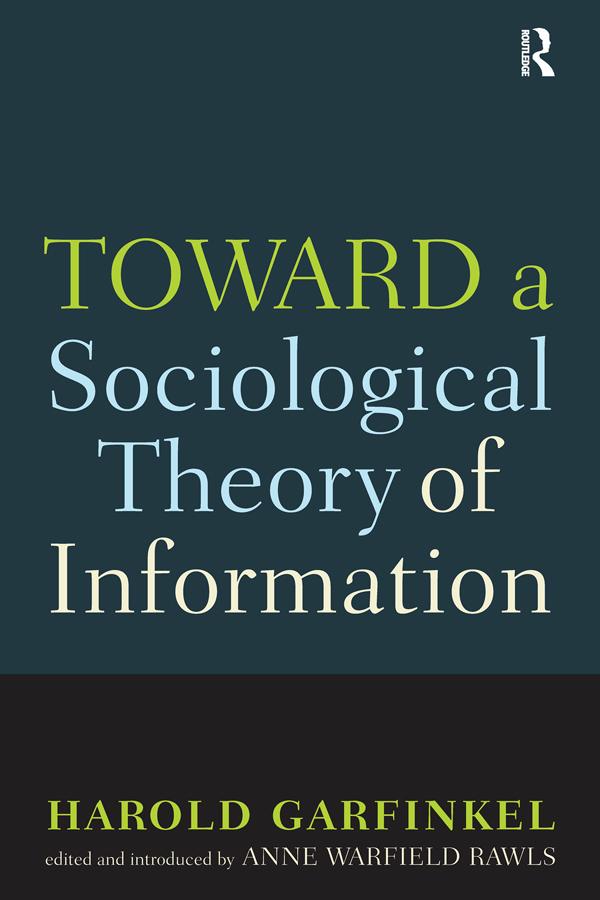
In 1952 at Princeton University, Harold Garfinkel developed a sociological theory of information. Other prominent theories then being worked out at Princeton, including game theory, neglected the social elements of "information," modeling a rational individual whose success depends on completeness of both reason and information. In real life these conditions are not possible and these approaches therefore have always had limited and problematic practical application. Garfinkel's sociological theory treats information as a thoroughly organized social phenomenon in a way that addresses these shortcomings comprehensively. Although famous as a sociologist of everyday life, Garfinkel focuses in this new book-never before published-on the concerns of large-scale organization and decisionmaking. In the fifty years since Garfinkel wrote this treatise, there has been no systematic treatment of the problems and issues he raises. Nor has anyone proposed a theory of information like the one he proposed. Many of the same problems that troubled theorists of information and predictable order in 1952 are still problematic today.
Maksa helposti kortilla, Klarnalla, Apple Paylla tai Google Paylla. Etkö ole tyytyväinen? Sinulla on aina 14 päivän palautusoikeus. Lue lisää ehdoistamme. Jos sinulla on kysyttävää, lähetä meille sähköpostia osoitteeseen hello@memmo.org.
Memmo tekee opiskelusta helpompaa – missä päin maailmaa ikinä oletkin. Meillä yhdistät kurssikirjat ja fiksut opiskelutyökalut yhteen paikkaan: tiivistelmät, visat, podcastit ja muistikortit. Ja sitten Ted, opiskelukaverisi, joka vastaa kaikkeen, mitä ikinä mietitkin. Yli 50 000 opiskelijaa opiskelee jo täällä – rakennettu auttamaan sinua oppimaan nopeammin ja stressaamaan vähemmän.
Saatat pitää myös näistä
Osta kirja0