
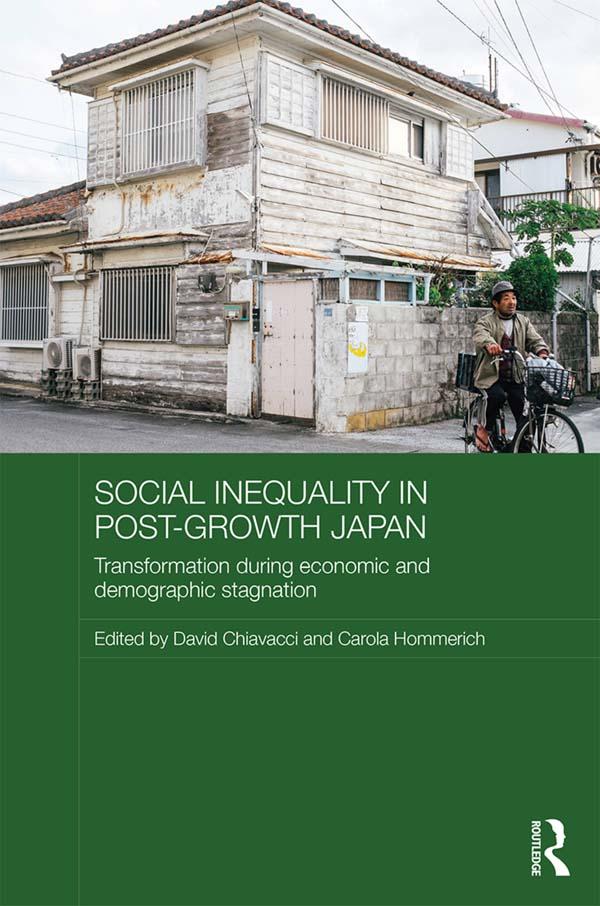
In recent decades Japan has changed from a strongly growing, economically successful nation regarded as prime example of social equality and inclusion, to a nation with a stagnating economy, a shrinking population and a very high proportion of elderly people. Within this, new forms of inequality are emerging and deepening, and a new model of Japan as 'gap society' (kakusa shakai) has become common-sense. These new forms of inequality are complex, are caused in different ways by a variety of factors, and require deep-seated reforms in order to remedy them. This book provides a comprehensive overview of inequality in contemporary Japan. It examines inequality in labour and employment, in welfare and family, in education and social mobility, in the urban-rural divide, and concerning immigration, ethnic minorities and gender. The book also considers the widespread anxiety effect of the fear of inequality; and discusses how far these developments in Japan represent a new form of social problem for the wider world.
Maksa helposti kortilla, Klarnalla, Apple Paylla tai Google Paylla. Etkö ole tyytyväinen? Sinulla on aina 14 päivän palautusoikeus. Lue lisää ehdoistamme. Jos sinulla on kysyttävää, lähetä meille sähköpostia osoitteeseen hello@memmo.org.
Memmo tekee opiskelusta helpompaa – missä päin maailmaa ikinä oletkin. Meillä yhdistät kurssikirjat ja fiksut opiskelutyökalut yhteen paikkaan: tiivistelmät, visat, podcastit ja muistikortit. Ja sitten Ted, opiskelukaverisi, joka vastaa kaikkeen, mitä ikinä mietitkin. Yli 50 000 opiskelijaa opiskelee jo täällä – rakennettu auttamaan sinua oppimaan nopeammin ja stressaamaan vähemmän.