
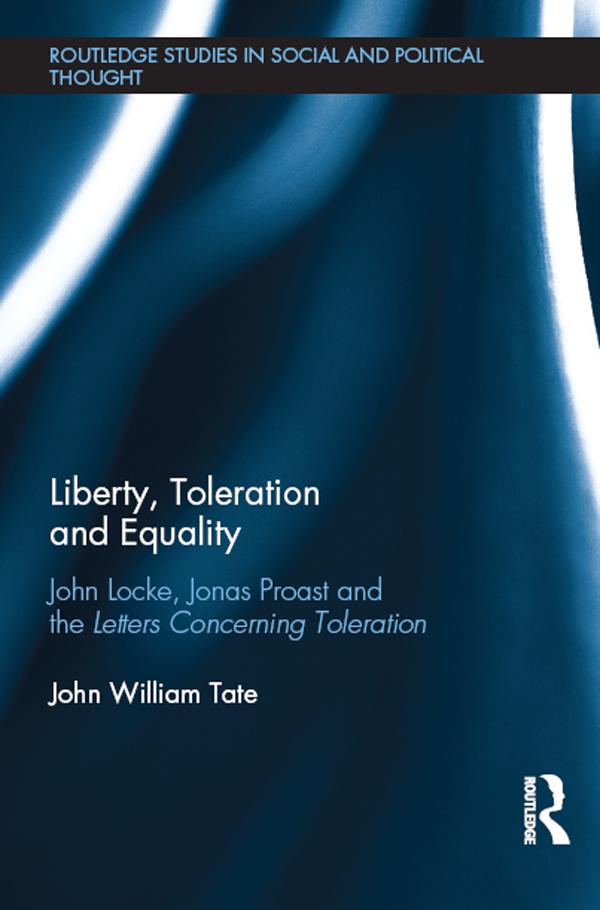
The seventeenth century English philosopher, John Locke, is widely recognized as one of the seminal sources of the modern liberal tradition. Liberty, Toleration and Equality examines the development of Locke’s ideal of toleration, from its beginnings, to the culmination of this development in Locke’s fifteen year debate with his great antagonist, the Anglican clergyman, Jonas Proast. Locke, like Proast, was a sincere Christian, but unlike Proast, Locke was able to develop, over time, a perspective on toleration which allowed him to concede liberty to competing views which he, personally, perceived to be "false and absurd". In this respect, Locke sought to affirm what has since become the basic liberal principle that liberty and toleration are most significant when they are accorded to views to which we ourselves are profoundly at odds.
John William Tate seeks to show how Locke was able to develop this position on toleration over a long intellectual career. Tate also challenges some of the most prominent contemporary perspectives on Locke, within the academic literature, showing how these fall short of perceiving what is essential to Locke’s position.
Maksa helposti kortilla, Klarnalla, Apple Paylla tai Google Paylla. Etkö ole tyytyväinen? Sinulla on aina 14 päivän palautusoikeus. Lue lisää ehdoistamme. Jos sinulla on kysyttävää, lähetä meille sähköpostia osoitteeseen hello@memmo.org.
Memmo tekee opiskelusta helpompaa – missä päin maailmaa ikinä oletkin. Meillä yhdistät kurssikirjat ja fiksut opiskelutyökalut yhteen paikkaan: tiivistelmät, visat, podcastit ja muistikortit. Ja sitten Ted, opiskelukaverisi, joka vastaa kaikkeen, mitä ikinä mietitkin. Yli 50 000 opiskelijaa opiskelee jo täällä – rakennettu auttamaan sinua oppimaan nopeammin ja stressaamaan vähemmän.