
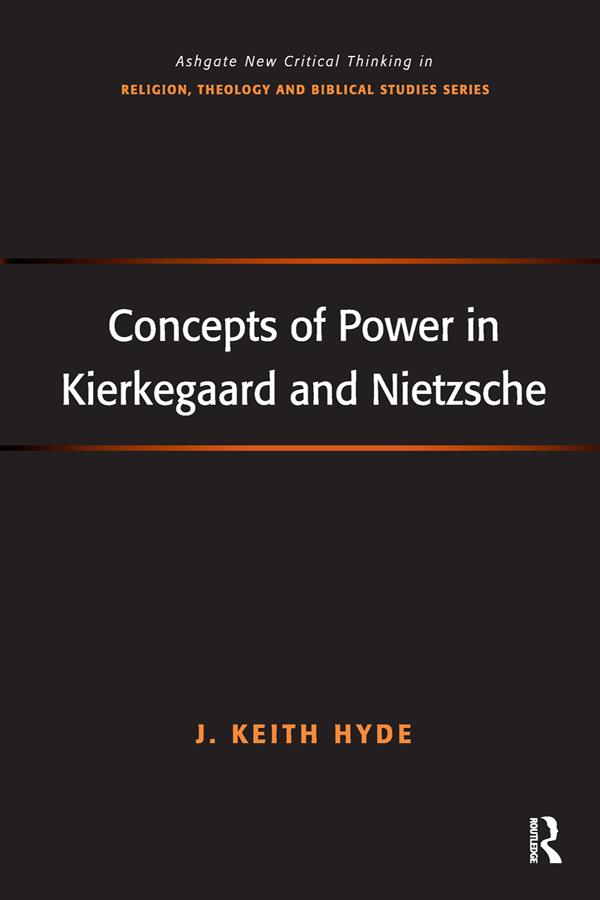
The name Friedrich Nietzsche has become synonymous with studies in political power. The application of his theory that the vast array of human activities comprises manifestations of the will to power continues to influence fields as diverse as international relations, political studies, literary theory, the social sciences, and theology. To date, the introduction of Søren Kierkegaard into this discussion has been gradual at best. Long derided as the quintessential individualist, the social dimension of his fertile thought has been neglected until recent decades. This book situates Kierkegaard in direct dialogue with Nietzsche on the topic of power and authority. Significant contextual similarities warrant such a comparison: both severely criticized state Lutheranism, championed the self and its imaginative ways of knowing against the philosophical blitzkrieg of Hegelianism, and endured the turbulent emergence of the nation-state. However, the primary justification remains the depth-defying prescience with which Kierkegaard not only fully anticipates but rigorously critiques Nietzsche's power position thirty years in advance.
Maksa helposti kortilla, Klarnalla, Apple Paylla tai Google Paylla. Etkö ole tyytyväinen? Sinulla on aina 14 päivän palautusoikeus. Lue lisää ehdoistamme. Jos sinulla on kysyttävää, lähetä meille sähköpostia osoitteeseen hello@memmo.org.
Memmo tekee opiskelusta helpompaa – missä päin maailmaa ikinä oletkin. Meillä yhdistät kurssikirjat ja fiksut opiskelutyökalut yhteen paikkaan: tiivistelmät, visat, podcastit ja muistikortit. Ja sitten Ted, opiskelukaverisi, joka vastaa kaikkeen, mitä ikinä mietitkin. Yli 50 000 opiskelijaa opiskelee jo täällä – rakennettu auttamaan sinua oppimaan nopeammin ja stressaamaan vähemmän.
Saatat pitää myös näistä
Osta kirja0