
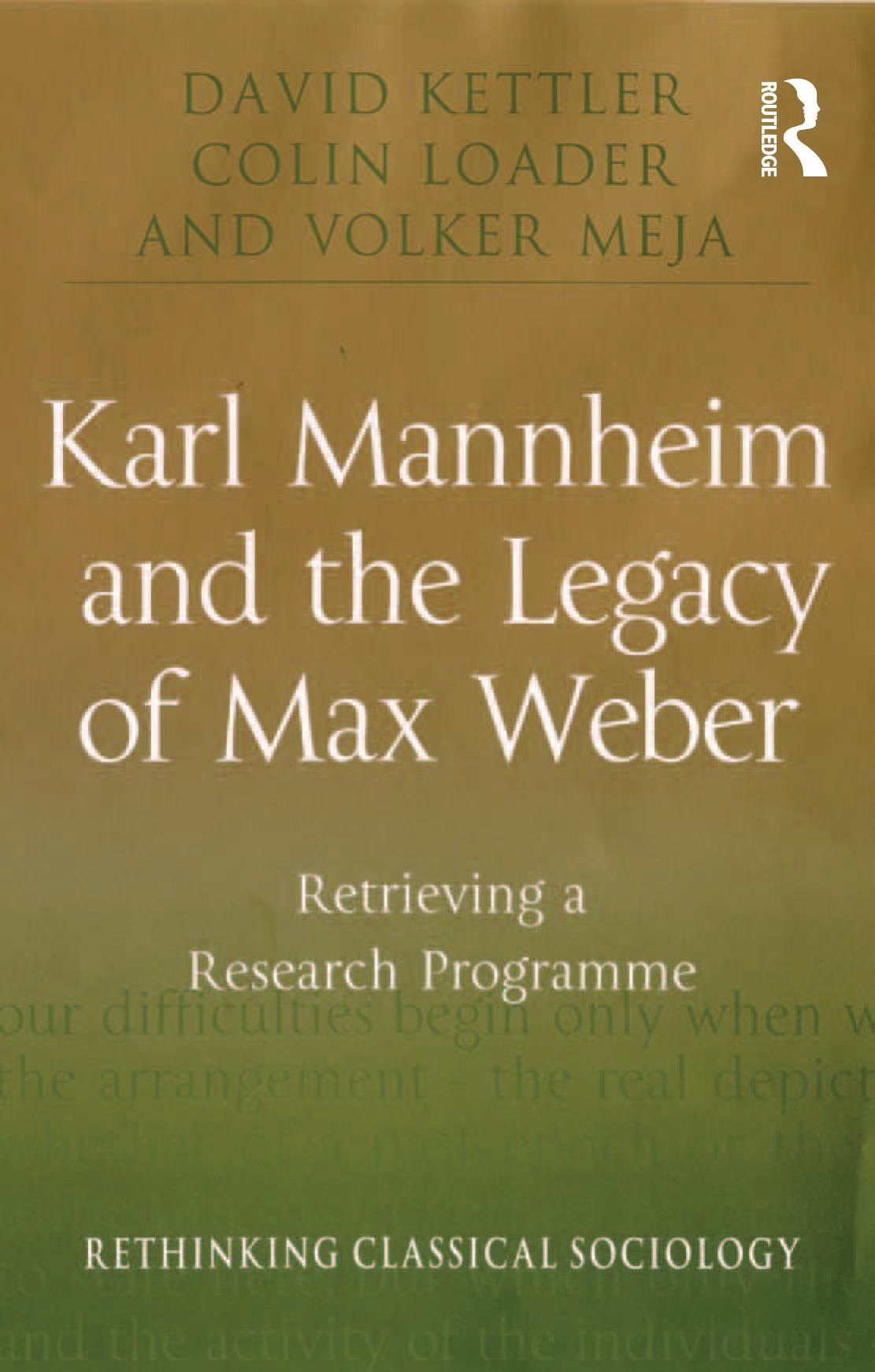
This book focuses on the important work of Karl Mannheim by demonstrating how his theoretical conception of a reflexive sociology took shape as a collaborative empirical research programme. The authors show how contemporary work along these lines can benefit from the insights of Mannheim and his students into both morphology and genealogy. It returns Mannheim's sociology of knowledge inquiries into the broader context of a wider project in historical and cultural sociology, whose promising development was disrupted and then partially obscured by the expulsion of Mannheim's intellectual generation. This inspired volume will appeal to sociologists concerned with the contemporary relevance of his work, and who are prepared for a fresh look at Weimar sociology and the legacy of Max Weber.
Maksa helposti kortilla, Klarnalla, Apple Paylla tai Google Paylla. Etkö ole tyytyväinen? Sinulla on aina 14 päivän palautusoikeus. Lue lisää ehdoistamme. Jos sinulla on kysyttävää, lähetä meille sähköpostia osoitteeseen hello@memmo.org.
Memmo tekee opiskelusta helpompaa – missä päin maailmaa ikinä oletkin. Meillä yhdistät kurssikirjat ja fiksut opiskelutyökalut yhteen paikkaan: tiivistelmät, visat, podcastit ja muistikortit. Ja sitten Ted, opiskelukaverisi, joka vastaa kaikkeen, mitä ikinä mietitkin. Yli 50 000 opiskelijaa opiskelee jo täällä – rakennettu auttamaan sinua oppimaan nopeammin ja stressaamaan vähemmän.
Saatat pitää myös näistä
Osta kirja0