
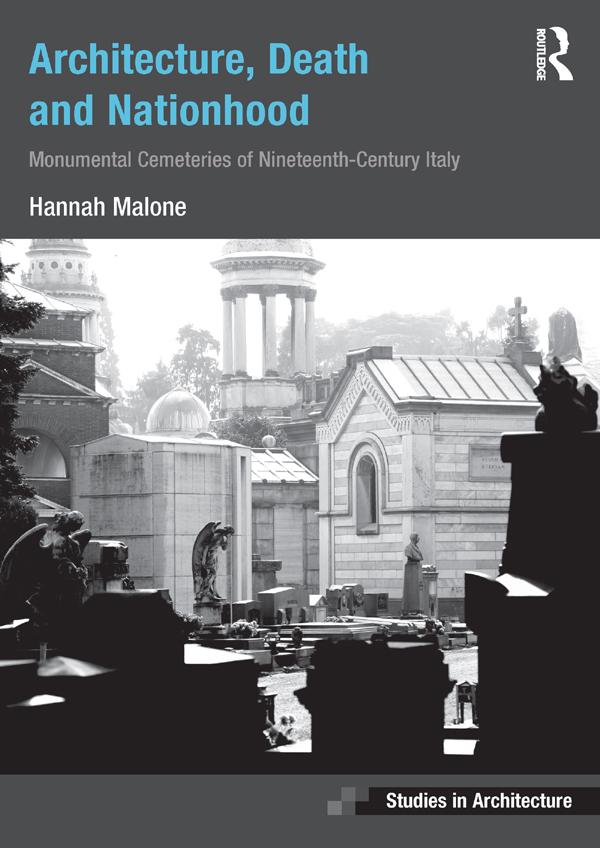
In the nineteenth century, new cemeteries were built in many Italian cities that were unique in scale and grandeur, and which became destinations on the Grand Tour. From the Middle Ages, the dead had been buried in churches and urban graveyards but, in the 1740s, a radical reform across Europe prohibited burial inside cities and led to the creation of suburban burial grounds. Italy’s nineteenth-century cemeteries were distinctive as monumental or architectural structures, rather than landscaped gardens. They represented a new building type that emerged in response to momentous changes in Italian politics, tied to the fight for independence and the creation of the nation-state.
As the first survey of Italy’s monumental cemeteries, the book explores the relationship between architecture and politics, or how architecture is formed by political forces. As cities of the dead, cemeteries mirrored the spaces of the living. Against the backdrop of Italy’s unification, they conveyed the power of the new nation, efforts to construct an Italian identity, and conflicts between Church and state. Monumental cemeteries helped to foster the narratives and mentalities that shaped Italy as a new nation.
Maksa helposti kortilla, Klarnalla, Apple Paylla tai Google Paylla. Etkö ole tyytyväinen? Sinulla on aina 14 päivän palautusoikeus. Lue lisää ehdoistamme. Jos sinulla on kysyttävää, lähetä meille sähköpostia osoitteeseen hello@memmo.org.
Memmo tekee opiskelusta helpompaa – missä päin maailmaa ikinä oletkin. Meillä yhdistät kurssikirjat ja fiksut opiskelutyökalut yhteen paikkaan: tiivistelmät, visat, podcastit ja muistikortit. Ja sitten Ted, opiskelukaverisi, joka vastaa kaikkeen, mitä ikinä mietitkin. Yli 50 000 opiskelijaa opiskelee jo täällä – rakennettu auttamaan sinua oppimaan nopeammin ja stressaamaan vähemmän.